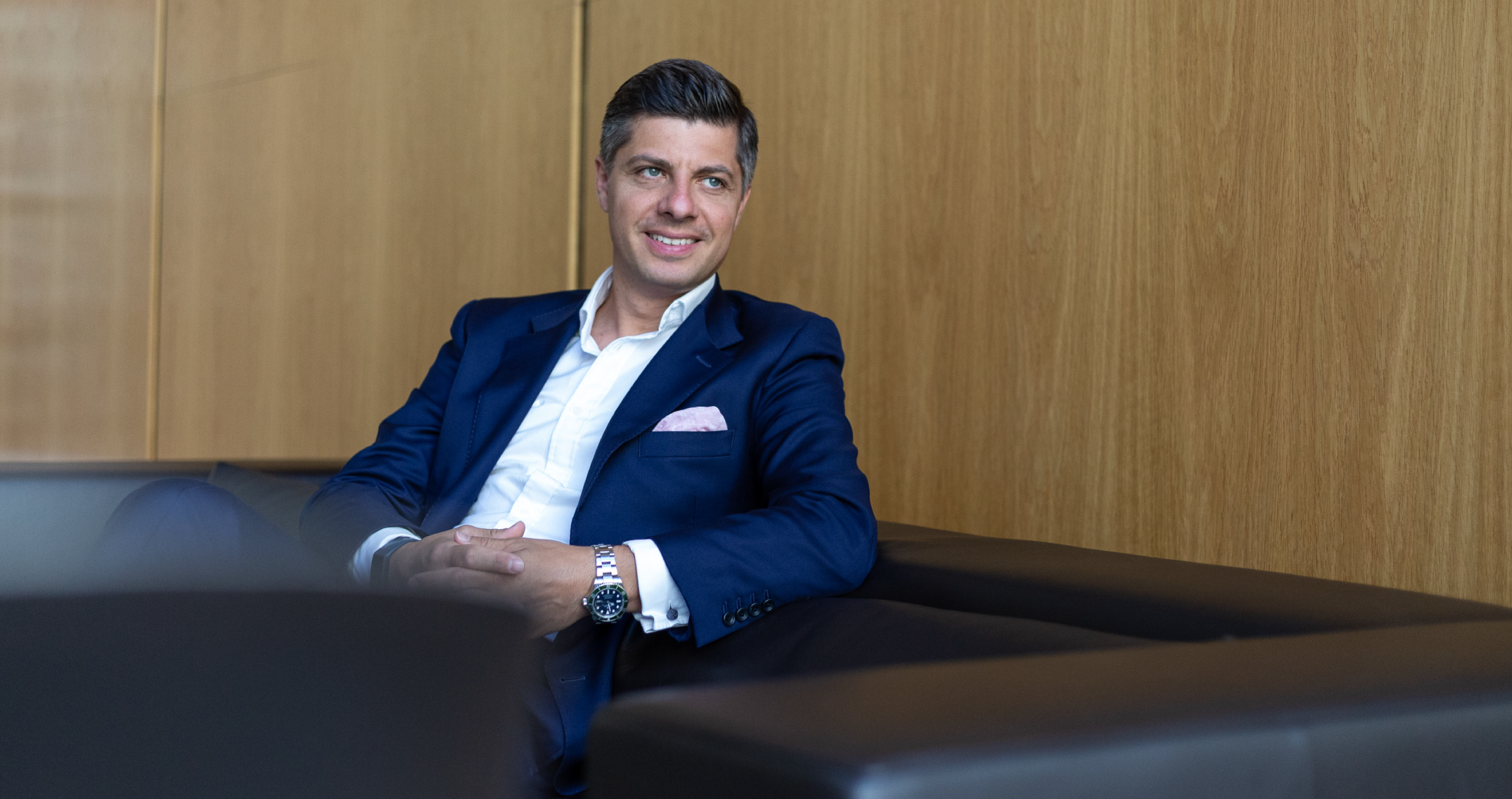
By Daniel Bauer, Managing Partner at VALDIVIA
Whenever I speak to CEOs, divisional directors or managing directors in the property sector, one observation stands out time and again: most leaders do not suffer from a lack of information. Quite the opposite, in fact.
Never before have those in charge had access to as much data, analysis, dashboards, market reports and courses of action as they do today. At the same time, decision-making cycles are becoming shorter, uncertainty remains high and the number of relevant issues is constantly increasing. Strategic transformations, regulatory requirements, digitalisation, HR issues, geopolitical developments and new technologies all compete for attention on a daily basis.
The challenge, therefore, often does not lie in obtaining information. The real challenge lies in deriving the right decision from a multitude of options. It is precisely at this point that many today speak of ‘decision fatigue’. More precisely, one could also refer to decision overload or decision pressure caused by an information overload.
This does not refer to being overwhelmed or a lack of resilience. Rather, the term describes a reality of modern leadership: those who make many important decisions every day must manage their attention, time and judgement carefully.
When information makes decision-making more difficult
Recent surveys show that this trend is not merely a subjective feeling. In a study commissioned by Oracle, 85 per cent of respondents in Germany stated that the growing volume of data makes decisions more complicated. 55 per cent reported facing a decision-making dilemma more than once a day. 69 per cent1had already avoided making a decision because they felt overwhelmed by the volume of available information.
This trend is particularly relevant to the property sector. The 2025 Digitalisation Study2 by the German Property Federation (ZIA) and EY-Parthenon shows that 79 per cent of the companies surveyed cite a lack of human resources and 75 per cent cite insufficient data quality as key factors holding back digital transformation. At the same time, 90 per cent of respondents regard artificial intelligence as a key technology for the next five years.
The challenge, therefore, does not lie in providing as much data and as many technologies as possible. Rather, the crucial factor is to develop reliable bases for decision-making from them – and to recognise when additional information no longer yields any significant new insights.
Thomas Dries, member of our active advisory board, recently summed this up aptly in a conversation:
“At some point, a manager has to make a decision. Waiting for that last five per cent of additional information certainly does not improve the quality of the decision any further.”
This is a notion that is more relevant than ever in many companies. Paradoxically, the desire for absolute certainty can lead to decisions being delayed, whilst opportunities slip away.
The overall economic situation also increases the pressure to make decisions. In PwC’s 28th Global CEO Survey, 56 per cent of German CEOs expected a decline in domestic growth. Macroeconomic volatility, geopolitical developments, cyber risks and the shortage of skilled workers were cited, amongst other things, as key risk factors.
In such an environment, the challenge for leaders is not to eliminate uncertainty entirely. It is about dealing with uncertainty in a structured way, making assumptions transparent and remaining capable of taking action despite incomplete information.
Beter structures rather than more control
At the same time, we observe that many successful leaders very deliberately create structures to ensure the quality of their decisions. This includes the consistent delegation of operational matters as well as dialogue with trusted sparring partners.
In my recent article on ‘Invisible Leadership’, I explored the question of why effective leadership often emerges in situations where leaders do not have to make every decision themselves or be constantly visible.
Good leadership does not mean controlling every process. Good leadership means providing guidance, assigning responsibilities and empowering people to act independently.
The Federal Institute for Occupational Safety and Health (BAuA) also points out in a relevant publication that managers are particularly frequently confronted with high work demands. These include interruptions, intense pressure to meet deadlines and perform, and having to juggle various tasks simultaneously. Among managers with more than ten staff, for example, 64 per cent reported being frequently disturbed and interrupted at work.
These figures make it clear that the quality of decision-making does not depend solely on individual experience or resilience. It also depends on whether an organisation facilitates focused work, clear lines of responsibility and sufficient time for reflection.
Nils Hübener, also an active member of our advisory board, put it this way:
“An important realisation from my professional career was that not every important decision has to be made on my desk.”
This statement may sound self-evident at first. In practice, however, it is anything but trivial. Those in positions of responsibility often tend to want to manage as many issues as possible themselves. In the long term, however, this creates a bottleneck that not only limits one’s own effectiveness but can also hinder the development of teams and organisations.
Delegation does not mean handing over all responsibility. It means distributing responsibility sensibly. The manager remains responsible for the direction, the framework and the outcome – but they do not have to make every operational decision themselves.
Dissent as a mark of quality
Yet even the best structures cannot replace the value of differing perspectives. Particularly at C‑level, the quality of decisions is significantly influenced by whether differing opinions are permitted. Leadership does not mean always knowing the right answer. Leadership often means asking the right questions and surrounding oneself with people who are prepared to contribute different perspectives and take on responsibility
This idea brings to mind a key aspect of my contribution to the Pirate Leadership methodology. Progress often arises not from conformity, but from people who challenge existing ways of thinking, point out new paths and have the courage to swim against the tide.
For leaders, this means understanding constructive dissent not as a disruption, but as an integral part of good decision-making processes.
The quality of a decision often depends on whether there are people in the room who are prepared to disagree.
Psychological safety is a key prerequisite here. Employees must feel confident that differing views will not automatically be interpreted as disloyalty or a lack of support. Only then will risks become apparent at an early stage, assumptions be challenged and alternatives be seriously considered.
A professional sparring partner therefore fulfils more than just an advisory role. They help to clarify priorities, expose assumptions and examine decision options from different perspectives.
What characterises modern leadership
At a time when complexity is increasing rather than decreasing, this is precisely what becomes a decisive competitive advantage. After all, the best decisions are rarely made in isolation. They arise where experience meets different perspectives and discussion is encouraged.
For us at Valdivia, it is therefore clear: modern leadership is not measured by how many decisions a leader makes. What matters far more is the ability to set priorities, provide direction and remain capable of taking action even in the face of uncertainty.
Or to put it another way:
The best leaders do not make more decisions than others. They know which decisions truly deserve their attention.
The ability to share responsibility, to allow for different perspectives and to maintain clarity in complex situations ultimately links many of the leadership topics we regularly explore at Valdivia.
Whether in the context of *Invisible Leadership*, *Pirate Leadership* or the question of how leaders cope with an ever-increasing flood of information: the focus is always on the same challenge – successfully guiding people and organisations through change.
Voices from the Valdivia Advisory Board
What helps you personally to make good decisions, even when things are highly complex? “I try to distinguish between urgent and truly important decisions. Not everything that makes a lot of noise is strategically relevant.”
What piece of advice would you give to young leaders? “Perfect information is rare. Those who constantly wait for absolute certainty often miss the right moment to act.”
What role do sparring partners play in helping to make good decisions? “A leader isn’t judged by how often they’re right. What matters is whether they have people around them who feel free to openly challenge them.”
Conclusion
Leadership does not mean making every decision yourself. Leadership means enabling the right decisions to be made.
Sources & Notes
- Haufe: Data overload in companies complicates decision-making processes
- Study: Information overload slows managers down – the number of decisions increases tenfold
- The property sector in flux – what 10 years of digitalisation have shown | ZIA
- BAuA – Psychological stress and mental health among managers – Federal Institute for Occupational Safety and Health
- PwC – 28th Global CEO Survey 2025
(Image source: Valdivia Consulting GmbH in cooperation with new office GmbH)