How much sea is there in our everyday lives — and how much future is there in the Arctic? On 25 September, the United Nations World Maritime Day reminds us how inextricably linked life on Earth is with the oceans. Its motto “Our Ocean, Our Responsibility, Our Opportunity” outlines the central role that the oceans play for ecology and economy worldwide. We are taking this as an opportunity to present two current projects from the Alfred Wegener Institute AWI , which we support: “ShrimpWiz” shows how AWI research has an impact on supermarket shelves and our plates. And with the CONTRASTS expedition, the Polarstern will embark on a journey through the past, present and future of Arctic ice development.
A day for ocean awareness
In addition to World Oceans Day on 8 June, World Maritime Day is the second date in the calendar that reminds people worldwide of the importance and protection of the world’s oceans. With over 80 per cent of global trade in goods, shipping is the largest economic sector in the maritime industry. According to the International Maritime Organisation IMO ((Link3)), it therefore plays a key role in the protection of the oceans and the sustainable use of oceanic resources. The IMO is committed to ensuring clean and safe seas in its 176 member states with an international set of regulations and, above all, a steadily growing number of technical support projects.

ShrimpWiz: an AI shrimp keeper
The shrimp available in our shops usually come from land-based farms, often from outside the EU. However, species-appropriate husbandry in these facilities is complex and not always guaranteed: The operators have to fish the animals regularly to check the condition of the farm. This leads to stress and reduces animal welfare. Under the leadership of the Alfred Wegener Institute, a research group is now working with the company Oceanloop to investigate how a land-based shrimp farm can be set up that guarantees animal welfare and is economically viable for companies. In this “ShrimpWiz” project, an AI counts and analyses the stock, identifies sick animals and also controls the supply.
Dr Stephan Ende, the coordinator of the project at AWI, is convinced that this is the key to animal welfare issues in intensive aquaculture facilities: “The use of image recognition software to measure the shrimp enables accurate and non-invasive monitoring of animal welfare and productivity in shrimp farming — 24 hours a day, 7 days a week. The clear water technology in combination with our ‘Early Welfare Alert’ software can be the starting point for any welfare labelling in the future shrimp industry.”
Read more about the ShrimpWiz project here …
Travelling through space and time with the Polarstern
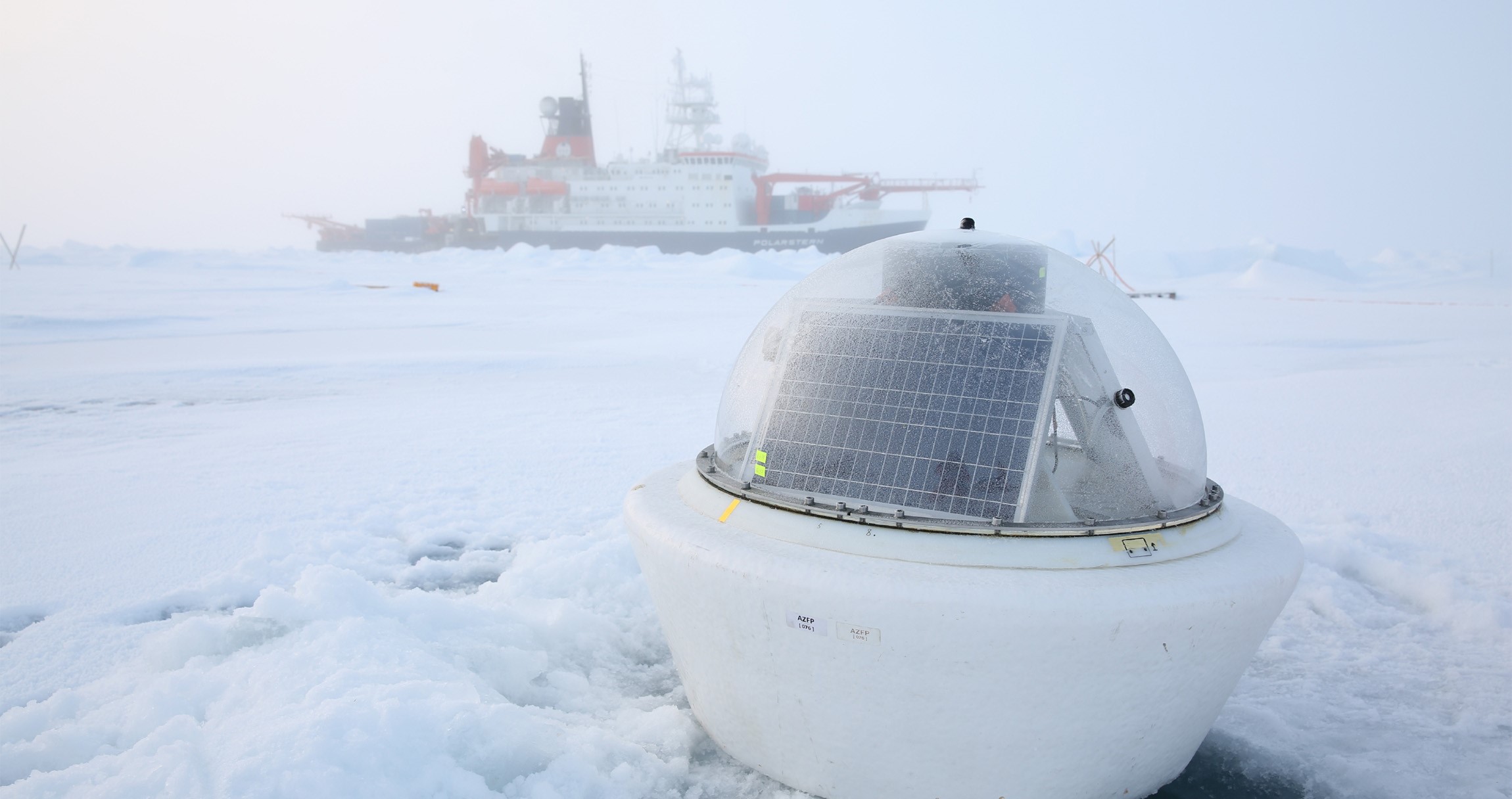
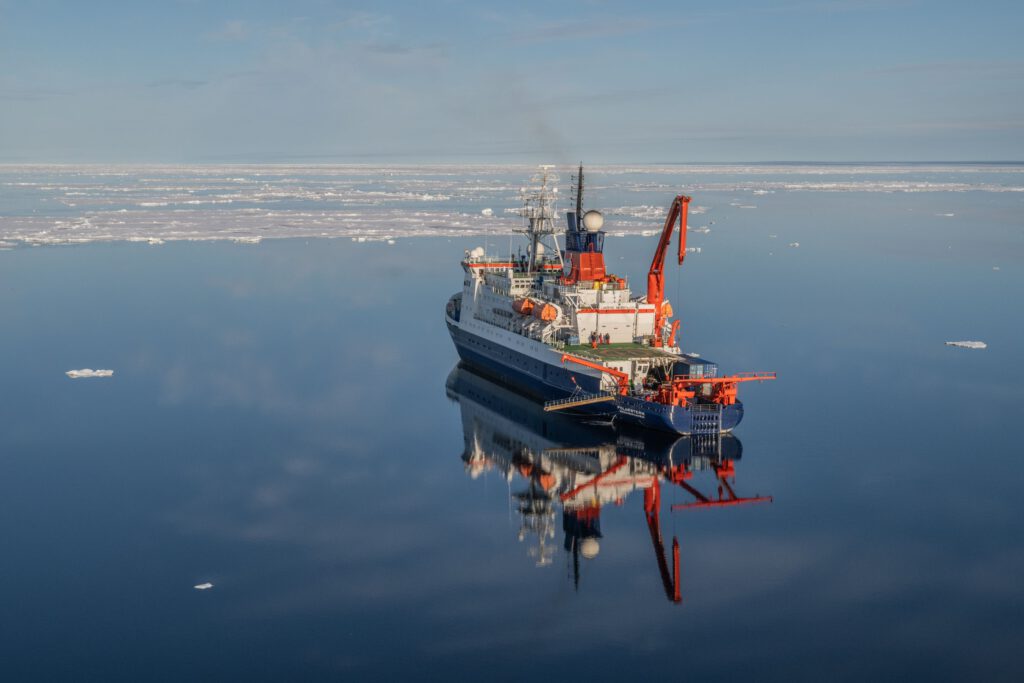
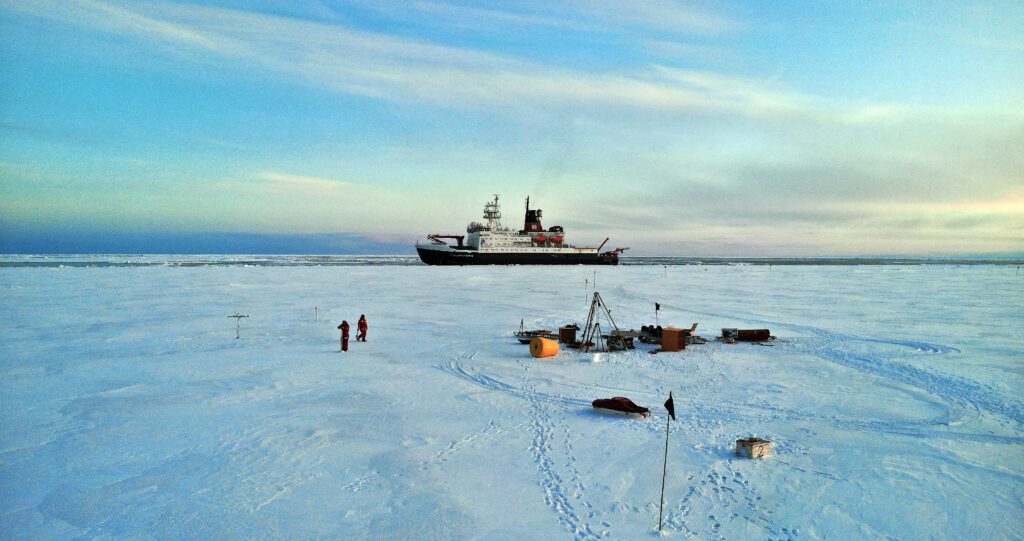
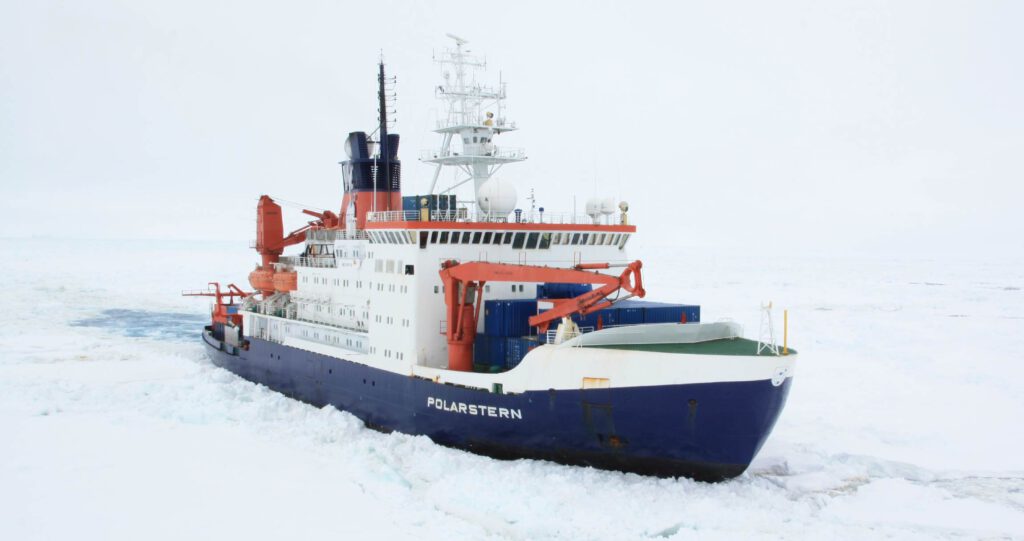
The past, present and future of the pack ice are the “stations” of the current voyage of the AWI flagship Polarstern. On the expedition in the Arctic Ocean, called CONTRASTS, an international research team is investigating the feedback between global warming and the retreat of ice floes at sea. There are three types of ice floes, representing the Arctic of the past decades, the present and the future: One-year-old sea ice from the past winter often drifts at the edge of the ice zone and is expected to dominate the Arctic of the future. Two-year-old sea ice drifts over the polar ice cap until it melts in the Fram Strait; it is characteristic of the present. Finally, multi-year sea ice persists for years north of Greenland and Canada; it originates from the so-called “last ice zone” north of Greenland and was still widespread decades ago. In the meantime, global warming is causing older and therefore thicker ice floes to melt more frequently.
“We are particularly interested in gaining a better understanding of which sea ice survives the melting in summer and which does not. This is because the Arctic is warming particularly quickly compared to the rest of the world, and warm air and water temperatures are affecting the ice from above and below,” explains Dr Marcel Nicolaus from the AWI, who is leading the expedition of 51 scientists. He continues: “Our goal is to better understand the role of shrinking and remaining sea ice in the Arctic summer, so that we can also better predict future developments in the Arctic.”
Read more about the Polarstern’s current research cruise here …
Valdivia and the sea — a profound connection
Deep performance, passion for the sea — that’s how we found our name Valdivia. After all, “Valdivia” was the name of the first German research vessel to set out on a systematic exploration of the deep sea in 1898. This connection motivates us to support the exploration and protection of the oceans in a practical way: as member of the support association of the Alfred Wegener Institute, the leading German scientific organisation for marine and polar research. We cordially invite you to join!