8 June marks ‘World Oceans Day’ – a good opportunity to provide an update on the work of the Alfred Wegener Institute (AWI), which we support.
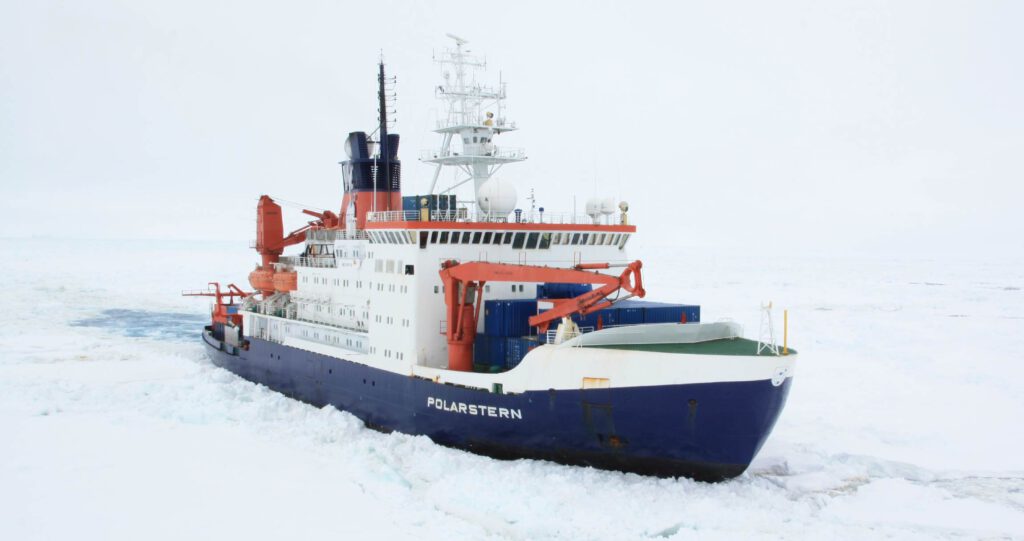
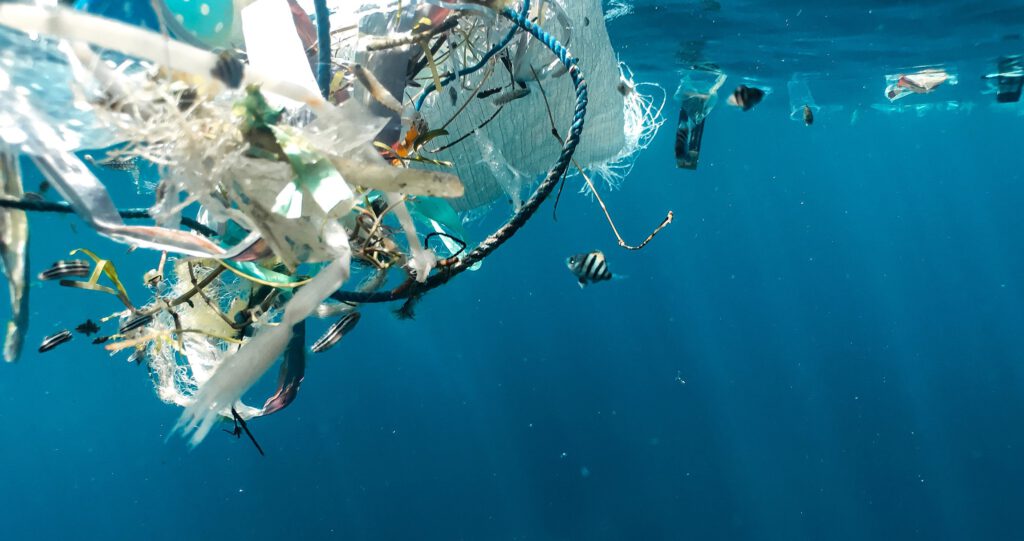
We continue our series on the voyages of the flagship of German polar and marine research with a report on the Polarstern’s latest Antarctic expedition. There is also news regarding the fight against plastic pollution in the oceans – and the hope that the international community will come together to finally agree on solutions on the necessary scale. We had already highlighted just how urgent such a decision is in the Valdivia Newsroom with our article on the “Northdrift”.
Global warming in Antarctica too
For a long time, the extent of sea ice in Antarctica was considered relatively stable – unlike in the Arctic, where ice has been declining by 12 per cent per decade in summer since satellite observations began in 1979. Since around 2017, however, significant changes have also become apparent in the Antarctic region. During the southern hemisphere summer, from December to February, sea ice extent is now also declining sharply here.
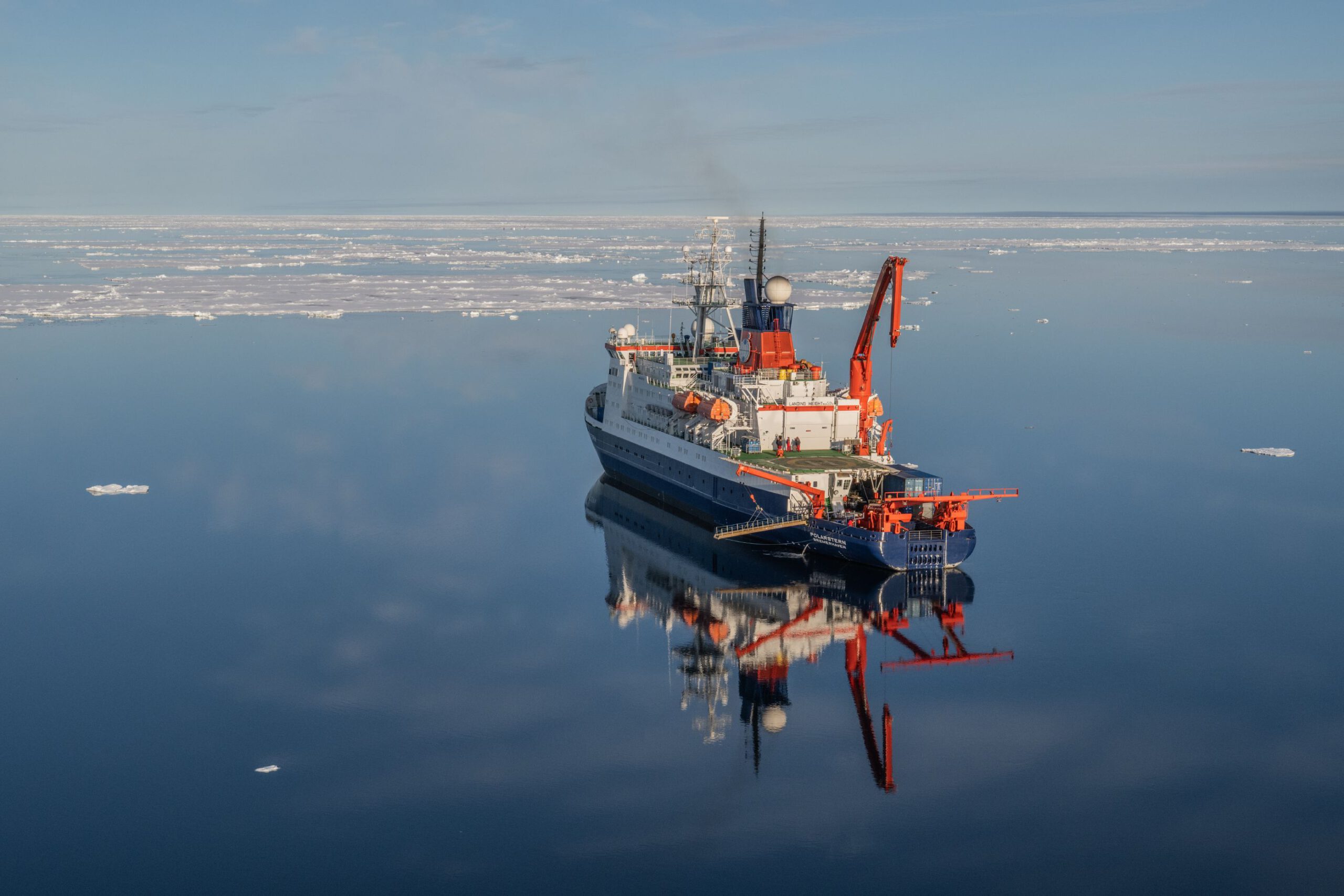
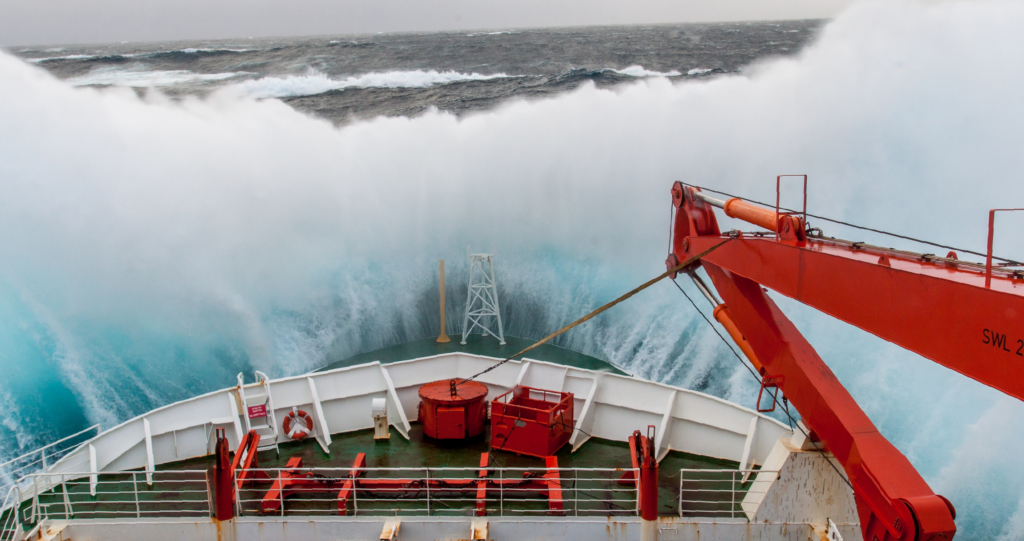
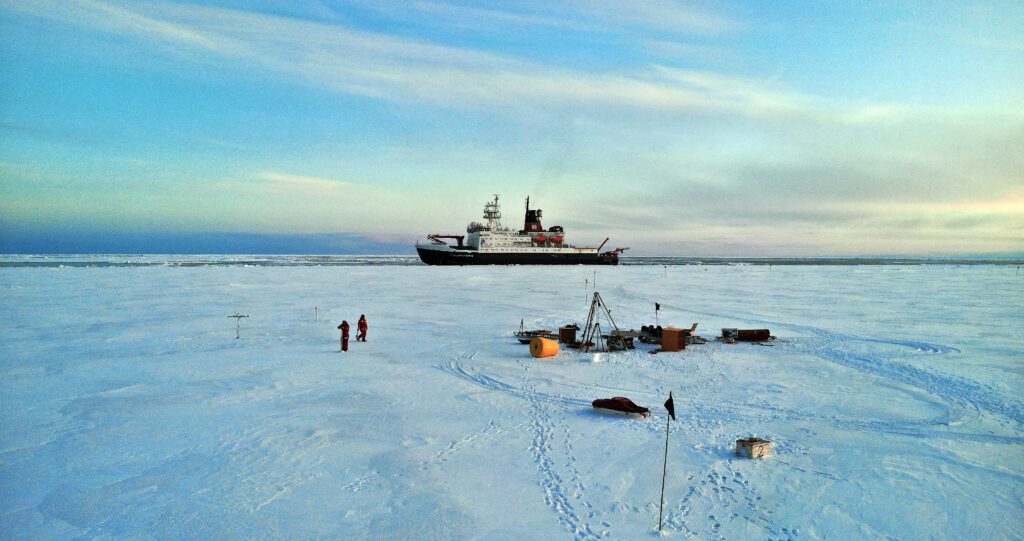
On 8 February 2026, the Polarstern therefore weighed anchor in Punta Arenas (Chile) for another voyage into Antarctic waters. On board were 50 scientists from eight different countries, as well as 43 crew members. Under the name “Summer Weddell Sea Outflow Study” (SWOS), the multidisciplinary research team investigated the north-western part of the Weddell Sea – an area of central importance for the global climate and ocean system, which, due to its difficult ice conditions, can only be explored by powerful research icebreakers such as the Polarstern.
Tracking ice melt with SWOS
“The aim of SWOS is to investigate why sea ice in Antarctica has declined so sharply in recent years and how this is affecting the ecosystem,” explained Prof. Dr Christian Haas of the AWI and leader of the expedition before the voyage began. To achieve this aim, comprehensive observations were carried out for the first time in the north-western Weddell Sea region, ranging from the seabed up to the atmosphere.
“Many of our key questions cannot be answered by satellites alone,” Christian Haas continued. “We need in-situ observations to understand the state of the sea ice, the currents and the biological communities in the water and on the seabed – and to be able to assess whether the sea ice might disappear entirely in the future.”
The Weddell Sea – remote yet significant
The expedition’s research area was a region of the Southern Ocean covered in thick sea ice almost all year round and one of the least explored areas on Earth. From here, water masses, nutrients and carbon flow into the world’s oceans – thereby influencing the global climate system. Ice and ocean interact closely in this process. They determine the formation and melting of sea ice and, consequently, the living conditions for organisms in the water and on the seabed. The decline in sea ice cover could have far-reaching consequences – potentially also for the stability of the ice shelf.
The research took place at a critical juncture: the Antarctic Ocean is warming and losing sea ice at an increasing rate. The data collected should therefore help to better understand these changes and improve climate models. In doing so, SWOS has made an important contribution to understanding a key zone of the Antarctic ice-ocean system – at a time of profound change whose effects extend far beyond Antarctica.
Research from the seabed to the clouds
The main focus of the investigations was the interactions between sea ice, ice shelves and the ocean, as well as their effects on the ecology of the zone. To this end, the scientists measured ice and snow thickness at intervals of a few nautical miles, examined the water masses and tracked how nutrients and carbon move from the surface to the deep sea. In addition, the expedition carried out numerous other research tasks:
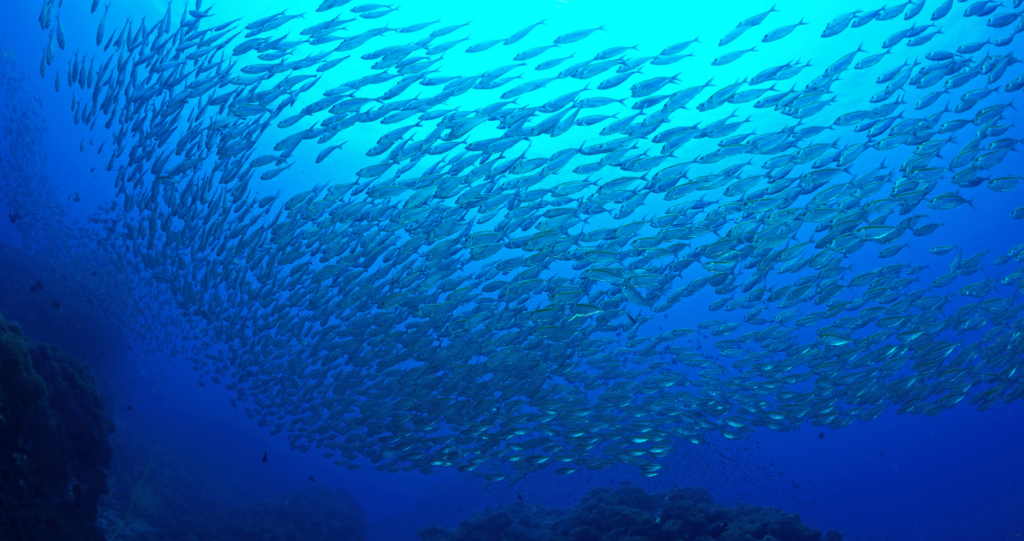
- Zooplankton, krill and fish are important components of the food web in the Southern Ocean and contribute to carbon transport. Their abundance and distribution were recorded using special nets in various water layers. The data obtained in this way show how sea ice influences distribution. This enables analyses of the role of sea ice and predictions regarding changes caused by its climate-induced retreat.
- In addition, a CTD probe (for ‘conductivity, temperature, depth’) was deployed. Among other things, it measures light intensity, salinity, oxygen, current velocity and chlorophyll concentration at various water depths.
- A submersible drone was also deployed to investigate the topography of the seabed and the effects of processes within the ice on the animal and plant communities living there.
Further research activities included observations of wildlife, measurements of the physical and chemical properties of aerosol particles as potential cloud nuclei, and additions to the International Bathymetric Chart of the Southern Ocean (IBCSO), the precise topography of which is currently only partially known.
Follow the Polarstern’s voyages live
The Polarstern is currently enjoying a well-deserved rest and overhaul in the dry dock in Bremerhaven. But as early as the beginning of July, it will set sail for the Fram Strait between Greenland and Spitsbergen. The new expedition is set to continue long-term ecological research there in the water column and on the seabed. The aim is to observe the effects of significant environmental changes and pollutants in the transition zone between the northern North Atlantic and the central Arctic Ocean. Further research topics include Arctic deep-sea biodiversity and the effects of climate change on deep-sea communities. Remotely operated underwater robots and seabed vehicles will also be deployed.
By the way, you can follow all Polarstern voyages live: with the new On-Expedition app! This also gives you access, during our summer months, to reports from the scientists overwintering at the German Neumeyer II South Pole Station.
A new opportunity for a global plastics agreement
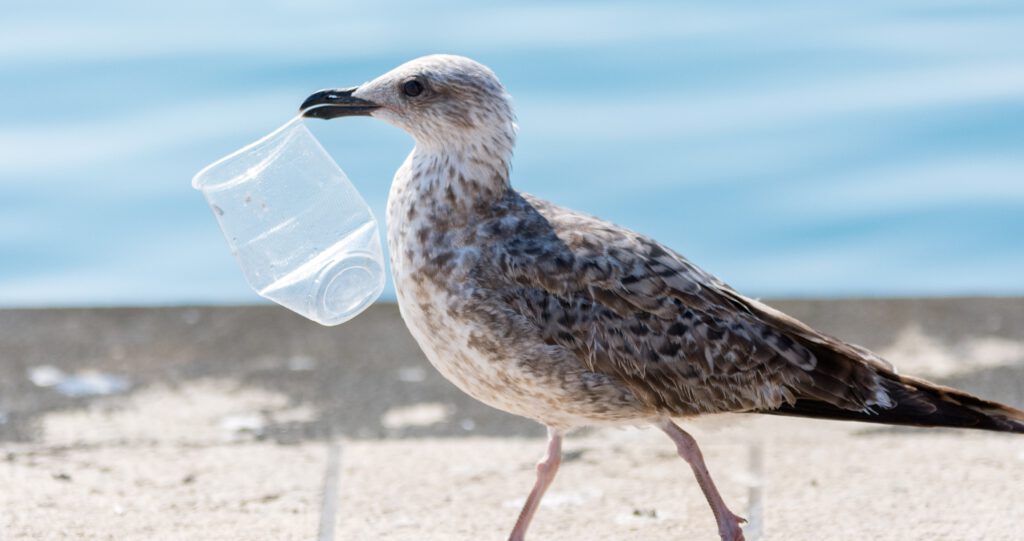
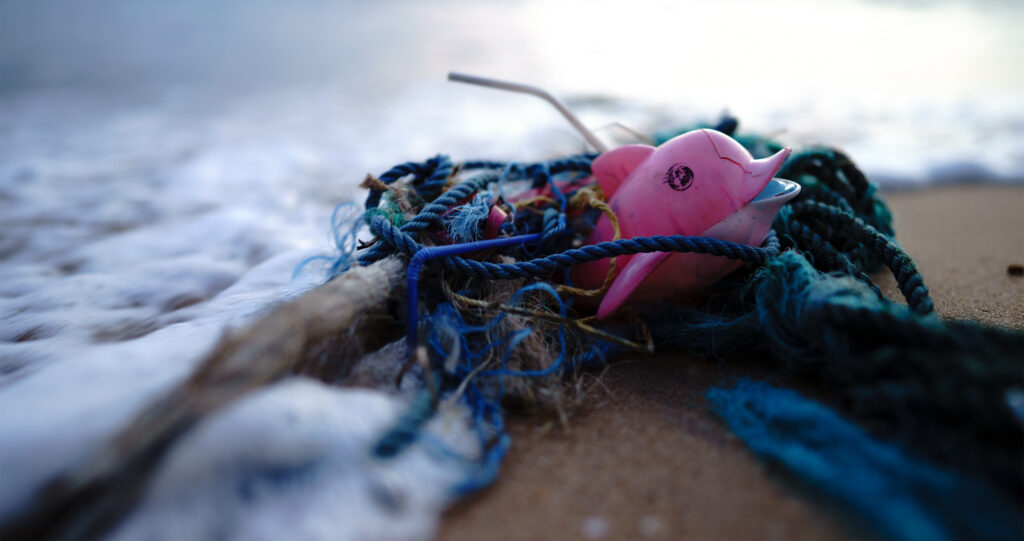
Since August 2025, an Intergovernmental Committee (INC) has been negotiating a global plastics agreement at the United Nations in Geneva – unfortunately without success so far. It has become apparent that the INC’s comprehensive mandate – to take into account the entire life cycle of plastics – has led to fragmented and protracted debates. However, without binding international rules, the entry of plastic into the oceans remains a structural problem – regardless of local initiatives.
With the election of the new chair, Julio Cordano from Chile, on 7 February 2026, hopes have arisen that a new mode of negotiation will lead to better results. A proposal to this effect came from, among others, the German participants Melanie Bergmann from the AWI, Paul Einhäupl and Linda Del Savio (Research Institute for Sustainability) and Annika Jahnke (Helmholtz Centre for Environmental Research): clear priorities, procedural rules and majority decisions are to replace the previous approach. This offers hope that marine plastic pollution will, after all, be brought under control in the foreseeable future.
You can find the latest information on the UNEP Plastics Initiative on the programme’s website.
Valdivia and the sea – a profound connection
Depth of commitment, passion for the sea – that is how we came up with our name Valdivia. For ‘Valdivia’ was the name of the first German research vessel to set sail in 1898 on a systematic exploration of the deep sea. This connection motivates us to provide practical support for marine research and conservation: as a member of the Friends of the Alfred Wegener Institute, Germany’s leading scientific institution for marine and polar research. We warmly invite you to join us!
(Image source: AWI – Polarstern)