Not Human Capital, but People: From HR to People Management
HR 2030: Daniel Bauer on the shift from human resources to genuine people management, and why people are the key factor for success in the future.
Crucial ideas in leadership bodies are not always voiced by the most vocal members. Quieter members can offer valuable insights and nuanced perspectives. So, how can leadership teams and boards ensure that these voices are heard? How can we prevent important insights from being overlooked simply because they are not presented forcefully enough?
In this feature of our Valdivia Leadership Impulse series, we focus on a personality type whose strengths in leadership are often underestimated: the introverted leader. They impress less through their presence and self-promotion than through strategic clarity, careful analysis and long-term thinking.
Discovering the quiet strength
The understanding of which skills are appropriate for a leader and lead to success has changed significantly in the 21st century. On the one hand, a more prominent public profile is today being expected; on the other, social and emotional skills are becoming increasingly important alongside experience and qualifications1. In light of this development, Harvard professor Joseph L. Badaracco examines the characteristics of quiet or introverted leaders and their significance for organisations in his book *Leading Quietly – An Unorthodox Guide to Doing the Right Thing*2 .
According to Badaracco, quiet leaders usually come across as modest and reserved; they are the antithesis of typical leaders who openly address issues at all times, take a ‘firm stance’ and thereby inspire others. A particular strength of quiet leaders is often their ability to solve difficult problems through perseverance. Their approach can become problematic, however, when they have valid objections or alternative suggestions on a topic but prefer to remain silent rather than go against the majority view.
A small group with valuable qualities
It comes as no surprise that introverts usually form a minority in boardrooms: generally speaking, managers are extroverted and enjoy communicating3,4 . However, many personality studies only measure introversion indirectly; for example, a US study from 2016 5 , which identifies six leadership types, only identifies the conscientious, ‘behind-the-scenes’ leader (3.6 per cent) as clearly introverted.
The proportion of introverts in leadership bodies can be determined more accurately using the Myers-Briggs Type Indicator. For instance, a 2024 study 6 reports the following proportions for introverted types amongst executives and CEOs (first and second scores respectively):
with the remaining I‑types all below 5 per cent. On the one hand, this confirms the picture of a numerically small group. On the other hand, it can also serve as a reminder to the extroverted majority to consciously recognise these valuable strengths within their ranks and actively involve them in discussions.
Networks as a source of support
Decision-makers in business are often under considerable pressure. They need self-confidence to tackle difficult issues, to react swiftly and decisively when necessary, or to lead their staff with the necessary authority. Badaracco has recognised that this stands in contrast to the reserve and modesty of ‘quiet leaders’. He therefore recommends that they deliberately build up a network, both within the company and in their private lives, which offers support through practical help or emotional reassurance.
An institutional equivalent of this could also be an official advisory board, which offers not only professional but also personal support – an institution to which we at Valdivia already owe many valuable insights.
Badaracco also addresses two intrinsic issues that can hinder a quiet leader. On the one hand, there is the danger of going round in circles whilst reflecting on and weighing up alternatives, without making any progress. On the other hand, there are problems that are too difficult to be solved by a single person through sheer perseverance alone. In such cases, too, a support network can help, but only if one reflects on one’s own actions and those involved acknowledge their own limitations.
The meeting room as a safe space
Even executive boards and other high-level governing bodies are teams that may, under certain circumstances, develop problematic group dynamics1 . This can easily lead to entrenched patterns where everyone conforms and prefers to go along with the general consensus rather than contributing their own ideas and solutions. Such mechanisms have an even greater impact on members who, due to an introverted personality, prefer to remain in the background anyway .
To avoid this and to harness the collective intelligence of all managers, it is first necessary to foster an atmosphere of acceptance and appreciation within the management team. The group should consciously welcome its own creative, non-conformist ideas and develop mechanisms to ensure the participation of quieter members. In his study ‘Psychological Safety in the Boardroom’ 7, Biland Sadek describes a five-step process through which psychological safety can be systematically built up, reviewed and continuously developed:
The role of the chairperson
The chairperson of the relevant committee plays a key role in engaging silent leaders and taking their contributions into account. This person need not be the same as the CEO: the aforementioned PwC study1shows “that members tend to find it more difficult to express a dissenting opinion when the chairperson and CEO roles are held by the same person. An independent chairmanship can enable the CEO to focus on their role and could help to alleviate natural tensions.’ At the same time, the chairperson can concentrate on moderating discussions, seeking out dissenting views, listening to everyone and, finally – where possible – striving to reach a consensus.
In addition, the authors of the study recommend conducting an assessment approximately every three years. This is because “individual assessments provide information on the contribution each member makes and the added value they bring to the board. These insights outweigh any concerns about potential negative effects on collegial relations.” It is advisable to use an external facilitator for this, who can provide an independent outside perspective.
Conclusion
The quality of a governing body is not determined by how many people speak, but by whether all relevant perspectives are heard. When filling leadership and advisory board positions, we repeatedly observe that sustainable success rarely arises from a combination of similar personalities. What is far more crucial is a governing body’s ability to productively combine different leadership styles and ways of thinking.
Calm, introverted leaders are therefore a key factor in their companies’ resilience and success. They work with patience, pragmatism and a long-term perspective. In doing so, they embody a contemporary board and leadership culture that is characterised neither by high-profile performance nor by entrenched conformity, but works in a reflective and disciplined manner whilst also allowing for differences of opinion.
In order to nurture such individuals, involve them and benefit from their strengths, the meetings and sessions of the governing body should be characterised by acceptance and appreciation. Such a leadership culture is supported by a moderated chairing of meetings and mechanisms that provide psychological safety. It is not uncommon for it to be precisely the quieter voices that help to identify risks earlier and make more sustainable decisions .
Sources
(Image source: istockphotos.com)
HR 2030: Daniel Bauer on the shift from human resources to genuine people management, and why people are the key factor for success in the future.
AI is changing the demands placed on interim executives: what matters is not mastery of new tools, but the ability to translate technological potential into measurable business value.
Dr Stefanie Marx-Fleck, business psychologist, on responsible leadership, difficult decisions and dealing constructively with uncertainty.
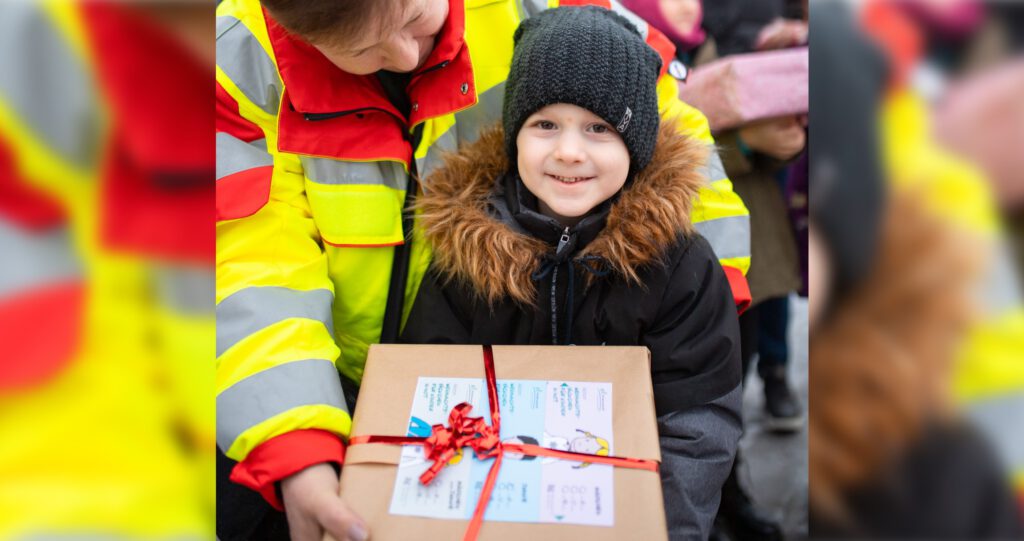
Christmas parcels are a good start:
The Kinderzukunft Foundation’s campaign. Join in!
Our new ValdiviaInsights series: Daniel Bauer in conversation with Nils Hübener, a member of Valdivia’s advisory board, on decision-making and courage.
The property sector is in the midst of a transformation – and with it, the role of leadership is undergoing a fundamental shift. Find out which skills are in demand now and what will matter most for leaders in the future in our latest Leadership Impulse in our Newsroom.
How can companies respond appropriately to today’s dynamic changes in markets and technologies? And what does the concept of the ‘Teal organisation’ mean?
A milestone, an anniversary. For 35 years, Aldea Infantil—part of our partner foundation, Kinderzukunft—has been providing children in the Guatemalan highlands with a place of safety, education, and new opportunities. Learn more about the children’s village!
More information does not automatically lead to better decisions—the ability to prioritise is becoming increasingly important for leaders. Read more about this in the latest article in our LeadershipImpulse series.
The Invisible Leadership model aims to make companies more agile and resilient. Find out more in today's LeadershipImpulse feature.
How can companies stay agile when markets and work environments are changing faster than ever?
Our latest Leadership Impulse explores “Pirate Leadership” – and what modern organisations can learn from unexpected role models.
To mark World Oceans Day, the current Polarstern expedition is demonstrating just how drastically sea ice in Antarctica is changing.
At the same time, confidence is growing that an international agreement will be reached in the fight against plastic pollution in the oceans.
AI has long been a reality—but what can decision-makers use as a guide to effectively lead their companies into the AI era without losing sight of the human element?
New roles, data-driven business models, and enhanced services: This is how the commercial real estate industry is adapting to change.
Read more in the latest article in our “LeadershipImpulse” series.
Long-term missions in space require precise role clarification, reliable decision-making mechanisms and a resilient team structure. This Leadership Impulse article highlights the governance principles that companies can derive from this in order to remain capable of acting even in uncertain times.
Today, visibility is a key leadership responsibility—it is crucial to building trust, making an impact, and shaping reputation.
Read more about this topic in this LeadershipImpulse article.
Where community thrives, the future takes shape: Easter at the children’s village run by our partner foundation, Kinderzukunft, brings new horizons to life.
Upskilling and reskilling are management tasks – because training has long been more than just an HR issue.
The CTTO combines talent development and transformation at C-level – read more in the latest LeadershipImpulse article!
As baby boomer retirements intensify talent shortages in real estate, the emerging C-suite role of the Chief Longevity Officer (CLO) offers a strategic approach to longevity-driven workforce management.

Employment teferences are important legal documents – but they only provide limited insight into how leadership works in real-life situations.
Read today's LeadershipImpulse to find out why letters of recommendation and qualified personal references provide more reliable evidence for key roles.
What will the next stage of HR evolution at C-suite level look like, and who will be shaping it? Find out why the Chief People & Culture Officer is set to become the driving force behind the future of companies.
Leadership means impact – even beyond the boundaries of your own company. The question is: how consciously do we use this influence – and what do we use it for?
Leadership is most effective where titles are irrelevant and behaviour makes the difference.
What lionesses, elephants and bonobos reveal about this – and how their strategies are rethinking modern leadership – is the subject of our new Leadership Impulse article.
Taking on responsibility as a new manager in challenging times requires attitude, orientation and the courage to make clear decisions.
How can education help children living in extreme poverty break out of the vicious cycle? At the Aldea Infantil children's village run by our partner foundation Kinderzukunft in Guatemala, it is clear that small steps can have a big impact.
Private crises among executives are silent but serious risks for organisations. What happens when the stability of those who support others falters – and who catches them?
Every year, we would like to invite you to join us in bringing Christmas joy to children in need in Eastern and South-Eastern Europe. For four years now, Valdivia Consulting has been supporting this unique campaign by the Kinderzukunft foundation. We cordially invite you to join us.
How can we secure leadership and knowledge in an industry that is ageing faster than its buildings? And how can leadership continue to succeed in the future when the most experienced minds will soon be gone? Join Valdivia in exploring this important topic.
So what does a leader do when everything's going well? The neighbourhood project's done, the new branch abroad's set up, the project development's sold with record numbers – what's next? You can find some possible answers here in the ‘Leadership Impulse’ article from our Governance series.
How much of our everyday lives is connected to the sea – and how much of our future lies in the Arctic? On 25 September, the United Nations' World Maritime Day reminds us how inextricably linked life on Earth is to the oceans.
To mark this occasion, we at Valdivia would like to present two current AWI projects.
What does sustainability mean in corporate management? How can you act in the most future-proof way possible and avoid sustainability risks? And what role do digitalisation and AI play in this?
We explore these topics today in our latest article in our series: Future: Governance.
Good leadership requires more than expertise and resilience – it requires support.
Our latest article in the Future: Governance series shows how competent assistance can truly empower managers.
Giving a future truly works: together with the Children's Future Foundation, we support children in the Guatemalan Children's Village on their journey into life.
Two moving examples show what can come from support, education and confidence.
Back from Antarctica: The Polarstern provides new impetus for climate and marine research – and for the future of German polar expeditions. A project of the Alfred Wegener Institute, supported by Valdivia as a funding partner. Read more in our latest article.
Where is the digitalisation of the real estate industry headed? Decision-makers need to prepare for constant change and new challenges. In this article, we shed light on this hot topic and show how companies can future-proof themselves..
Laughing, romping, dreaming, experiencing community and freedom... all this is the playground at Aldea Infantil, ‘our’ children's village in Guatemala. It is the heart and symbol of a carefree childhood that every child deserves. We want to keep this symbol – and invite you to join us!
Rethink leadership: In our newsroom series Valdivia Future: Governance, we introduce you to the model approach of ‘polymathic leadership’ – with promising potential for sustainable success.
In addition to the research work of the Alfred Wegener Institute, we in Valdivia are now also supporting the ‘Maritime Waste Disposal’ project of One Earth – One Ocean, or oeoo for short. Read more in the latest article in our Future series!
We have been fascinated by the world's oceans for four years, from the very start of Valdivia Now, as a member of the Friends of the Alfred Wegener Institute, we are actively involved in supporting scientific projects, educational programmes and public relations. Learn more about the important work of the AWI and its "Polarstern"!
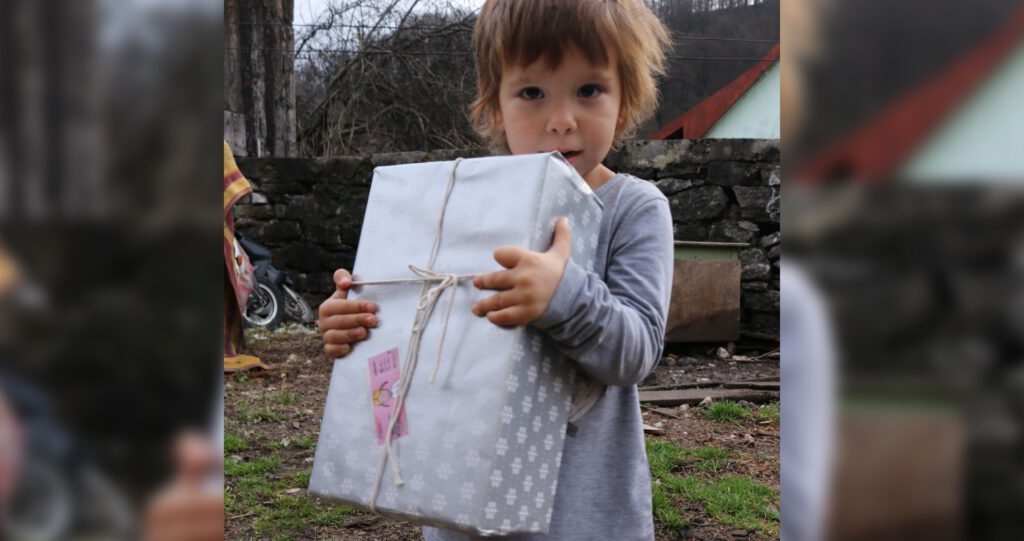
This year marks the 29th time that the Children's Future Foundation has organised its popular Christmas parcel campaign. The aim is to show girls and boys in need in Romania, Bosnia and Herzegovina and, if possible, Ukraine that the world has not forgotten them.
Currently, an extreme drought and subsequent flooding have completely destroyed the harvest in large parts of Guatemala. Hunger is now omnipresent. It is also affecting the children's village Aldea Infantil, which we at Valdivia have been supporting for more than 3 years now. Read more about the current situation in the country here.
The highlands of Guatemala are no tropical paradise. There is abject poverty in the villages. Many mothers are left to fend for themselves and often do not know how to put the next meal on the table for their children. In order to alleviate the most urgent need, the foundation therefore prioritises free meals for the children. Read on to find out more about the project.
Have you ever thought about recruiting athletes for your management team? Or what valuable skills refugees and asylum seekers have to offer? Read on about this exciting topic in our latest article.
The fight against plastic waste in the oceans has only just begun. But it already has some heroes who are achieving considerable success within the realms of possibility. One of them is 4ocean. Join us and findout more about this pioneering company - and how you can support it and benefit yourself in the process.
Our Valdivia Future series today features Earth Day, which takes place every year on 22 April - read more and make a difference!
Obviously, you can never build the roof before the foundation – but you just might place it a little bit sooner. This is made possible by Scrum, a term taken from the world of rugby, designating an agile working approach. What exactly does "scrum" entail?
As a successor of sorts of ’our’ Valdivia, the Polarstern is at the center of our series Future: Marine Research – and serves as an example for the groundbreaking scientific work on the interaction between oceans and the climate as well as approaches to marine protection.
Good news from our partner foundation Kinderzukunft: "Our" children's village Aldea Infantil receives a generous donation - 50,000 euros for "the forgotten children of Salcajá".
Even under normal conditions, life in Guatemala seems almost incomprehensibly difficult from a European perspective. The current political conflicts are further exacerbating the situation.
In the children's village "Aldea Infantil", Kinderzukunft provides effective and sustainable help on site.
Today's article sheds light on the current political situation and is also an appeal to provide support - because everyday things are needed locally that could easily be realised with a small donation. Read more here!
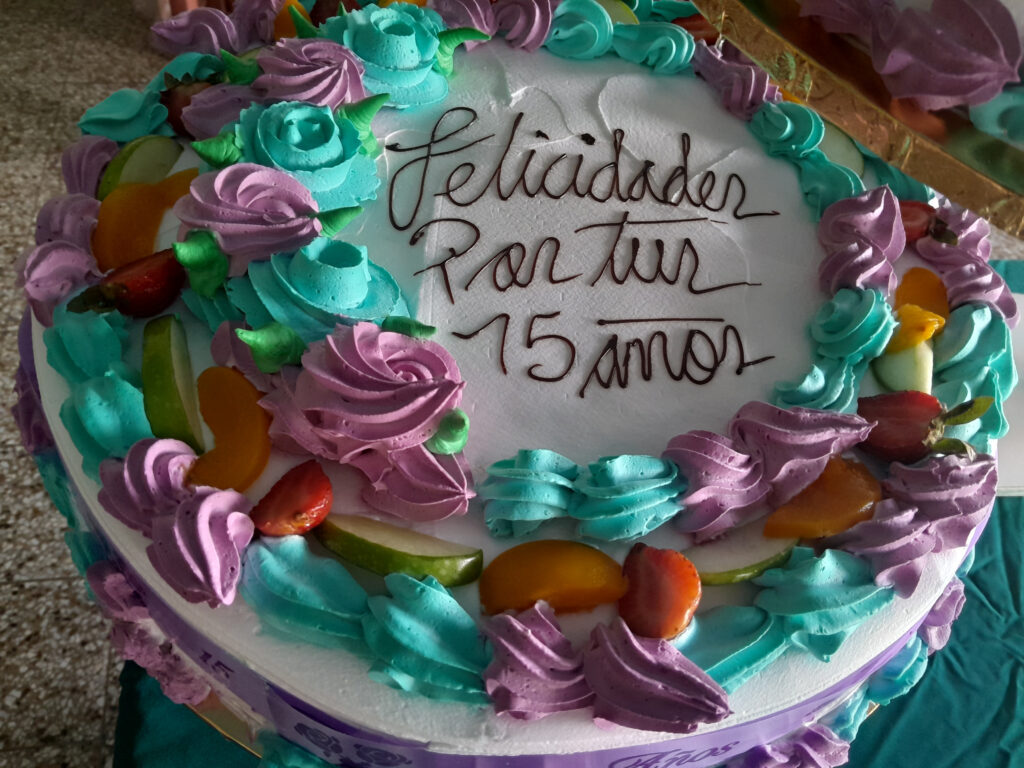
In most cultures, the transition from child to fully-fledged member of society is a special moment for the children themselves and for their relatives. A special 15th birthday party to mark this occasion is celebrated throughout Latin America. Read here how the children at the Aldea infantil children's village celebrate this day!
Christmas Parcel Campaign of the Stiftung Kinderzukunft: Learn more about the campaign and its background here.
Why not join in and support our partner charity with this year's Christmas Parcel Drive?
Congratulations: The Stiftung Kinderzukunft celebrates its 35th anniversary. Here we introduce you to our partner charity and give you an insight into the philosophy, the projects and the aim of the foundation, from its establishment until today.
We at Valdivia have the protection and preservation of the oceans and their inhabitants at our heart. Learn more about NABU in this feature and how this well-known organisation fights to turn the oceans plastic-free.
Sustainability has made it into the minds of people. Find out more in the new Valdivia Future feature about what ithis means with regards to leadership of a company and the human element of it all.
Join our Managing Partner Daniel Bauer today on his trip to the children's village of our partner foundation Kinderzukunft in Guatemala!
This brand new article of our Valdivia Future Series deals with the state our oceans are in – this time in combination with a hot tip for a very special kind of vacation.
How can corporate governance become more sustainable? In our expert tips, we shed light on a truly valuable approach to better time management,
The UN Decade of the Oceans. In our article for our "Future" series, we present the film "Northdrift" today. Plastic waste in the world's oceans and the protection of the seas - important issues for us at Valdivia that we would like to help bring to more attention.
Join us and support Kinderzukunft and the Christmas parcel project 2022. we all can make a difference!
What is the way to sustainable corporate leadership … to Good Governance as defined in the United Nations' goals? Find out more in our new ESG related feature.
Since 1988, Stiftung Kinderzukunft has been providing sustainable aid for children in need. In this article, we introduce you to the project in Guatemala which we proudly support and which is particularly close to our hearts at Valdivia.
The 12th "World Oceans Day": A special day for Valdivia and all those who love the oceans and want to protect them right now, in the midst of climate change.