Daniel Bauer: From tomorrow, neither Excel nor PowerPoint will work. What percentage of the property sector would be paralysed at first? What would you personally miss the most?
Nils Hübener: That would be quite a blow … I reckon a surprising number of people would be rather at a loss at first. Not necessarily because they don’t understand property, but because decisions these days are heavily underpinned by models and comparative figures. I’d miss the ability to quickly discuss complex issues more than I’d miss Excel itself. Ultimately, you have to be able to answer the crucial question even without a model. What, actually, is the investment rationale here?
When was the last time you had to make an important decision where your gut feeling told you something different from the figures, and who did you end up trusting?
When it comes to property investments, for me, gut feeling isn’t a counter-model to the figures, but rather a sort of early-warning system. If a business case looks excellent on paper but something feels off about the location or the operator, you know instinctively where you need to dig deeper. The crucial question then isn’t ‘gut feeling or the figures?’, but: Which assumption in the Excel spreadsheet explains my sense of unease?
And, above all, beyond the figures: property is so exciting precisely because it’s so wonderfully complex … Ultimately, both sides have to fit together.
What do you think is more dangerous: a bad decision or a good decision that comes three months too late?
In property, a good decision that comes three months too late is often more dangerous than you might think. An investment doesn’t have to be perfect, but it must be sufficiently well understood and feasible at the right time. What use is a business case with 95 per cent certainty to me if the property has already been “snapped up” by someone else? Bad decisions aren’t great either, of course.
Has there ever been a decision in your career that seemed entirely logical on paper but nevertheless turned out to be the wrong one? How did that change things for you?
Unfortunately, there have been. Such decisions are often more instructive than clear-cut successes. Above all, I’ve learnt that a model can never be better than the assumptions on which it is based, and that you have to distinguish between model risk and market risk. That’s why, when looking at a business case, I’m at least as interested in which assumptions would have to be wrong for the logic to no longer hold. And once again on the subject of complexity: property is a social asset and must function sustainably for its users … that can’t be expressed in figures alone.
And conversely: was there ever a situation where many people said, ‘That won’t work’, but you still thought, ‘Yes, let’s do it’?
Yes, sometimes the difference lay in the fact that others were looking at the current state of affairs, whilst I was focusing on the potential state or the future development of the site. Perhaps the question is rather: is the risk really that bad, or has it simply not been addressed sufficiently yet? Or is the perspective perhaps wrong or too narrow?
How can you tell relatively quickly these days that someone is hiding behind analyses because they actually don’t want to make a decision?
When two new analyses are demanded for every question answered, and the decision still doesn’t change, that’s when things get interesting. At some point, additional information is no longer a means of reducing risk, but an expression of fear of making a decision. If you cannot make a decision when you have 85 per cent of the information, you’ll probably still be asking for an Excel spreadsheet showing 120 per cent even when you have 95 per cent. Here, it’s important to think in terms of robustness and opportunities and to give sufficient consideration to the fundamental basis of the investments.
The Investment Committee has ten minutes left and is allowed to ask exactly three questions. Which three must be answered before you give the green light?
Firstly: What is our investment thesis – in one sentence? Secondly: Which two or three assumptions must hold true for us to achieve our return target, and how robust are these assumptions? Thirdly: What could really cost us money in the long term, and can we influence this risk, or can we only passively hope that it does not materialise?
Fourthly 🙂 (I’m afraid this has to be included): Are the fundamentals convincing (sustainable rent, (energy) efficiency, replacement costs, etc.)? If these questions cannot be answered clearly, even the thick investment memorandum is of limited help to me.
In your opinion, which key figure receives too much attention in property decisions, and which too little?
In my view, the IRR often receives more attention than is actually helpful, because it looks precise, even though it is based on many uncertain assumptions. On the other hand, too little attention is paid to the quality and resilience of the cash flow – in other words, the question of where the money actually comes from and how robust this cash flow is in poorer market conditions. I’d rather invest in a slightly less spectacular IRR with a resilient cash flow than the other way round. And here, too, the fundamentals matter: how easily can production take place in the market in question? Can I expect shortages? Am I sustainably competitive?
What makes you more suspicious these days: a poor business case or one that looks astonishingly perfect?
Quite clearly, a business case that looks too perfect. Property markets are complex. If, in a model, exit yield, rental growth, vacancy rates, capex and financing all appear optimal at the same time, a few warning lights should come on. A good business case is allowed to have weaknesses. The crucial thing is that you are aware of them and actively address them.
What, in your view, distinguishes a good idea from an actually investable idea, and why do even good ideas so often fail at the implementation stage?
A good idea may initially describe nothing more than a possible, potential value. An investable idea takes into account how, when and through what means this value can actually be realised. In property investments, therefore, failure often stems not from the idea itself, but rather from planning permission, the speed of implementation or even the courage to make decisions. For me, investability begins when a story is transformed into a robust plan with clearly defined responsibilities and realistic assumptions.
As a member of the advisory board, you know Valdivia well enough to truly understand our issues, yet you have the necessary distance from day-to-day operations. What can sometimes be seen more clearly from the outside than from the inside?
From the outside, it is sometimes easier to see which issues are truly strategic and which merely appear urgent. In day-to-day operations, one naturally focuses on today’s problems. I hope that, as an advisory board, we can ask more frequently whether the company is actually solving the right problem (for its customers).
When does a good advisory board need to become a thorn in the side, and how does a company know that the advisory board is actually making a difference and not just sitting around the table four times a year?
An advisory board must start to be a thorn in the side at the very latest when everyone in the room is of the same opinion – especially if that opinion has perhaps become too comfortable. Its value becomes apparent in the medium term by whether better decisions are made following a meeting. A good advisory board should therefore not only monitor, but also pinpoint precisely the assumption that nobody questions anymore.
If you were allowed to ask us at Valdivia just one question – one that we probably ask ourselves far too rarely – what would it be? What would it be?
‘What would we do differently today if we could build Valdivia from scratch all over again?’ And after that, we can ask ourselves the follow-up question together: why aren’t we actually doing these things today? Sometimes successful companies are more bound by positive results than by their strategy.
And if you had to rein us in on one point and say on another: “Less analysis. Just do it.” Which two areas would those be?
Perhaps in line with the thoughts on investment decisions we discussed earlier: we should be more cautious about anything based on ever-finer market analyses, even though the key uncertainty might not be resolvable with supposedly more accurate data.
I’d say “just do it” in situations where the hypothesis and the rationale are already clear, and further analysis would only delay the decision even further.
When we look back at today’s property sector in 2035, what will we be surprised by and say: “Unbelievable that we still did it that way back then”? What will we be surprised by and say: ‘Unbelievable that we still did it that way back then!’?
We’ll probably be surprised at how much time we still spend today compiling data from various systems, checking its validity and then transferring it back into presentations. We’ll also wonder why we so often relied on average figures when making investment decisions, even though property is extremely local and property-specific.
“If you could give your 30-year-old self just one piece of advice on decision-making, what would it be?”
“Don’t wait for absolute certainty … Have the courage to make a decision when you know enough to be able to bear the consequences of that decision.”
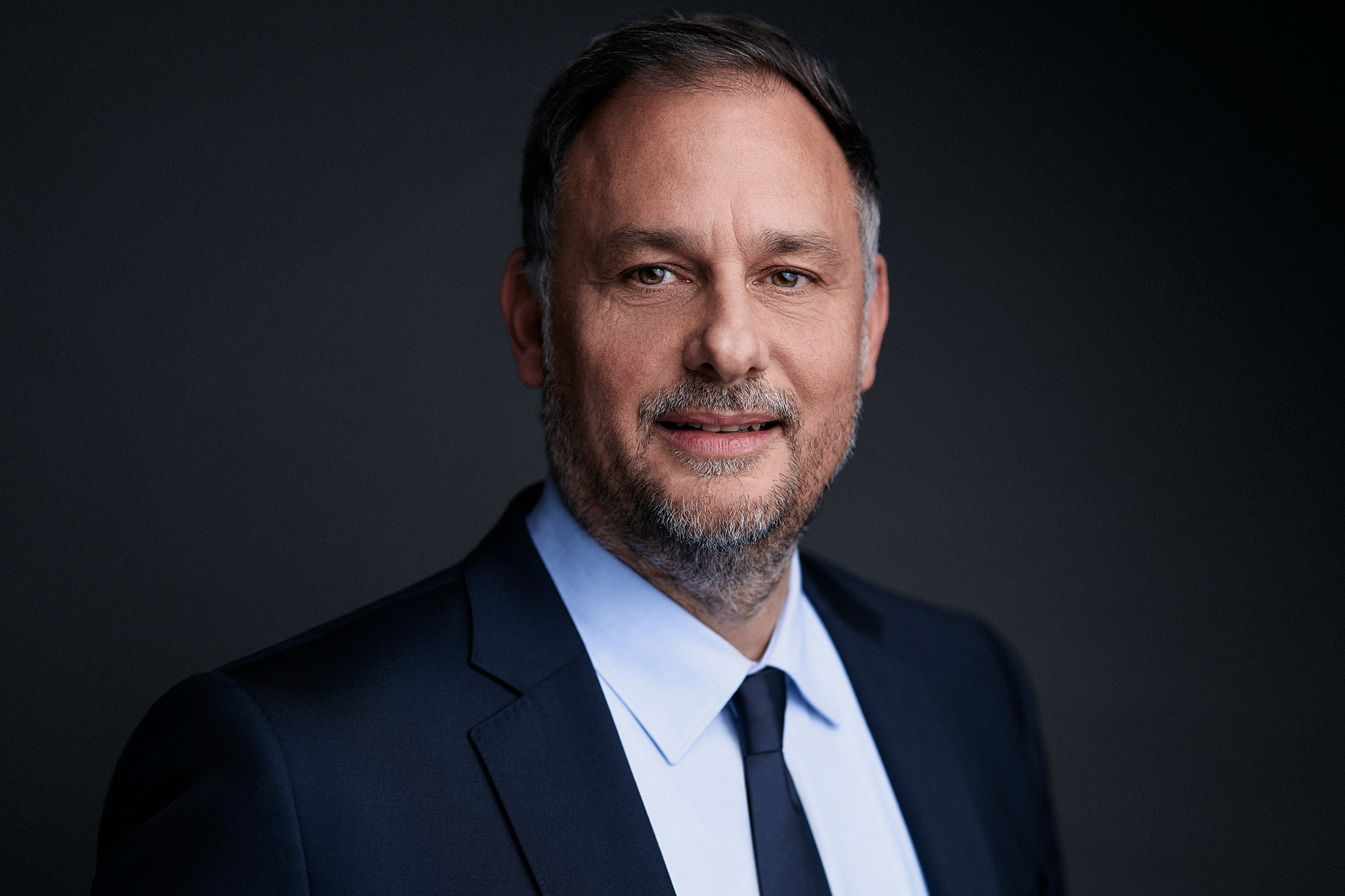
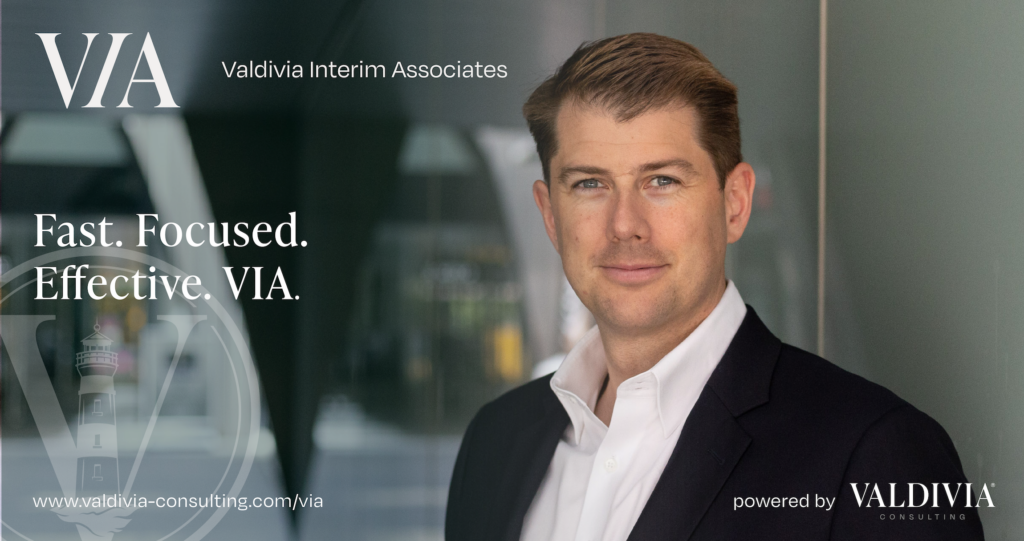
About Nils Hübener:
With over 25 years’ experience in every aspect of the real estate industry, Nils Hübener is one of the most prominent figures in European investment and asset management.
He gained international experience at an early stage of his career at IBI Real Estate in Berlin, London and Paris, before joining Deutsche Bank Real Estate as Head of Transactions for Western and Southern Europe. He then held long-standing pan-European key positions at SEB Asset Management as Head of Real Estate Management and at BNP Paribas REIM as Global Chief Investment Officer. He then served as CIO, responsible for European investment and asset management, at Corestate Capital in Luxembourg. Most recently, as Chief Executive Officer of the Dr. Peters Group, he oversaw the company’s strategic realignment and expansion. He is currently supporting Noratis AG in its ongoing restructuring as a non-executive CIO, while also advising international investors on their activities in Germany.
He obtained a degree in urban and regional planning from the Technical University of Berlin and Oxford Brookes University, and a master’s degree in European Property Development & Planning from the renowned University College London.
His expertise covers the entire institutional real estate investment value chain – from acquiring and structuring complex transactions to managing assets and portfolios internationally. His multilingualism strengthens his endeavour to build bridges between markets, cultures and investors. In addition to German, he is fluent in English and French.
(Image source: Business & Commercial Photographer Sebastian Schueler, )