What does a leader do when everything is running smoothly? The neighbourhood project is complete, the new branch abroad is up and running established, the project development has been sold with record figures – what happens next?
This is where true leadership qualities come to the fore. A football coach cannot rest on the laurels of a championship win. The same applies in companies: success is the beginning of the next stage, not the end.
In general, leadership in 2025 is more than just managing processes and achieving goals. A strong leader ensures that organisations remain successful, resilient and innovative in the future. In the “Governance | LeadershipImpulse” series in the Valdivia Newsroom, we recently highlighted the topic of “Sustainable Leadership”. Today, we will take a look at the aspects of leader tasks and responsibilities when the company is stable. After all, what happens when everything is running smoothly and everyone is satisfied?
Core tasks in times of success
Success tempts us to continue on the same course. However, as in football, leadership must continue. According to the results of a recent study carried out by the German Association for Personnel Management1 , modern managers should question processes, identify potential and look to the future. They create structures for innovation and promote a culture of learning and development. In addition to the classic focus on strategy and efficiency, newly conceived and polymathic approaches are gaining in importance. Managers who bring together different disciplines lay the foundation for innovation and future viability.
Avoiding complacency
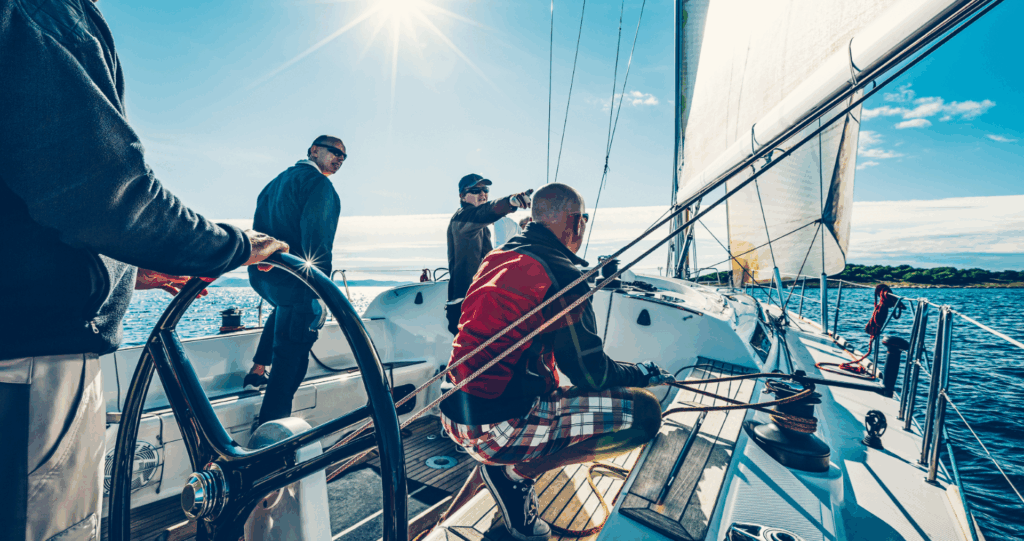
A key leadership principle is to prevent complacency. Successes must not become a comfort zone. As in rowing, only when everyone pulls in the same rhythm does the boat stay on course. A coach ensures precision, team spirit and clear instructions – in the same way, a manager keeps enthusiasm alive in the organisation. This includes a culture of feedback, realistic but ambitious goals and exemplifying one’s own willingness to change – even in times of success.
Continuous improvement as an attitude
Standing still means falling behind – in sport as in business. A successful team stays at the top by continuing to develop its playing style and remaining open to innovation. Leaders naturally keep an eye on key figures: finances, customer satisfaction, employee engagement, process quality and innovative strength. These indicators ensure long-term success. At the same time, leaders establish structures for continuous improvement.
This is particularly evident in sport: leadership in success is like an ultra-marathon. It doesn’t end after the marathon, because the next stage is already waiting. If you want to survive in the long term, you have to pace yourself wisely, achieve intermediate goals and keep moving. In the same way, leaders succeed in turning individual successes into a lasting success story.
Securing success – the will to develop further
What happens next when you are successful? There are parallels in sport that show how to remain competitive. Roger Federer, the celebrated tennis star with 20 Grand Slam titles, repeatedly adapted his style to become better. Michael Jordan, six-time NBA champion and legend of the Chicago Bulls, worked hard, changed his role in the team and set new standards – thus becoming not only a player but also a leader. Cristiano Ronaldo, five-time Champions League winner and also five-time World Footballer of the Year, remains at the top of his game even after many successes because he trains consistently, eats a disciplined diet and constantly adapts his game tactically. True excellence is self-management and the will to develop further.
These examples show that true leadership means building on successes and continuously developing. Especially in phases of success, leadership means optimising processes and strengthening the adaptive performance2 of the team. Studies show that managers can actively promote the adaptability of their teams. A key approach to this is the continuous improvement process (CIP)(3):it offers managers a practical tool for strengthening participation, motivation and willingness to learn. Modern leadership is thus evident not only in strategic decisions, but above all in the consistent support of everyday improvements – a decisive factor for sustainable success.
Competence radar – 16 skills
These impressive paths to success are, of course, only possible if, in addition to strong motivation and passion for one’s own work, a broad range of skills is also available. Today – in times of crisis as well as in times of success – in addition to classic competencies, many new characteristics of modern leadership2 are in demand, often summarised under the term “humble leadership“4, such as self-reflection, openness and modesty.
- Strategic thinking – recognising opportunities, planning for the long term, providing guidance.
- Visionary power – painting a picture of the future and inspiring teams.
- Willingness to innovate – building on successes, embracing new ideas.
- Sense of responsibility – taking decisions and building trust.
- Ability to delegate – promoting talent and creating freedom.
- Empathy – listening, understanding and strengthening bonds.
- Strong communication skills – communicating clearly, openly and appreciatively.
- Decisiveness – remain capable of acting, even in uncertain situations.
- Resilience – overcoming setbacks and radiating stability.
- Self-management – confidently managing time and priorities.
- Integrity – exemplifying values and acting authentically.
- Role model – providing guidance through your own behaviour.
- Coaching & mentoring – recognising potential and promoting development.
- Adaptability – Accepting and shaping change.
- Results orientation – setting goals and pursuing them consistently.
- Continuous improvement – establishing structures for continuous learning.
Carrying success into the new season
Leadership in times of success means not standing still. This is when it becomes clear whether a manager thinks strategically, promotes talent and keeps motivation and momentum high. Sustainable and modern leadership is relevant not only in crises, but also in situations of success – especially through values, culture, participation and adaptability, as a study by the Niederrhein University of Applied Sciences 5shows. The characteristics described help to use success as a springboard for further development and to position the organisation for the future.
This is again impressively demonstrated inthe world of sports: a coach of a championship team is not content with defending the title. He refines tactics, promotes new talent and keeps ambition alive so that a victory becomes a lasting success story. In the same way, leaders succeed in laying the foundation for sustainable top performance in times of success.
Sources (selection)
-
- German Association for Human Resource Management, LEADERSHIP, Five Trends in Modern Leadership, _16-23.pdf
- Bonini A, Panari C, Caricati L, Mariani MG (2024) The relationship between leadership and adaptive performance: A systematic review and meta-analysis The relationship between leadership and adaptive performance: A systematic review and meta-analysis | PLOS One
- Innolytics: https://www.innolytics.de/kvp-kontinuierlicher-verbesserungsprozess/
- Harvard Business Review, February 2025, The Power of Humble Leadership
- Niederrhein University of Applied Sciences, Future Leadership. Leadership skills for the new world of work (March 2024) PdF_Skript_SS2020
(Image source: dreamstime)