What does leadership look like when position is irrelevant? When titles don’t count – and only behaviour matters? How does orientation arise when it is not power but presence that is decisive?
And what can we learn from systems that have been functioning stably for millennia – without organisational charts, without KPIs, without leadership programmes?
This article explores what lionesses, elephants and bonobos can teach us about effective leadership and the strategies that managers can adopt.
These key questions run like a thread through our previous Leadership Impulse articles – from ‘Leading sustainability’ to ‘Leading in success’ . And there is hardly a place that provides clearer answers to these questions than nature. There, leadership does not arise from position or status, but from lived behaviour: from clarity, orientation, presence, relationship and the ability to make decisions at the right moment. This is precisely where its power lies – and its value for modern leadership.
Current behavioural biology studies from Vienna, Berlin and international research teams confirm this picture: Animal communities often live by key leadership principles more precisely and consistently than we know from organisational structures. They demonstrate clear role definitions (lionesses), stable orientation in uncertainty (elephants), relationship-oriented conflict resolution (bonobos), situational distribution of competence (wolves) and leadership that works through attitude rather than words (horses).
Our latest article in the LeadershipImpulse series picks up on these findings and shows how managers can integrate these natural mechanisms into their own leadership practice – not as a metaphor, but as concrete behavioural impulses for effective leadership:
Clarity & orientation: creating structure instead of controlling
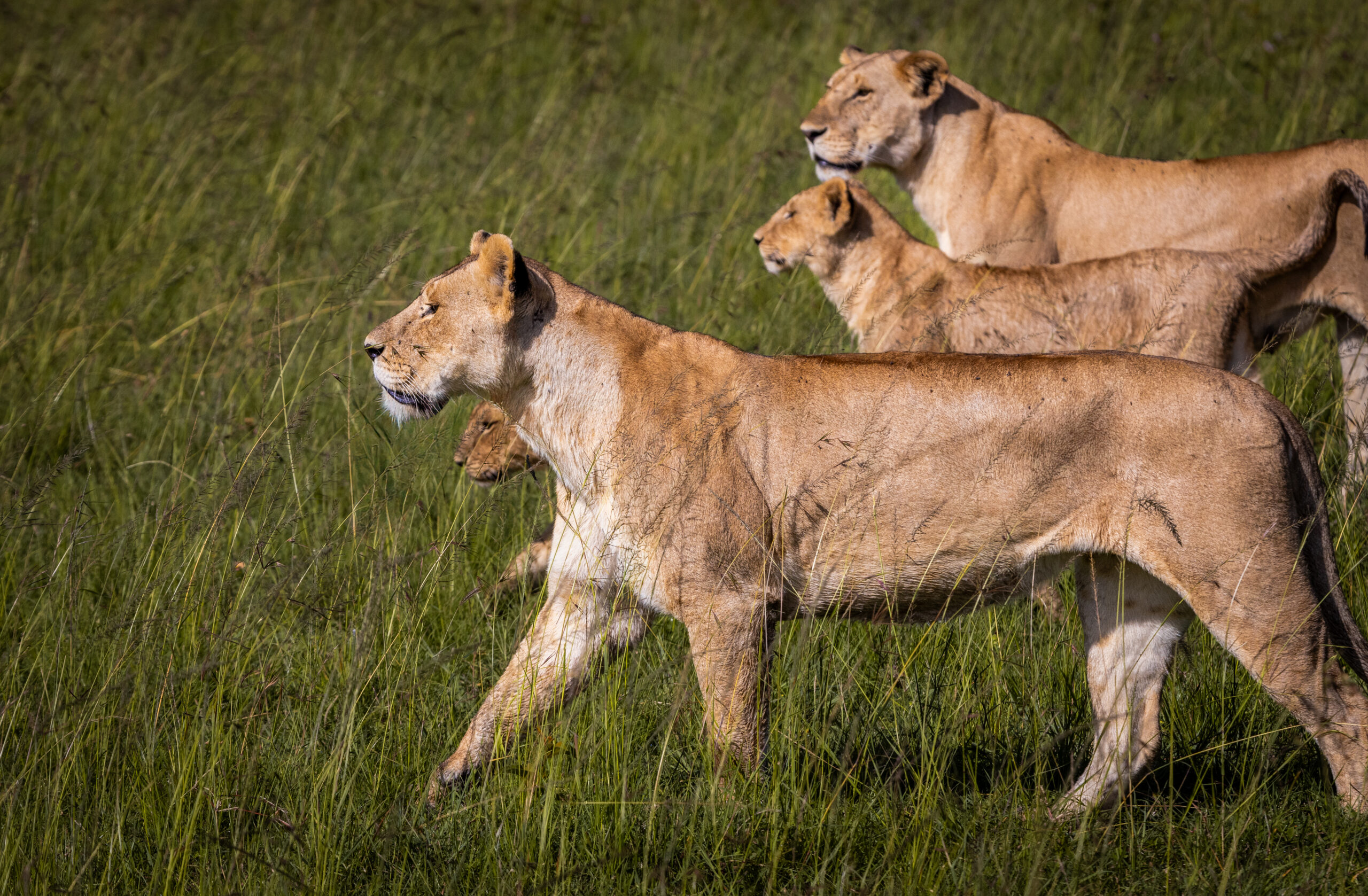
Nature impressively demonstrates that leadership is effective where there is clarity. Lionesses lead their pride by distributing tasks according to individual strengths and energy profiles – not according to tradition, hierarchy or dominance.
The cooperative hunting communities of octopuses and fish also clearly demonstrate that success comes when roles are clearly defined and communication signals are precisely coordinated.
For organisations, this means that
roles should not be understood as static, but should be regularly reviewed, consciously formulated and clearly delineated from one another. Orientation comes from clear responsibilities – not from tight control. A brief role reset at the start of new projects or when market conditions change reduces friction losses and noticeably increases collective effectiveness.
Stability & self-regulation: calmness as a leadership quality
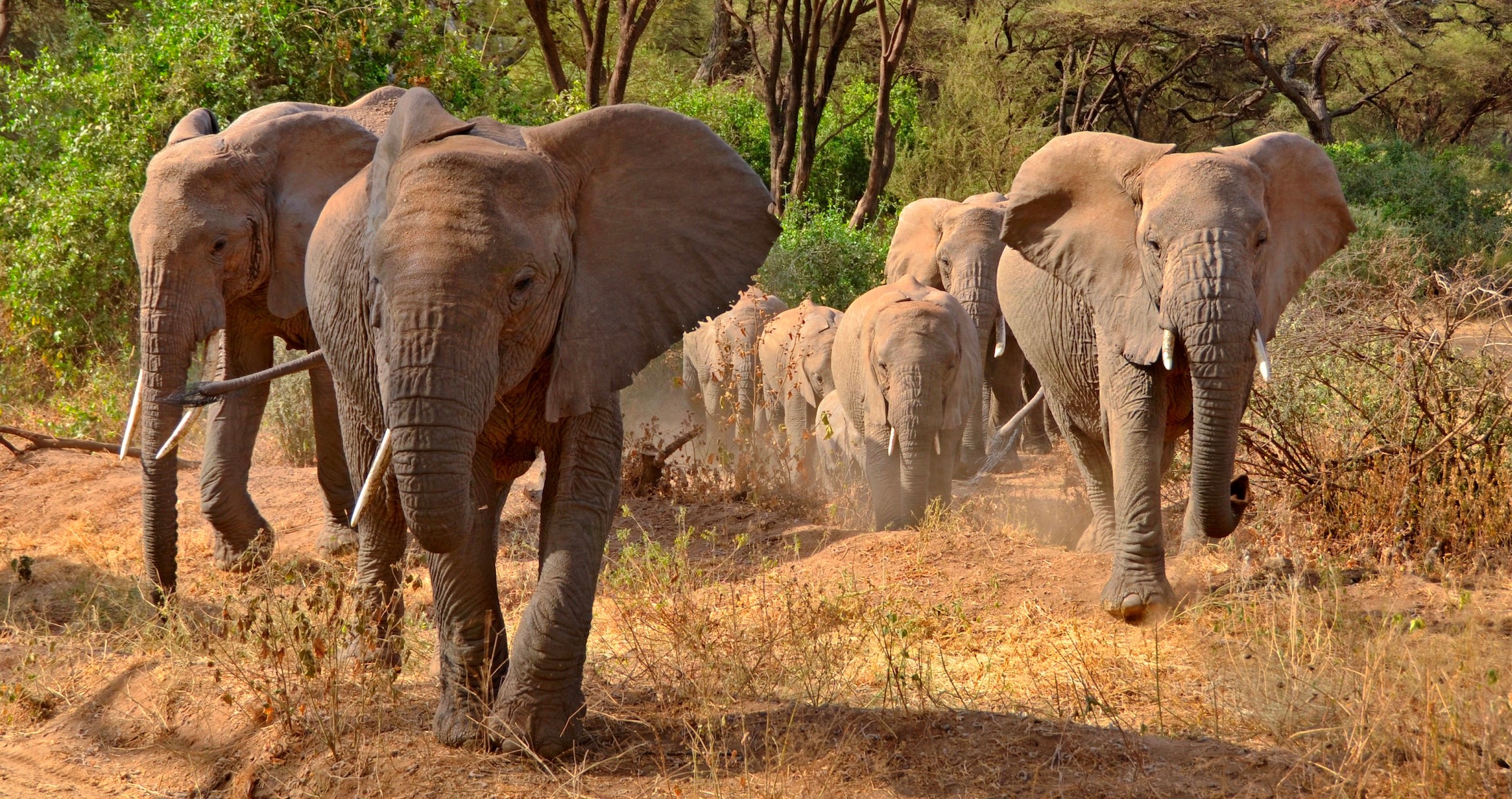
Herds of elephants demonstrate how stable leadership is based on inner calm and experiential knowledge. The matriarch leads not through pressure, but through assessment, foresight and an attitude that radiates confidence. In moments of high complexity, it is not volume that decides – but regulation.
For managers, this means:
In challenging phases, your own emotional and cognitive stability is the strongest point of reference for teams. Those who embody calmness create trust, especially when dynamics become confusing. Self-regulation is thus becoming one of the most important leadership skills of our time – across all industries.
Relationships & psychological safety: leadership as social architecture
A direct comparison between bonobos and chimpanzees shows how strongly leadership styles shape culture. Bonobos ensure cohesion through closeness, diplomacy and social intelligence – chimpanzees through dominance and competition. The 2024/2025 pet study confirms that social bonds have a profound influence on behaviour.
For leadership reality, this means:
Relationship orientation is not a ‘soft factor’ but a strategic leadership tool. Short, regular discussions without any intention of control strengthen psychological security – the basis for innovative strength, commitment and team stability. Culture is not created through programmes but through consistent relationship building.
Situational competence: leadership as a flexible system, not a title
Dr Jennifer Hatlauf’s wolf research (BOKU Vienna, 2025) exemplifies how situational leadership works: responsibility shifts to where the highest level of competence lies. Expertise instead of status – context instead of position.

For organisations, this means:
Leadership is a dynamic process. Teams become faster, clearer and more responsible when managers allow situational competence and openly identify who has the best basis for decision-making on which issues. This creates ownership and increases the quality of joint decisions.
Impact & presence: attitude as a leadership tool
Horses in equicoaching do not respond to words, but to energy, body language and inner alignment. Chameleons remind us how powerful non-verbal communication can be when used consciously. Impact comes before arguments – and often independently of them.

For managers, this means:
A sharpened impact profile is essential. Questions such as ‘How do I come across when I am calm? Under pressure? When uncertain?’ form the basis for a presence that provides orientation. An authentic attitude and clear body language are among the most effective – and at the same time underestimated – leadership tools.
Role innovation & flexibility: strengthening structures instead of holding on to them
The role model of seahorses shows that systems become stable when roles are designed to be functional rather than traditional. Nature does not follow conventions – it follows the principle of effectiveness.
For modern leadership, this means:
The courage to innovate roles, conscious rotation and shared responsibility strengthen resilience, creativity and adaptability. It is not the usual roles that create success – but the right ones.
Conclusion: Behaviour beats position
These insights are much more than biologically inspiring observations – they confirm fundamental leadership principles that we have repeatedly emphasised in our previous leadership impulses: clarity, interpersonal skills, situational sensitivity and a consistently practised leadership attitude.
Effective leadership does not come from formal power, but from behaviour. Nature impressively shows us how leadership works when it focuses on clarity, attitude, relationships, perception and situational competence. Animals lead through behaviour – and create orientation because they embody calmness, use expertise, form bonds or consciously assign roles.
For modern organisations, this means that
leadership is less about what we say and more about what we do, radiate and enable. This is precisely the difference between management and true leadership.
Sources
Studies & scientific papers
-
-
- Study by BOKU Vienna – Wolf behaviour & conflict management
- Prof. Dr. Jan Wirsam, HTW Berlin – Social-cooperative leadership styles
- Pet study 2024/2025 – HorseFuturePanel
- https://hunderunden.de/artikel/haustierstudie-2425
- https://www.lifepr.de/inaktiv/takefive-media-gmbh/haustier-studie-2024–2025-erforscht-trends-rund-um-heimtierhaltung-nachhaltigkeit-und-das-einkaufsverhalten/boxid/991191
- Study on cooperative hunting communities of octopuses and fish (2024)
Further reading and articles
-
- Leadership inspiration: impact and personality
- https://grundl.de/blog/wirkungspersoenlichkeiten-fuehrung/
- Beck eLibrary – Publications on leadership
- https://www.beck-elibrary.de/document/download/pdf/uuid/a30927e8-6c99-32a6-9908–1d47b352882a
ntscheidungsgrundlage hat. Das schafft Ownership und erhöht die Qualität gemeinsamer Entscheidungen.
Wirkung & Präsenz: Haltung als Leadership-Werkzeug
Pferde im Equicoaching reagieren nicht auf Worte, sondern auf Energie, Körpersprache und innere Ausrichtung. Chamäleons erinnern daran, wie mächtig nonverbale Wirkung ist, wenn sie bewusst eingesetzt wird. Wirkung entsteht vor Argumenten – und oft unabhängig von ihnen.HR Manager – Animal metaphors in leadership
- https://www.humanresourcesmanager.de/content/der-rat-der-tiere-wie-hr-von-tieren-lernen-kann/
- Foran – Leadership lessons from the animal world
- https://foran.ch/news/blog/detail/von-loewen-bis-bonobos-was-wir-in-der-tierwelt-ueber-leadership-lernen-koennen/
(Image sources: dreamstime, istockphotos)