Not Human Capital, but People: From HR to People Management
HR 2030: Daniel Bauer on the shift from human resources to genuine people management, and why people are the key factor for success in the future.
by Anthony Baumruk, Partner at Valdivia Consulting and Head of Finance and VIA – Valdivia Interim Associates
When I speak to executives and companies about interim management today, there is one topic that is virtually impossible to avoid: artificial intelligence.
The question is no longer whether executives should use artificial intelligence. What matters far more is who is capable of translating its potential into tangible business benefits. By 2026, AI will no longer be a niche topic confined to IT or digital departments. It is transforming the way information is processed, analyses are carried out, decisions are prepared and business processes are scrutinised. This also shifts the demands placed on leadership – particularly on those executives who, in an interim role, must provide direction, make an impact and consistently implement changes within a short timeframe.
AI competence is more than just tool competence
Today, I do not expect a successful interim executive to be familiar with every new AI tool or to follow every technological development in detail.
What is crucial is the ability to make sound judgements about where AI actually creates economic value – and where its use makes no substantial contribution. This competence is becoming significantly more important, particularly in the finance sector. Analyses can be prepared more quickly, data evaluated in a more structured manner, scenarios developed more efficiently and the basis for decision-making prepared with greater precision. At the same time, many companies are seeing a significant discrepancy between technological potential and actual implementation.
The study “The Digital CFO 2026” by PwC and WHU highlights this gap: 71 per cent of the CFOs surveyed regard the digitalisation of their finance function as a high priority. Yet only 20 per cent already consider their finance organisation to be highly or very highly digitalised. Furthermore, on average, only 6.9 per cent of staff in the finance departments surveyed possess specialised digital or IT skills.
Considerable potential also remains untapped in the use of AI and large language models – including in forecasting, reporting and working capital management.
Deloitte paints a similar picture in its ‘Finance Trends 2026’ report: 63 per cent of the finance executives surveyed state that they are already making full use of AI solutions within their function. However, only 21 per cent have so far been able to demonstrate a clearly measurable return on investment.
To me, this demonstrates one thing above all: technology alone does not yet create business value. The real expertise lies in the translation:
These questions are not primarily technical in nature. They are leadership questions.
The real expertise lies in translating technological possibilities into concrete business applications, whilst assessing opportunities, limitations and risks in equal measure.
We at Valdivia have already written about this in our article “Leadership in the Age of AI: People Make the Difference”. The central idea from that article is more relevant today than ever: the more AI is integrated into operational processes and decision-making workflows, the more important judgement, critical reflection and the ability to lead people through change become. Technology can structure information, recognise patterns and improve the basis for decision-making. However, it is still people who must take responsibility, set priorities and stand by their decisions.
At the same time, traditional corporate functions are changing. Finance, HR, investment and asset management are not losing their importance – but their role profiles are evolving. Data literacy, an understanding of technology and the ability to embed new ways of working sustainably within organisations are increasingly becoming integral parts of modern leadership. AI competence is therefore not an additional specialist discipline; it is becoming part of the professional understanding of leadership.
Interim Executives as Catalysts for Change
In my view, this is precisely where a particular strength of interim management lies. An experienced interim executive does not merely bring additional leadership capacity to a company. He or she usually possesses a broad range of experience gained from various organisations, sectors, structures and transformation scenarios. And it is precisely this experience that enables comparisons to be made.
Interim executives have often already seen which approaches work under comparable conditions – and at which points transformations stall. Anyone who combines this experiential knowledge with a sound understanding of the potential and limitations of AI can activate significant levers within a short space of time: scrutinising processes more rigorously, refining priorities, preparing decisions on a more solid footing and guiding teams towards new ways of working. Particularly in situations where change must be achieved under intense time pressure, this combination of experience, technological insight and the ability to deliver is of particular value.
After all, it is not about deploying as much AI as possible. It is about identifying the relevant areas of application and generating measurable impact from them.
Modern leadership does not mean more control
Modern leadership must not be confused with an increase in control. Our latest Valdivia LeadershipImpulse on ‘Invisible Leadership’ describes a trend that is also gaining significance in the context of AI: leaders are increasingly becoming catalysts, points of reference and architects of the broader framework. Their role is less about making every decision themselves and more about enabling decision-making capacity within the organisation. I consider this idea to be central, particularly in the interplay between people and AI.
For the more technology takes over operational tasks or prepares decisions, the more clearly those skills that cannot be automated come to the fore: judgement, contextual understanding, communication, trust, a sense of responsibility and entrepreneurial thinking.
AI is therefore not merely changing processes. At the same time, it is sharpening our focus on what actually constitutes good leadership.
“AI will not replace a good leader. However, it will make the difference between good and mediocre leadership more apparent. The ability to translate technology into value creation remains crucial.”
Conclusion
The most successful interim executives of the coming years will not be those who master the greatest number of AI tools. Success will go to those who combine an understanding of technology, business acumen and leadership qualities – and use this to achieve concrete business impact.
AI is increasingly becoming an integral part of business value creation. For executives, this does not necessarily mean acquiring in-depth technical expertise. Rather, what is crucial is to assess technological possibilities realistically, deploy them strategically and guide organisations through the associated changes.
This applies particularly to interim executives: they must quickly get their bearings, identify relevant levers, set priorities and make an impact within a limited timeframe. The crucial question is therefore no longer whether executives use AI, but whether they are able to turn technology into business impact.
What AI skills do you already expect from an interim executive today?
With VIA – Valdivia Interim Associates, we provide targeted support to companies in situations where speed, transformation and the ability to deliver are essential: during vacancies, restructuring, turnarounds, growth phases or strategic projects. We do not view interim management merely as a stopgap, but as a targeted, temporary leadership resource.
Sources
(Image source: istockphotos.com)

HR 2030: Daniel Bauer on the shift from human resources to genuine people management, and why people are the key factor for success in the future.
How can organisations gain a competitive edge when resources are limited and established market rules seem to leave little scope for success?
Dr Stefanie Marx-Fleck, business psychologist, on responsible leadership, difficult decisions and dealing constructively with uncertainty.
After years of consistent cost discipline, a key question is once again coming to the fore for many companies: How can new growth be generated?
In management boards, the most important ideas are not always put forward by the most vocal members. Even reserved members can contribute valuable objections and nuanced perspectives. But how do executive boards and management teams ensure that these voices are heard?
A challenging property portfolio, critical financing negotiations and mounting pressure to act: a management position is not always vacant when additional leadership is urgently needed.
Read our VALDIVIA-Review of
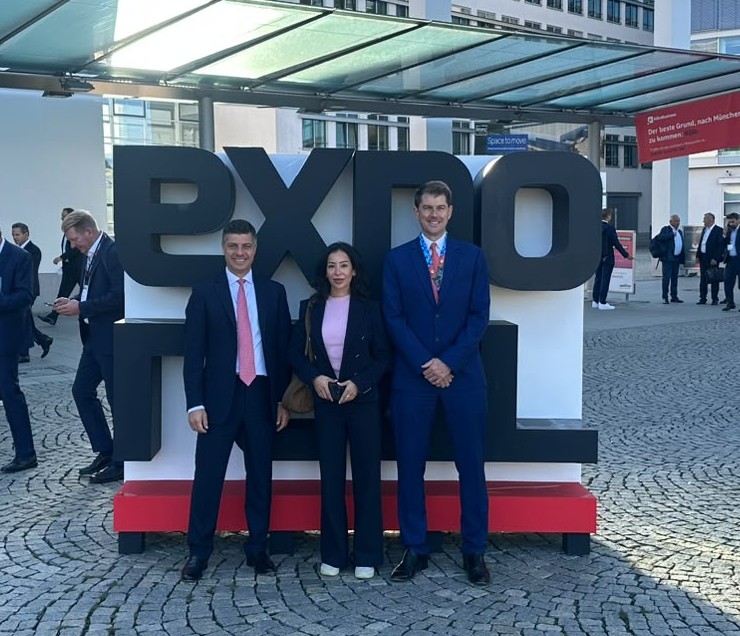
EXPO REAL 2026.
Our new ValdiviaInsights series: Daniel Bauer in conversation with Nils Hübener, a member of Valdivia’s advisory board, on decision-making and courage.
Anthony Baumruk on Interim Management in Germany
The property sector is in the midst of a transformation – and with it, the role of leadership is undergoing a fundamental shift. Find out which skills are in demand now and what will matter most for leaders in the future in our latest Leadership Impulse in our Newsroom.
How can companies respond appropriately to today’s dynamic changes in markets and technologies? And what does the concept of the ‘Teal organisation’ mean?
What happens when a key leadership position in the finance department becomes vacant on short notice? Who assumes responsibility toward banks, investors, and shareholders? And how can critical financing, reporting, and management issues be handled without interruption?
More information does not automatically lead to better decisions—the ability to prioritise is becoming increasingly important for leaders. Read more about this in the latest article in our LeadershipImpulse series.
You can find out why interim management will become more important in 2026 in the latest article by Anthony Baumruk.
Welcome to the first edition of the Valdiva MediaClub!
The Invisible Leadership model aims to make companies more agile and resilient. Find out more in today's LeadershipImpulse feature.
How can companies stay agile when markets and work environments are changing faster than ever?
Our latest Leadership Impulse explores “Pirate Leadership” – and what modern organisations can learn from unexpected role models.
AI has long been a reality—but what can decision-makers use as a guide to effectively lead their companies into the AI era without losing sight of the human element?
New roles, data-driven business models, and enhanced services: This is how the commercial real estate industry is adapting to change.
Read more in the latest article in our “LeadershipImpulse” series.
Long-term missions in space require precise role clarification, reliable decision-making mechanisms and a resilient team structure. This Leadership Impulse article highlights the governance principles that companies can derive from this in order to remain capable of acting even in uncertain times.
Today, visibility is a key leadership responsibility—it is crucial to building trust, making an impact, and shaping reputation.
Read more about this topic in this LeadershipImpulse article.
Upskilling and reskilling are management tasks – because training has long been more than just an HR issue.
The CTTO combines talent development and transformation at C-level – read more in the latest LeadershipImpulse article!
As baby boomer retirements intensify talent shortages in real estate, the emerging C-suite role of the Chief Longevity Officer (CLO) offers a strategic approach to longevity-driven workforce management.

Employment teferences are important legal documents – but they only provide limited insight into how leadership works in real-life situations.
Read today's LeadershipImpulse to find out why letters of recommendation and qualified personal references provide more reliable evidence for key roles.
What will the next stage of HR evolution at C-suite level look like, and who will be shaping it? Find out why the Chief People & Culture Officer is set to become the driving force behind the future of companies.
A personal review of the year – and an outlook for the new year 2026 from Valdivia.
Leadership means impact – even beyond the boundaries of your own company. The question is: how consciously do we use this influence – and what do we use it for?
Leadership is most effective where titles are irrelevant and behaviour makes the difference.
What lionesses, elephants and bonobos reveal about this – and how their strategies are rethinking modern leadership – is the subject of our new Leadership Impulse article.
Taking on responsibility as a new manager in challenging times requires attitude, orientation and the courage to make clear decisions.
Private crises among executives are silent but serious risks for organisations. What happens when the stability of those who support others falters – and who catches them?
How can we secure leadership and knowledge in an industry that is ageing faster than its buildings? And how can leadership continue to succeed in the future when the most experienced minds will soon be gone? Join Valdivia in exploring this important topic.
This year's EXPO REAL 2025 once again highlighted the profound changes taking place in the real estate industry.
Valdivia was right at the heart of it all – engaging in dialogue about strategies, innovations and future prospects. Read our review here!
So what does a leader do when everything's going well? The neighbourhood project's done, the new branch abroad's set up, the project development's sold with record numbers – what's next? You can find some possible answers here in the ‘Leadership Impulse’ article from our Governance series.
What does sustainability mean in corporate management? How can you act in the most future-proof way possible and avoid sustainability risks? And what role do digitalisation and AI play in this?
We explore these topics today in our latest article in our series: Future: Governance.
Good leadership requires more than expertise and resilience – it requires support.
Our latest article in the Future: Governance series shows how competent assistance can truly empower managers.
Team spirit meets running shoes...
Valdivia was back at the J.P. Morgan Corporate Challenge in Frankfurt in 2025 – full of energy, good spirits and genuine team spirit.
Where is the digitalisation of the real estate industry headed? Decision-makers need to prepare for constant change and new challenges. In this article, we shed light on this hot topic and show how companies can future-proof themselves..
On the way back from MIPIM 2025 - with many impressions and after in-depth discussions!
Rethink leadership: In our newsroom series Valdivia Future: Governance, we introduce you to the model approach of ‘polymathic leadership’ – with promising potential for sustainable success.
Find out how Valdivia experienced this year's Expo Real!
Have you ever thought about recruiting athletes for your management team? Or what valuable skills refugees and asylum seekers have to offer? Read on about this exciting topic in our latest article.
Valdivia at the 30th JPMCC in Frankfurt - it truly was a happening!
Obviously, you can never build the roof before the foundation – but you just might place it a little bit sooner. This is made possible by Scrum, a term taken from the world of rugby, designating an agile working approach. What exactly does "scrum" entail?
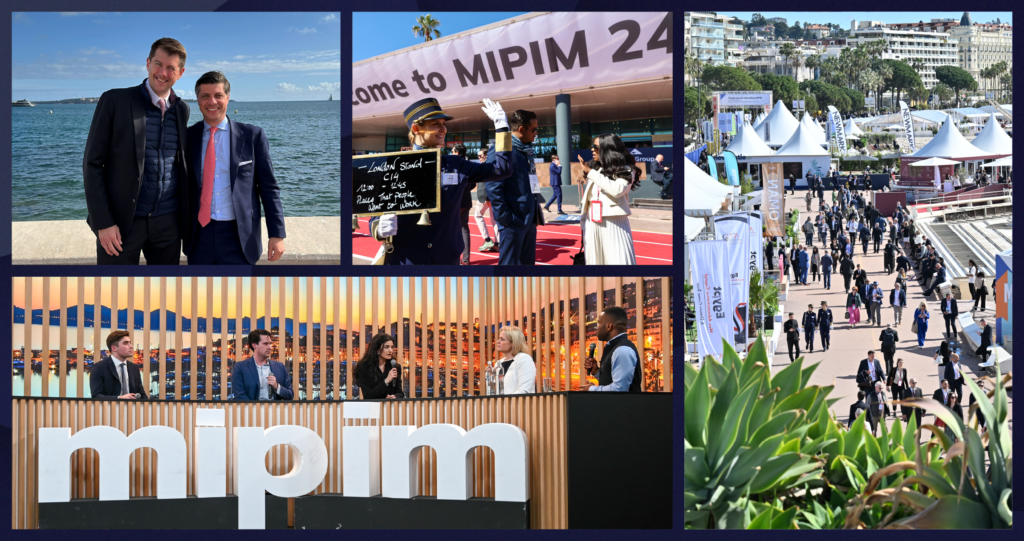
How was MIPIM 2024 as seen by Valdivia? Here you find our review of this year's fair.
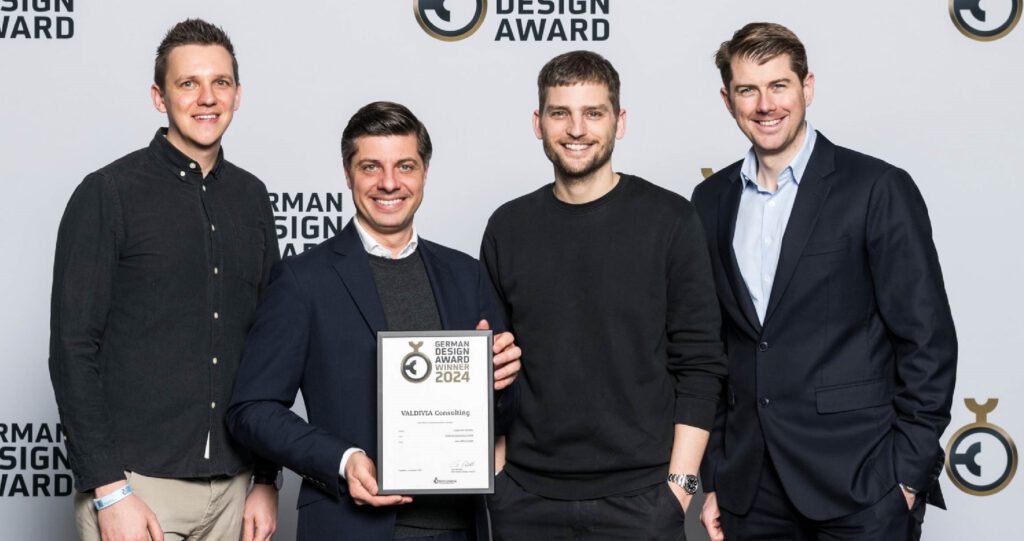
We are truly delighted to receive this award: together with our creative agency, we were honoured as "Winner" of the German Design Award 2024. Read onhere!
Merry Christmas 2023!
REFD 2023 in Frankfurt again was a truly important forum for the ndustry. Find out more in this article.
Read on toi find out our feedback on the fair!
Sustainability has made it into the minds of people. Find out more in the new Valdivia Future feature about what ithis means with regards to leadership of a company and the human element of it all.
Wjhat a great reason to celebrate Together with our creative agency, we were awarded as "Winner" with the German Brand Award 2023. Read on here to find out more!
How can corporate governance become more sustainable? In our expert tips, we shed light on a truly valuable approach to better time management,
Learn more in this brief summary about how we experienced this years's MPIM in Cannes.
Back from Berlin after three days full of information, discussions and positive debates around the development of the real estate industry in the coming years.
Join us on the exciting journey from the beginnings in rather troubled times to today: What drives us. Where we have come to. What commitment a meeting sometimes demands. And how much the future means to us.
What is the way to sustainable corporate leadership … to Good Governance as defined in the United Nations' goals? Find out more in our new ESG related feature.
Successful leaders in the real estate industry today - Anthony Baumruk sheds light on this topic in a recent guest feature published in the FAZ.
Back from three days with the decision makers of the real estate industry: Read about the insights of Daniel Bauer, our Managing Partner.
How it all began...the history of Valdivia's origins is full of surprises. Dive in deeply!
The 12th "World Oceans Day": A special day for Valdivia and all those who love the oceans and want to protect them right now, in the midst of climate change.