Leadership Gap?
How Interim Management
works in Germany
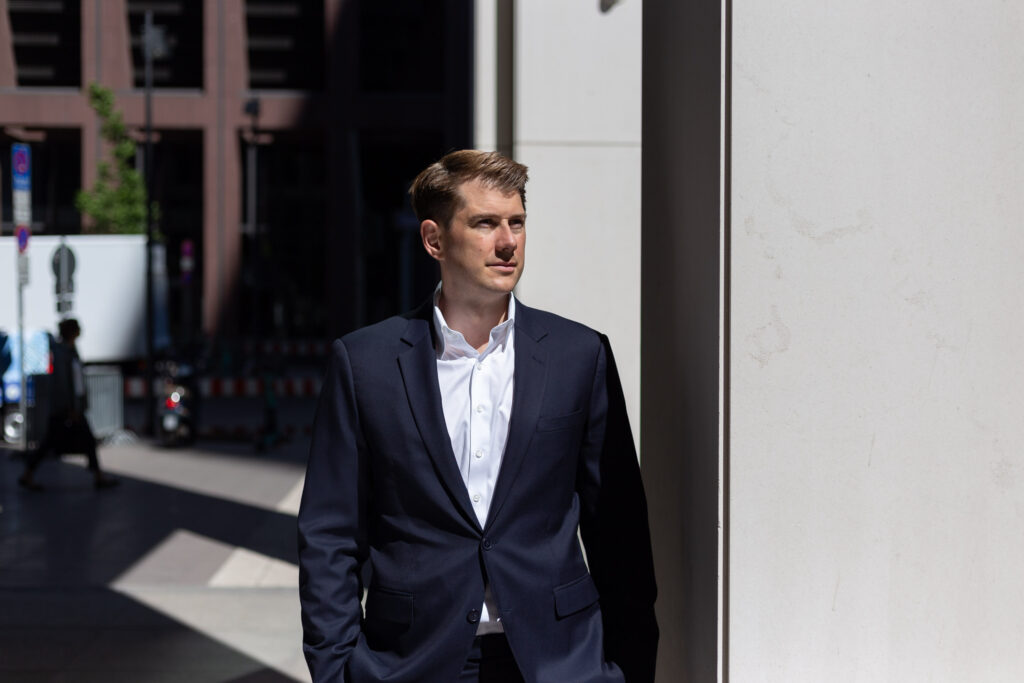
Anthony Baumruk on Interim Management in Germany
Art and culture can shape the image of a neighbourhood – and thus also its property values. But how exactly does cultural engagement affect the attractiveness of a location?
The influence of individual works or institutions is difficult to quantify. Nevertheless, the effect is clear, as we show you in this Valdivia Newsroom article. Above all, social value is enhanced by proximity to art and culture: popularity as a residential area, workplace, shopping or leisure zone increases, and with it a sense of community and security.
The appeal of contemporary art
Contemporary art in public spaces broadens cultural access, strengthens social bonds and promotes social awareness. This is demonstrated by a study on Highline Park in New York City and Superkilen Park in Copenhagen1, which we cite here as representative of many studies with the same or similar results. Art projects and other cultural activities attract residents and tourists alike, thereby also boosting economic revitalisation. This can be accompanied by a significant increase in the value of surrounding properties: between 2003 and 2011, the Highline caused property values to rise by 103%; around Superkilen, property values rose by around 50%.
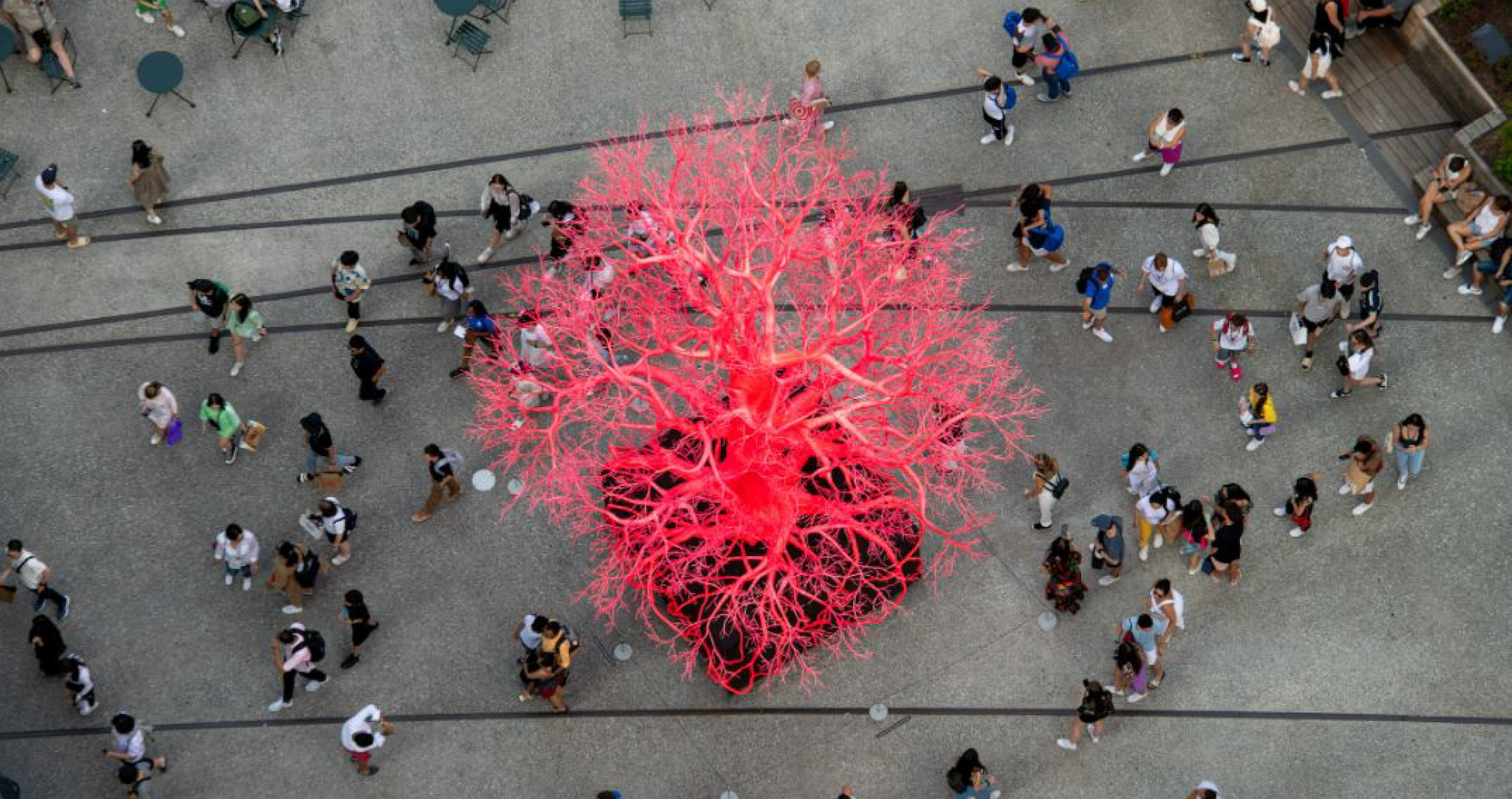
(Art installation at High Line Park, New York)
Art in the neighbourhood – the Berliner Leben Foundation
Bringing art into people’s everyday lives is one of the main focuses of the Berliner Leben foundation. One example is the URBAN NATION Museum in the heart of the Schöneberg neighbourhood, which uses urban art to offer low-threshold access to art.
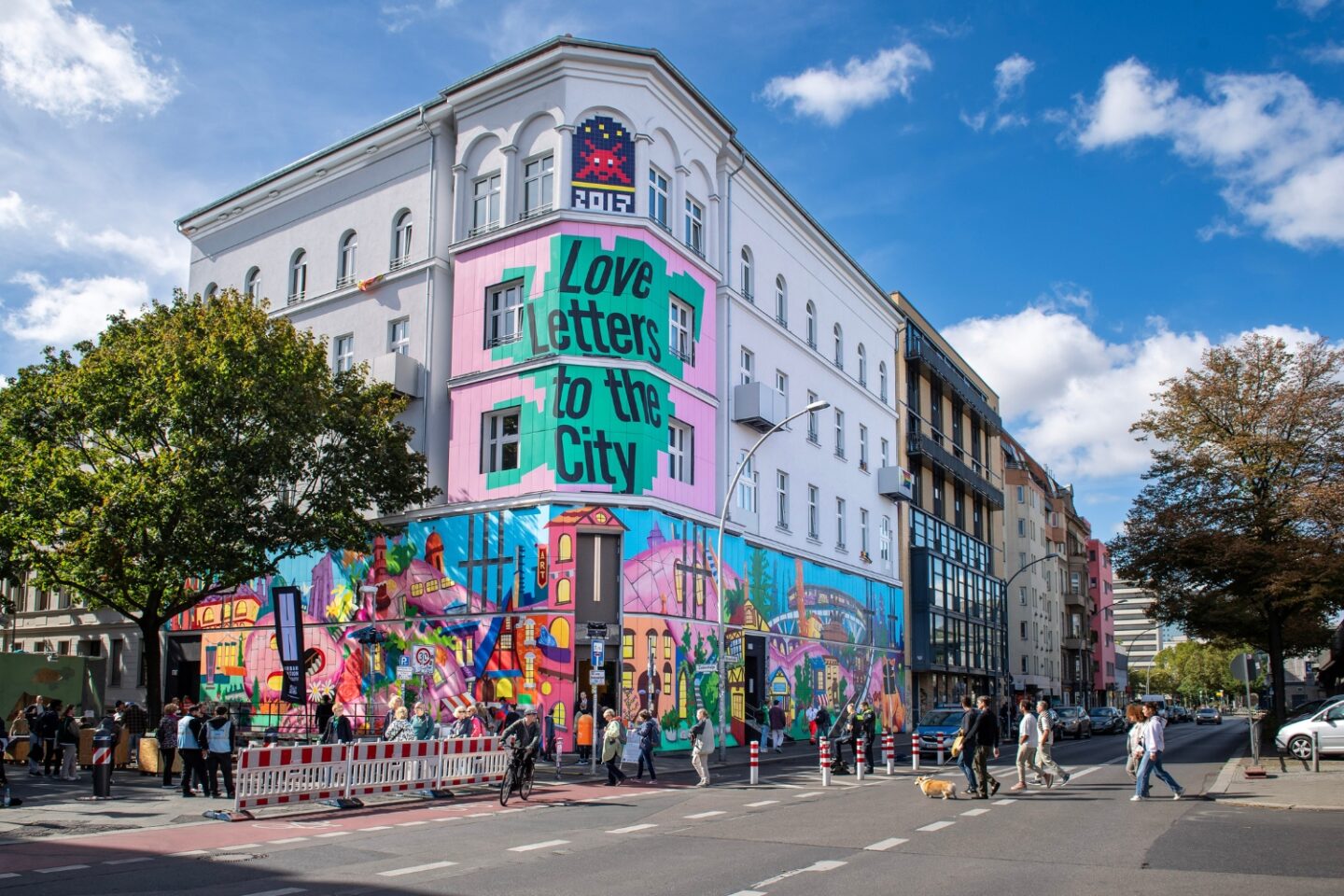
(URBAN NATION Museum, Berlin)
It acts as a “driving force for the social and cultural development of its neighbourhood” and invites not only professional artists but also people from the neighbourhood to actively participate and create. In this way, the museum not only focuses on aesthetic and creative aspects, but also promotes identification with the environment and social cohesion.
Urban art – also effective in smaller towns
André Kazmierski from Stadtbau Aschaffenburg also describes the importance of urban art for neighbourhoods in a detailed article for immobilienmanager3: graffiti, murals, sculptures or temporary installations – they all give the neighbourhood “a face”, strengthening identification, community spirit and a sense of security. Urban art attracts visitors and also benefits surrounding shops and cafés. This increases the social and economic value of the location and thus also its marketability. Kazmierski comments: “Especially in up-and-coming neighbourhoods, urban art can be used as an image-building tool to present the neighbourhood as culturally interesting and lively.”
Neighbourhoods as galleries
Urban and neighbourhood planners go one step further when they dedicate an entire neighbourhood to art. A prominent example is the aforementioned New York High Line, where an abandoned elevated railway line was transformed into a nature and art installation. The redesign triggered a real estate boom in the surrounding Chelsea neighbourhood, with luxury apartments, boutique hotels and exclusive retailers moving in.
Similar effects can be observed in DUMBO in Brooklyn4 or around the murals in Miami, Philadelphia and San Diego. Whether artistic graffiti or sculpture parks, art has the power to transform the world around it.
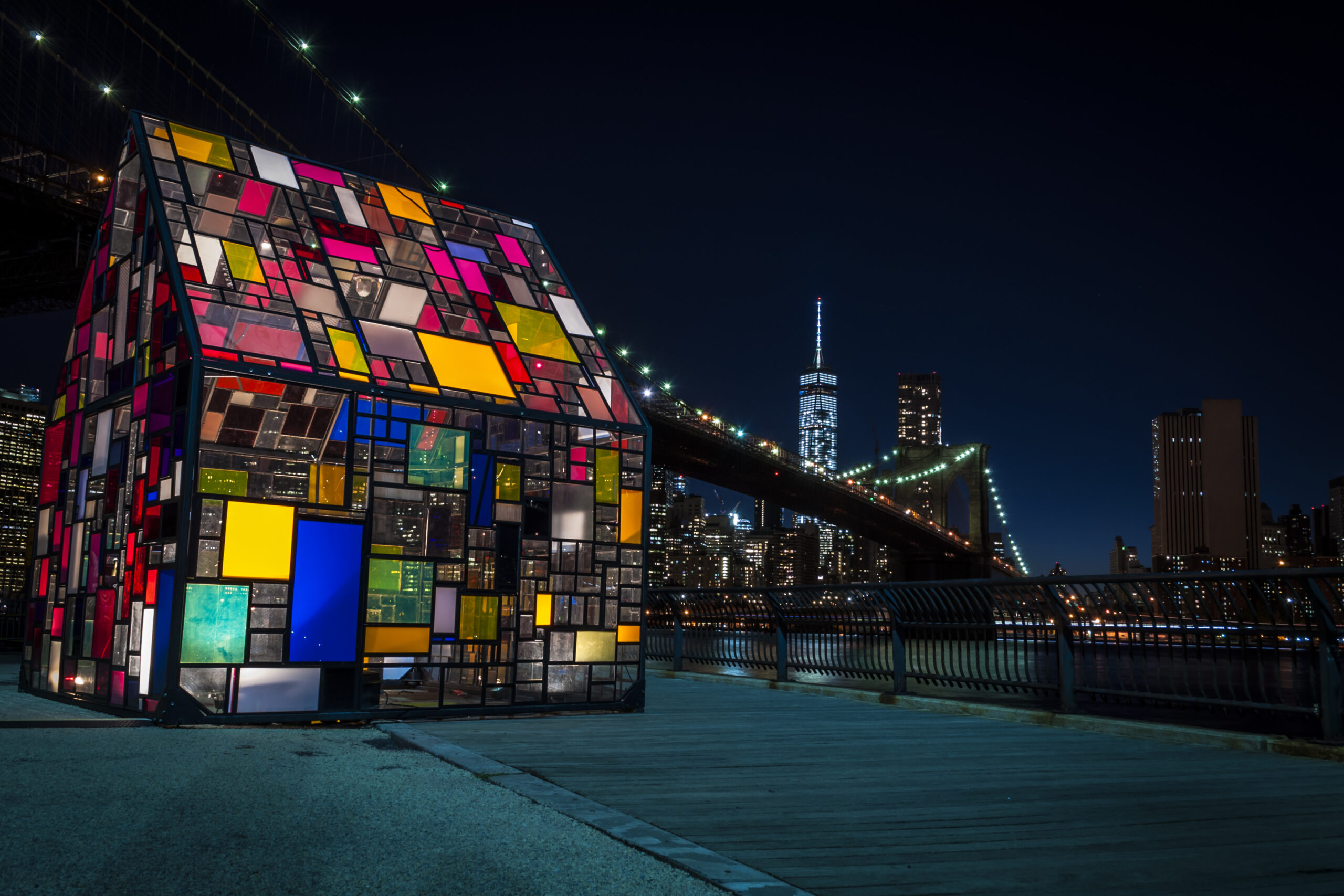
(Installation at DUMBO, New York City)
And it doesn’t have to be on a New York scale: in 2007, committed art lovers in Bad Vilbel transformed a small area along a stream into a lively gallery and, under the title “Massenheimer Auenkunst”, have been showing sculptures and installations by regional artists in exhibition cycles of approximately two years5.
Utopia City Wuppertal
Urban art and culture play an important role in the success of the Utopiastadt project in Wuppertal6. In 2011, the project was launched in the historic Mirke railway station as a “laboratory for development and creativity” with the aim of creating a lasting connection between art, culture and society. Over the following eight years, Utopiastadt grew from a 200 m² co-working space to almost 40,000 m². A hacker and maker space, a community workshop, urban gardening areas, a bicycle and cargo bike rental service, markets, festivals and many other elements of today’s urban culture were created. Above all, the strong commitment of the people from the surrounding neighbourhood demonstrates the appeal and thus also the marketing potential of such a project.
Godsbanen Aarhus
In Aarhus, Denmark’s second largest city, an old freight station – Danish: Godsbanen – was also transformed into an art and culture centre. Since 2012, Godsbanen has not only been a magnet for locals, visitors and artists. The project has also led to a significant increase in property values in the surrounding neighbourhood7 :apartment prices rose by 2.3 to 3 per cent or 27 to 29 thousand euros per apartment compared to the city as a whole.
Conclusion
Urban culture is extremely versatile and adaptable. In the field of visual arts, for example, it does not have to be limited to large-scale murals and representative sculptures. Even relatively small spaces are suitable for exhibitions by local artists or pop-up galleries. Event spaces and venues can literally provide a stage for performing arts such as music, dance, theatre, cabaret or variety shows. Participatory offerings such as those at Godsbanen in Aarhus or the URBAN NATION Museum in Berlin, where artists collaborate with the neighbourhood to create works of art, also have an appealing effect. Even relatively small projects can thus create spaces or rooms for art and culture and leverage their appeal.
This often results in added financial value, but this is not necessarily guaranteed – the influences on property prices are too diverse. Furthermore, excessive price increases can easily lead to gentrification, which is not always welcomed by urban planners and politicians3 .However, proximity to art and culture certainly creates an ideal marketing argument for real estate – and not only for residential areas and leisure zones: shopping and office locations also benefit when customers and professionals find inspiration and experiences in the surrounding area.
Sources
(Image sources: istockphotos.com, dreamstime.com, High Line Park NYC, Urban Nation Museum Berlin)
Anthony Baumruk on Interim Management in Germany
What happens when a key leadership position in the finance department becomes vacant on short notice? Who assumes responsibility toward banks, investors, and shareholders? And how can critical financing, reporting, and management issues be handled without interruption?
How can investments in the property sector become more attractive during an economic downturn, thereby also boosting marketing? find out all vital information on tokenisation in this Experttip feature.
How do signage and wayfinding systems shape a property’s image?
Our expert tips show how signage helps people find their way and strengthens brand identity.
City centres under pressure: How can their value and marketability be best targeted for enhancement?
Unsere Expertentipps zeigen umsetzbare Ansätze. Lesen Sie hier mehr!
Remote working meets holiday feeling: workations are turning hotels into a growth asset class. What exactly does this trend look like – and what are the key success factors in marketing? Read more in the latest Valdivia expert tip!
A genuine welcome is more than just a formality.
The new feature of our series on the candidate journey shows how pre-onboarding and onboarding can inspire new employees and retain them in the long term.
From idea to application: When searching for qualified personnel, how can you reach potential candidates who are still undecided? The solution: the potential of passive job seekers.
How can the construction and real estate industry send out positive signals today? Which construction topics have a future, inspire confidence and even trigger purchasing impulses? Our latest Valdivia Expert Tip provides some initial answers.
Understanding Generation Z - successfully recruiting young talent
Numerous studies disprove common prejudices: Young talents are more traditional than is often assumed.
In the second part of our ‘Employer Branding & Recruiting’ series, we show how contemporary recruiting can succeed at eye level.
Data centres are considered the backbone of digital transformation and offer great potential for development and investment. Our latest Valdivia Expert Tip shows how they can be designed to be sustainable and compatible with their location.
Social and sustainable living - but how?
The new PwC study shows what really constitutes social housing quality: 24 clear factors from rental price to mobility provide orientation for construction, purchase and marketing. Read more in the new article in our ‘Expert tip’ series.
How is your employer brand reflected in the recruitment process? What stages does the candidate journey involve - from initial contact to onboarding? And what role do new media and technologies play? We provide you with some answers in our new series “Employer Branding & Recruiting” in our Valdivia Newsroom.
Sustainable properties have been shown to be valuable assets that generate good rental income. But how can the outdoor areas of these properties be enhanced to increase their attractiveness on the market? In the latest edition of Valdivia Newsroom, we explore the opportunities offered by the ‘XXGreen concept’ to strengthen not only climate protection and sustainability, but also the quality and value of properties.
Strategic employer branding requires a targeted approach. This article shows companies that have recognised its importance how to take effective first steps.
Make your exposé more effective by using target group-specific landing pages, integrating emotional content and using innovative formats such as 3D experiences or storytelling - this will make your property tangible and convincing.
From micro-housing to co-operative multi-generational houses – living environments and housing concepts have expanded significantly in recent decades. This article provides ideas for new marketing approaches!
How authentic is my employer branding? Today, in our Valdivia expert tip, we would like to present an approach that focuses on openness, honesty and communication at eye level.
‘Good location’ is one of the strongest arguments in favour of a property. But only traffic advertising can actually make it tangible. In today's edition of our Valdivia expert tip, we present attractive and low-cost advertising ideas that have an immense impact.
HR management today requires mindsets and processes that are familiar from product management, marketing, sales and customer loyalty. In the latest feature of our Employer Branding series, we present the most important points of contact - and also promote cross-departmental collaboration.
Today, the working atmosphere and corporate culture are crucial for employee retention1. This includes employees being able to see the purpose of the company in a broader context - and thus also the meaning of their work. But what exactly does this entail?
Do you know SAM? SAM is a remote-controlled, semi-autonomous robot that makes viewing apartments and offices child's play. Find out more about SAM in our new "expert tip" feature!
How can you market office space today? In our latest feature of our expert tip series on property marketing, we present some exciting solutions today.
With this article in our Valdivia Expert Tips series, we want to encourage you to take up the topic of "mental health" for your employer branding - both practically and in your internal and external communication.
Strong brands are like lighthouses; this also applies to the property industry. They provide orientation and create trust for customers, stakeholders and your team.
Employee retention is more important than ever, especially in the construction industry: current figures show that vacancies in this sector remain vacant the longest. Find out more here on how to retain your qualified staff!
Specialists and managers are urgently needed in many areas today. But how can the "bread-and-butter" medium of a job advert be used to effectively address potential candidates?
Today, it is impossible to imagine communication without video as a standard medium. This has long been true within the construction industry as well. Find out here how you can use video clips for your company!
New Work and digital transformation have long entered the more traditional industries, e.g. the construction and real estate business. At the same time, the transformation is a necessity just as much as it is a welcome occasion for enterprises to develop a new self-image as an employer and to transform this into employer branding.. Read more about Cultural Change here!
In the wake of Artificial Intelligence, another technology is about to become a hype: the Metaverse. But what is it all about? Find out more in our latest feature of Valdivia Expert Tip.
The sale of existing properties is part of the core business in real estate marketing. This issue of the expert tip series now deals with how a property can be made more marketable without extensive construction measures and at relatively little expenditure.
How can corporate governance become more sustainable? In our expert tips, we shed light on a truly valuable approach to better time management,
In this article, we present effective ways in which you can use recruiting events to attract urgently needed specialists and also reach young talent.
In this article, we present effective ways to use recruiting events to attract much-needed skilled personnel and also reach the next generation.
From gate signs to light painting - construction sites are a paradise for creative outdoor advertising! Read more in the latest issue of our expert tip.
Digital. Cross-linked. Online: Within a few years, social media have become a critical factor in virtually all areas of life. Read on here to learn more about addressing skilled personnel by means of social media.
Read more about dingbats and how they can help sculpt and promote buildings and support your brand in our latest feature covering topics in the area of our expert tips.
How do employees communicate employers to the outside world? This new episode of our series looks at this tool for promoting employer branding and corporate marketing.
What are the digital tools available to and implemented in the real estate world?
We have an initial overview and answers for you on this cutting-edge and promising topic:
The success of an employer brand clearly depends on the consistency of living it every day. Valdivia explains how this can be achieved and what lies behind the acronym EVP. Read on for more insights!
Farming as a marketing technique in the real estate industry: We explain the trend and what exactly lies behind it.
Keep up with the times in Employer Branding and promote diversity.
Today, building names are often creative and an important marketing tool. Valdivia highlights this trend in this episode of "Expert Tip".
Importance of appreciation for your employer brand: In this article, you will find valuable background information and facts.
What exactly does the term staging mean? What is its added value? We explain staging in this feature.
Part 2 of our series on employer branding. After a first overview, we will now go into depth.
Real estate marketing is a highly exciting area that we take a closer look at here.
What is essential when it comes to working from home in Corona Year 2? Find out more here.
It is hard to imagine the construction and real estate industry without employer branding. Here is the first part of our new series on this exciting topic.