With new connections between remote working and a holiday feeling, an additional, promising trend is emerging for the hotel property asset class. But which characteristics are important for marketing?
New property classes or usage concepts require marketing approaches that transcend more familiar categories. As we did for data centres, we have compiled information and arguments in this Valdivia expert tip that may be useful for marketing a hotel as a ‘workplace with a holiday feeling’.
Rooms with a view of returns
Hotels are a successful real estate investment. Rising demand and growing interest in specialised concepts, such as boutique and wellness hotels, have driven a noticeable upturn since the end of the pandemic. For instance, a Bulwiengesa study² already recorded annual growth in overnight stays and transaction volumes in 2023, with returns expected to range from 4.5 to 5.5 per cent.
Even beyond the recovery effect, the asset class has proven stable: a Bulwiengesa report compiled in collaboration with Union Investment shows a 1.5% increase in the value of the investment-relevant portfolio for 2024. The total value reached €64.3 billion by the end of the year, marking a 3.7 per cent increase compared to 2023. According to Immobilienmanager⁴, the positive trend remained stable until the end of 2025, as confirmed by several studies by CBRE and JLL, among others.
Business is no longer ‘as usual’
The reasons for overnight stays remain largely unchanged: holidays and leisure trips, business trips, visits to friends and relatives, and special occasions such as pilgrimages. However, business travel in particular is changing. For around ten years, a sub-segment known as ‘bleisure’ (business + leisure) has been growing. This portmanteau of ‘business’ and ‘leisure’ describes business trips that are extended with private stays based on the motto ‘while I’m here’.
The spread of remote working, accelerated by the pandemic, has given rise to further combinations of work and holiday. One of these is the ‘workation’, a portmanteau of ‘work’ and ‘vacation’. This describes temporary mobile working from a location typically considered a holiday destination, offering a special atmosphere, whether that be nature and landscapes or urban life. Thus, workation is more than just a tourism trend; it is a completely new way of using hotel properties.

Workation is motivation!
To date, there have been no precise studies on the actual number of workation cases and turnover volumes. However, various sources indicate a clear and growing interest in this type of travel: a survey of remote workers revealed that, by the end of 2023, 35 per cent had taken at least one workation lasting two weeks or more per year – compared to 28 per cent in 2022.
The results of a PwC study examining the topic from the perspective of employees also indicate the increasing significance of workations:
- 57% of respondents (and 80% of 18- to 29-year-olds) cited a workation option as an important criterion when choosing a job.
- 30% (and 45% of 18- to 29-year-olds) would even turn down a job offer if the company did not allow workations.
Therefore, employers who do not allow their employees to work remotely from abroad are reducing their pool of potential applicants by almost a third. For hotel properties, this development means more reliable and predictable demand beyond traditional seasonal patterns.
The hotel as a work(ation) place
Marketing the hotel as a workation destination can offer good occupancy and return opportunities, even in locations that primarily appeal to tourism and already have a high bed density. However, not every hotel is automatically suitable Therefore, employers who do not allow their employees to work remotely from abroad are reducing their pool of potential applicants by almost a third. For hotel properties, this development means more reliable and predictable demand beyond traditional seasonal patterns.
for workations. In order to be successful in this new market, the property and its facilities must take into account the specific needs of remote workers.
It all started with hotels offering a business centre and free Wi-Fi in the rooms. Today, much higher standards are expected if a hotel is to be suitable for an extended workation. It should be just as possible to work stably and quickly in different scenarios as it is to relax. In order to be truly suitable for a workation, a hotel property needs the following structural and equipment features:
- A choice of workspaces, not just in the room
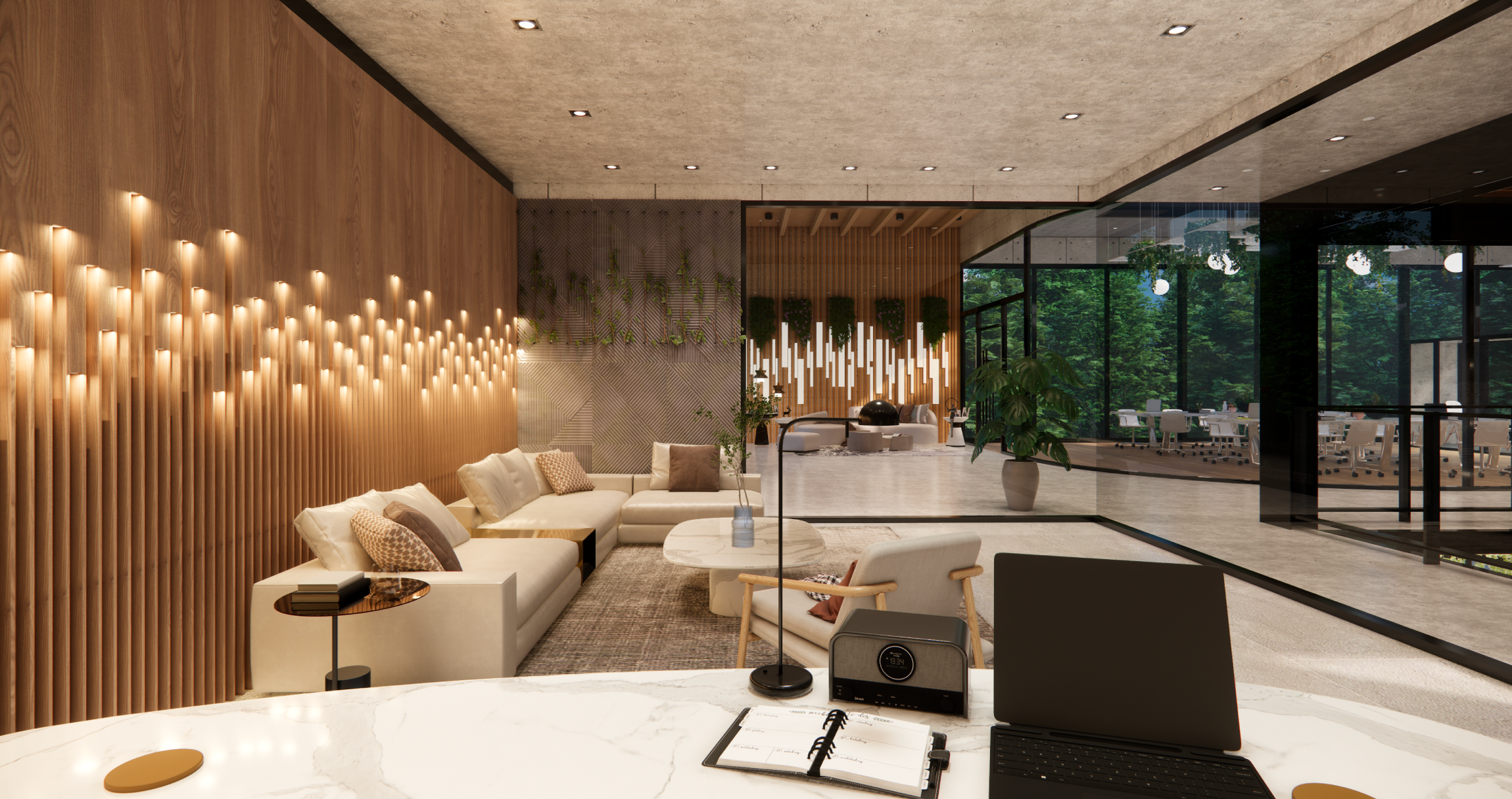
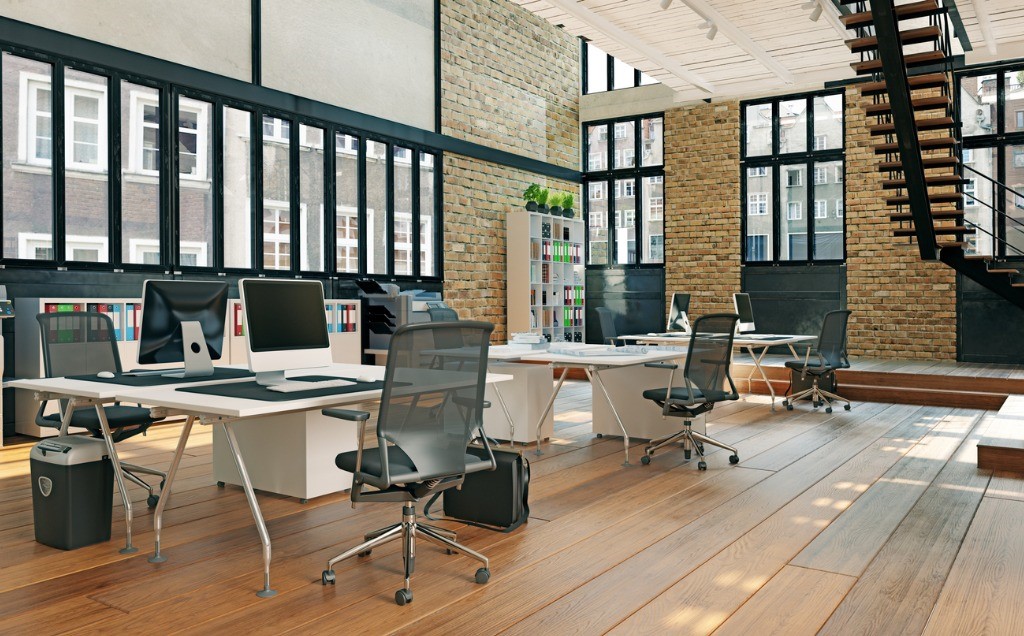
The workspace in the room naturally plays a central role. This includes an ergonomically optimal desk and chair as well as glare-free lighting. For variety and teamwork, additional work options should be available: quiet lounge areas and a co-working area or business centre with tables, chairs and power connections.
- Modern technical infrastructure
A basic requirement is high-performance Wi-Fi throughout the building, which remains stable even when multiple video/conference calls are in use. Other requirements for working guests include a sufficient number of power sockets, good mobile phone coverage, air conditioning that is as quiet as possible, and the option to borrow or use additional monitors, printers and meeting equipment (projectors, screens, conference cameras).
- Rooms for different forms of teamwork
As a basic requirement, the hotel should have at least one seminar or meeting room equipped with modern presentation technology (projector/screen, whiteboard/flipchart, presentation materials). Smaller, screened-off rooms or alcoves for confidential calls and concentrated collaborative work are also very welcome.
- Structural design for special service requirements
Individual service processes in a workation hotel can differ significantly from those in conventional hotels. For example, some rooms are used continuously during the day and are only available for cleaning at the end of the day. This requires not only flexible housekeeping, but also good sound insulation. Additional dining rooms are also useful – for example, for a snack buffet that can be used at any time outside of main meal times.
- Consistent sustainability
Sustainability is now an almost indispensable factor, especially for younger target groups. The hotel should therefore be energy neutral, furnished with sustainably produced materials and offer guests simple options for waste separation and energy saving. A new building could score additional points if it is constructed at least partially from recycled materials or wood.
In addition to such structural features, it is recommended that services and rates are tailored to the purpose of ‘workation’. Websites such as workation.de or futurestays.ai provide an overview of hospitality offerings.
Conclusion:
Workation expands the use of hotel properties to include a segment positioned between traditional tourism and business travel. The option of remote working has created demand that extends beyond seasonal peaks. Owners and investors can capitalise on this by tailoring their hotel concepts specifically to this market and appealing to additional target groups. This also includes companies, for example as partners in framework agreements.
This requires facilities and organisation that support productive work, relaxation, and high-quality service. Not all hotels are equally suitable as a ‘workplace at a holiday destination’; the deciding factors are the property’s conscious orientation, its infrastructure and the services it offers. From a marketing perspective, workation contributes to the functional differentiation of hotel properties, stabilises occupancy rates, and makes usage concepts more sustainable, particularly where traditional demand is declining or reaching its limits.
Sources:
- “Earning money while you sleep”, immobilienmanager.de, 17 July 2025
- “The 5% study – where it’s still worth investing”, Bulwiengesa 2024
- “German hotel industry on the rise,” Bulwiengesa, July 2025
- “Hotel investment market 2025 around 60 per cent above previous year”, immobilienmanager.de, 9 October 2025
- “105 Critical Business Travel Statistics: 2024 Spending & Concerns Analysis,” financesonline, June 2925
- “Workation: The Future of Work and Travel in One Concept,” Wired White Platform for Engineering Services and Learning, May 2025
- “Business Travellers Survey Q1 2023”, U.S. Travel Association, April 2023; “Workations Campaign 2026 — Reimagining tourism for the remote-working era”, Career Gappers, 2026
- “Workation between desire and reality 2024”, PricewaterhouseCoopers May 2024
(Image source: istockphotos.com)