Beyond the comfort zone: Leadership lesson derived from space travel
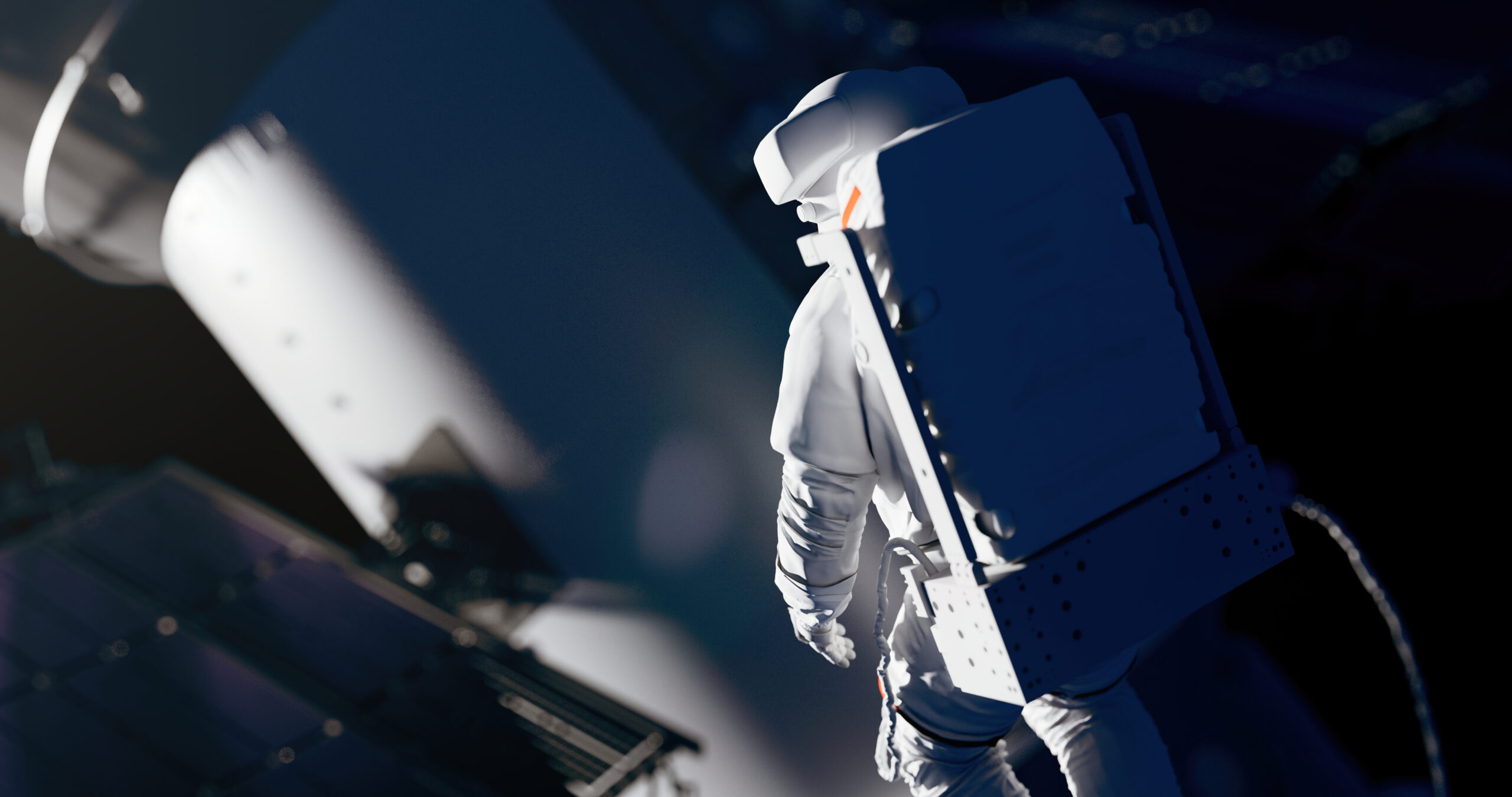
How can leaders help their employees perform at their best under unusual or difficult conditions? Psychological research for space travel offers valuable answers and food for thought. In preparation for long-term missions in space, it examines team dynamics, motivation, performance and cooperation under extreme stress – with insights that also support managers in everyday business life on Earth. This Valdivia LeadershipImpulse feature invites you on a metaphorical journey to Mars – and to ideas on how to improve team cohesion and work results even under the most difficult conditions.
Countdown to success for your teams
Research into team psychology in space travel primarily examines the dynamics of communities. In doing so, it often provides valuable insights into key topics of modern leadership in disruptive times. In the following, we will focus on three areas of space travel research that are important for successful leadership:
- What does an optimal team composition look like? What success factors should those responsible consider? And what are the possible causes of disruptions?
- How can critical situations be prevented or defused?
- From the perspective of an astronaut, what principles best help teams to work successfully even under extreme external pressure?
Diversity in the team increases the chances of success
A detailed long-term study1 compares the chances of success of homogeneous and heterogeneous teams. Two variables are considered: personality and professional skills. The result:
- Teams made up of people with similar personalities and skills developed the least team spirit, were prone to stress and health problems, and performed poorly.
- Teams with different skills but similar personalities performed only slightly better, developing only slightly more team spirit.
- Teams with different personalities but similar skills also developed slightly more team spirit, but performed better, were healthier and more resistant to stress.
Teams made up of individuals with differences in both variables were the clear winners: with strong team spirit, good performance, health and stress resistance. Although the study does not take into account hierarchical role distribution, for example by a commander, it nevertheless offers pointers for everyday business life on how teams can be put together or led to improved performance.
A metric for teamwork
Another study2 describes a set of personal characteristics (“group living skills”, GLS) that can be used as a useful measure of teamwork ability, even under stress:
- Cleanliness and tidiness, both in personal belongings and work materials
- Appropriate use of humour
- Appreciation of the knowledge, skills and performance of team members
- Consideration for personal attitudes and preferences
These often underestimated factors are particularly suitable for systematically assessing teamwork skills – for example, when selecting members for teams that have to work under high pressure. At the same time, the GLS metric points to levers that managers can use to identify and correct undesirable developments during ongoing operations.
Team building on solid ground
Many other experiences from space travel also facilitate team building. This also takes some of the pressure off managers as the project progresses3:
- Get-together before the kick-off
Professional conflict management, joint planning, team decision-making and shared leadership work better when a team gets together, gets to know each other and agrees on the ground rules before the actual work begins.
- Shared and joint leadership
Similar to astronaut candidates, larger teams often have several members with leadership experience. The task may require them to lead the team alternately or jointly in coordination. It is helpful to prepare those involved for changing leadership roles in targeted training.
- Training in openness and understanding
To realise the benefits of diversity within the team, mutual tolerance, an understanding of differences and mechanisms for dealing with conflicts constructively are required. Practising these skills through guided training requires an initial investment, but can help to avoid additional costs later on due to delays and mistakes.
The flight to Mars as a benchmark for stress
Space studies often deal with preparation for extreme long-term missions such as the flight to Mars3/4. In doing so, they gain valuable, practical experience that can also be used to improve the chances of success for complex, long-term projects in companies:
- Good information flow and transparency strengthen trust. This is particularly important when – as in the case of a flight to Mars – responses to questions or messages arrive with a delay or are absent at times.
- Astronauts on Mars missions will often have to make decisions and take action independently of flight control. Structured debriefings using an anonymous questionnaire have proven to be a good means of reassuring teams and ensuring stability. They strengthen the resilience of team processes, enable honesty and constructive conflict resolution, and thus improve overall team performance.
- Realistic work goals stabilise a team’s performance and morale. Unrealistic goals can easily create the impression of constant failure.
Leadership insights from an astronaut
Astronaut and engineering professor Mike Massimino5 has described his experiences with leadership roles under extreme conditions in books, lectures and interviews. In a lecture6, he summarised the essential characteristics of successful leadership in four points:
- A clear purpose ensures a clear course.
- Determination helps to overcome obstacles.
- Good preparation is also useful when the unexpected happens.
- Teamwork makes everyone stronger together.
Above all, a leader should know the team members very well in order to resolve even critical situations with positive approaches. Massimino recommends a conscious reflective leadership tool7 for this purpose: “Create a ‘good thoughts account’ for each team member, in which you record everything positive about that person – for example, what you can learn from them or what you have in common. Then, when something goes wrong, you won’t react with anger, but filter it through good thoughts.”
Conclusion
Leadership under extreme conditions can be understood as leadership “in zero gravity”: familiar points of reference are missing, and there is no longer a clear “up” and “down”. In such situations, orientation arises less from hierarchy than from clarity – from knowing what is important, even if not everything can be planned or predicted.
Space travel stands for high performance under extreme conditions: minimal tolerance for error, maximum complexity, constant pressure. Successful leadership here is not demonstrated by loudness or control, but by preparation, mental clarity, precise communication and a strong sense of responsibility. Trust becomes the central guiding principle.
For companies and their leaders, these insights provide proven principles for critical situations: thinking in scenarios, sharing responsibility, securing decisions – and at the same time being able to let go. Leadership then means providing guidance where rigid guidelines no longer apply.
Sources
- Iser Pena, Hao Chen: “Exploring team dynamics and performance in extended space missions using agent-based modelling”, Department of Systems and Enterprises, Stevens Institute of Technology, Hoboken, New Jersey, United States of America, October 2025
- Landon LB, Miller JCW, Bell ST and Roma PG: “When people start getting real: The Group Living Skills Survey for extreme work environments”, Front. 15:1348119, doi: 10.3389 / fpsyg.2024.1348119, April 2024
- Lauren Blackwell Landon, Kelley J. Slack, Jamie D. Barrett: “Teamwork and Collaboration in Long-Duration Space Missions: Going to Extremes,” American Psychologist, June 2018
- Rainer W. Sauer: “Dealing with Change – Why the inhabitants of the ISS are good team players”, verwaltungstraining.blog, 2023
- Mike Massimino, NASA astronaut (2 Hubble repair missions), professor of engineering at Columbia University, New York City, since 2014
- “Astronaut Mike Massimino’s leadership lessons from space,” Dassault Systèmes Blog, July 2022
- Mike Massimino, quoted in “Michał Poczwardowski: High Stakes Leadership: Two Key Rules from Orbit,” perspectiveship.com, October 2025
(Image source: istockphotos.com)