Art and culture can shape the image of a neighbourhood – and thus also its property values. But how exactly does cultural engagement affect the attractiveness of a location?
The influence of individual works or institutions is difficult to quantify. Nevertheless, the effect is clear, as we show you in this Valdivia Newsroom article. Above all, social value is enhanced by proximity to art and culture: popularity as a residential area, workplace, shopping or leisure zone increases, and with it a sense of community and security.
The appeal of contemporary art
Contemporary art in public spaces broadens cultural access, strengthens social bonds and promotes social awareness. This is demonstrated by a study on Highline Park in New York City and Superkilen Park in Copenhagen1, which we cite here as representative of many studies with the same or similar results. Art projects and other cultural activities attract residents and tourists alike, thereby also boosting economic revitalisation. This can be accompanied by a significant increase in the value of surrounding properties: between 2003 and 2011, the Highline caused property values to rise by 103%; around Superkilen, property values rose by around 50%.
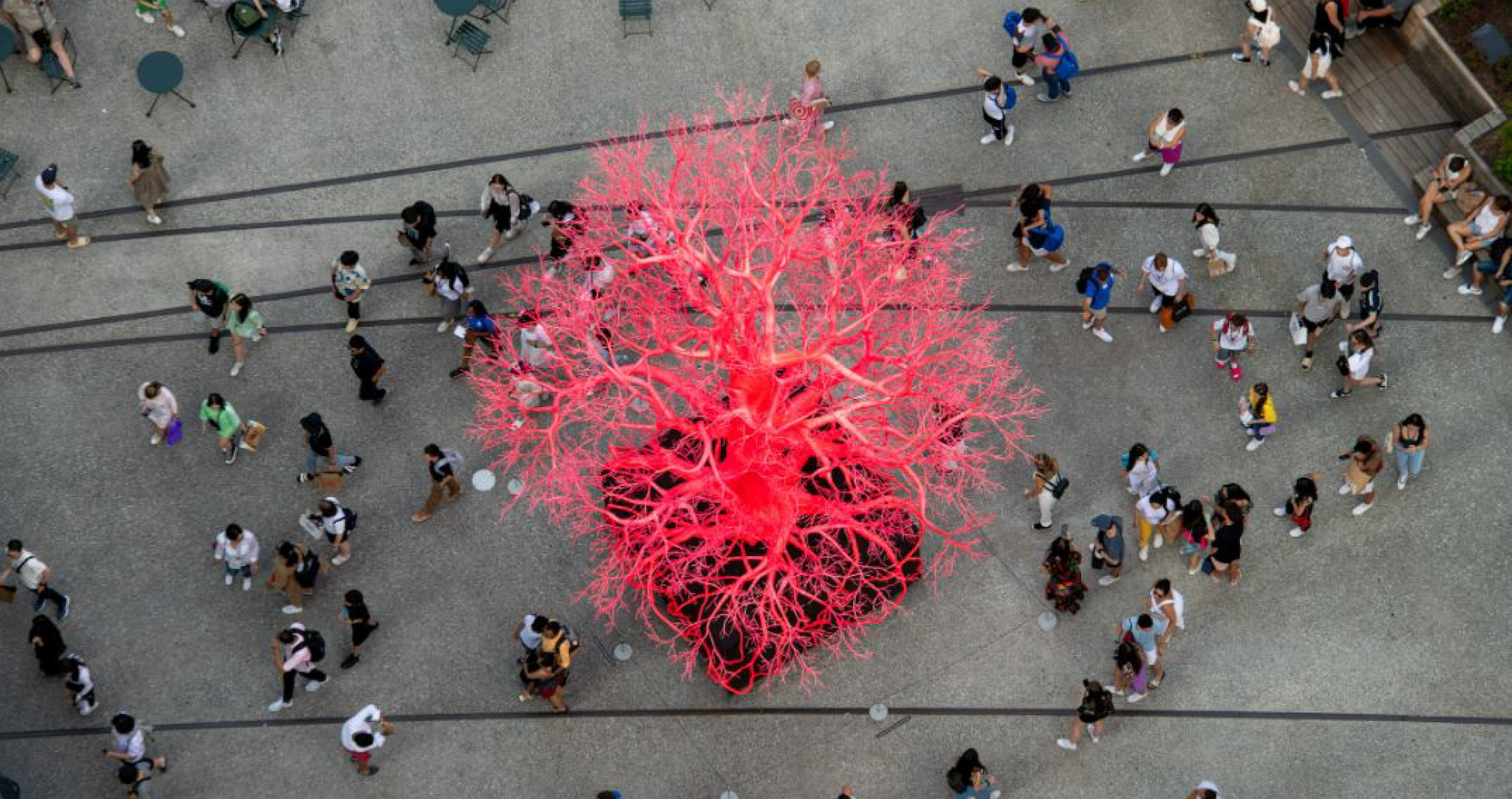
(Art installation at High Line Park, New York)
Art in the neighbourhood – the Berliner Leben Foundation
Bringing art into people’s everyday lives is one of the main focuses of the Berliner Leben foundation. One example is the URBAN NATION Museum in the heart of the Schöneberg neighbourhood, which uses urban art to offer low-threshold access to art.
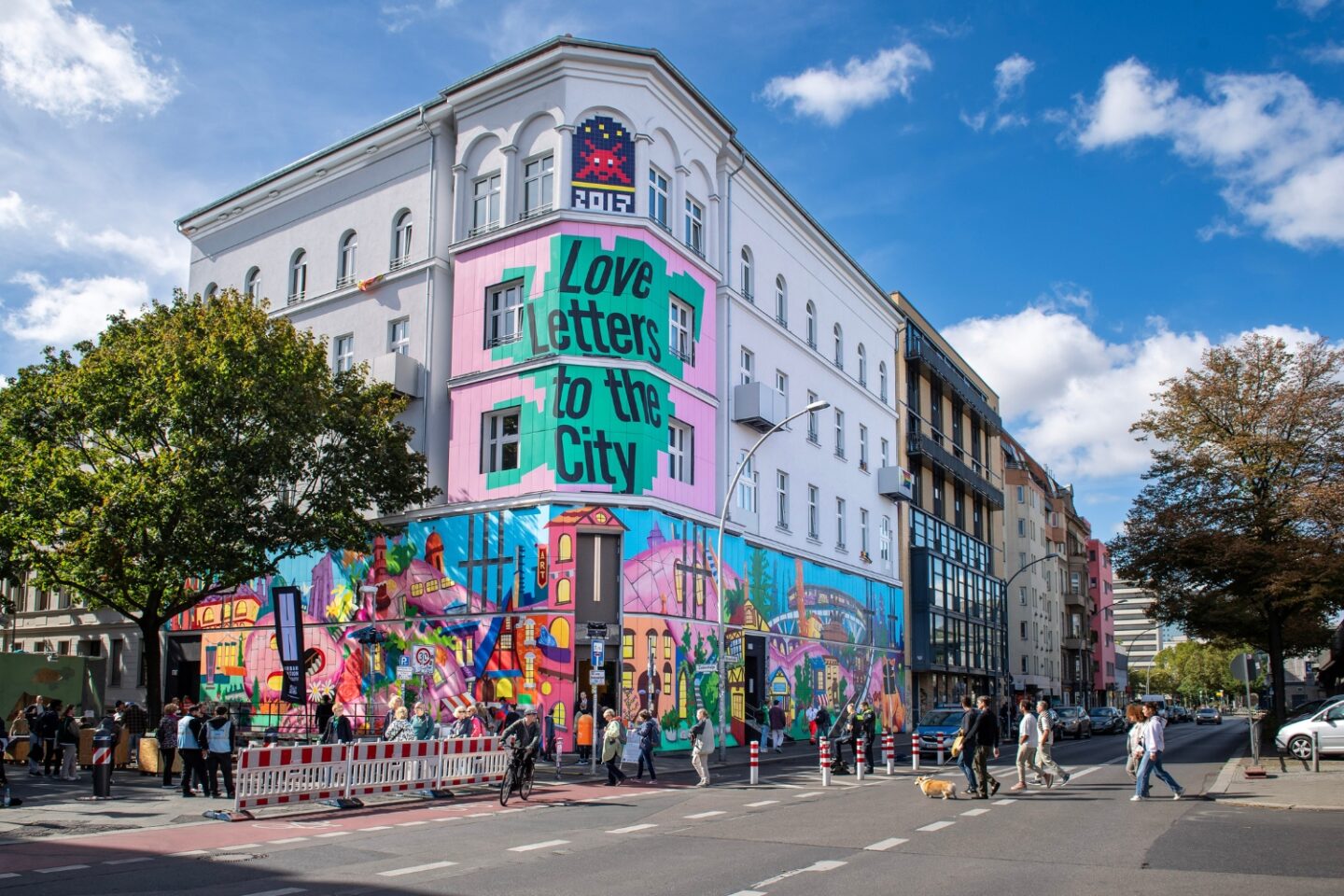 (URBAN NATION Museum, Berlin)
It acts as a “driving force for the social and cultural development of its neighbourhood” and invites not only professional artists but also people from the neighbourhood to actively participate and create. In this way, the museum not only focuses on aesthetic and creative aspects, but also promotes identification with the environment and social cohesion.
Urban art – also effective in smaller towns
André Kazmierski from Stadtbau Aschaffenburg also describes the importance of urban art for neighbourhoods in a detailed article for immobilienmanager3: graffiti, murals, sculptures or temporary installations – they all give the neighbourhood “a face”, strengthening identification, community spirit and a sense of security. Urban art attracts visitors and also benefits surrounding shops and cafés. This increases the social and economic value of the location and thus also its marketability. Kazmierski comments: “Especially in up-and-coming neighbourhoods, urban art can be used as an image-building tool to present the neighbourhood as culturally interesting and lively.”
Neighbourhoods as galleries
Urban and neighbourhood planners go one step further when they dedicate an entire neighbourhood to art. A prominent example is the aforementioned New York High Line, where an abandoned elevated railway line was transformed into a nature and art installation. The redesign triggered a real estate boom in the surrounding Chelsea neighbourhood, with luxury apartments, boutique hotels and exclusive retailers moving in.
Similar effects can be observed in DUMBO in Brooklyn4 or around the murals in Miami, Philadelphia and San Diego. Whether artistic graffiti or sculpture parks, art has the power to transform the world around it.
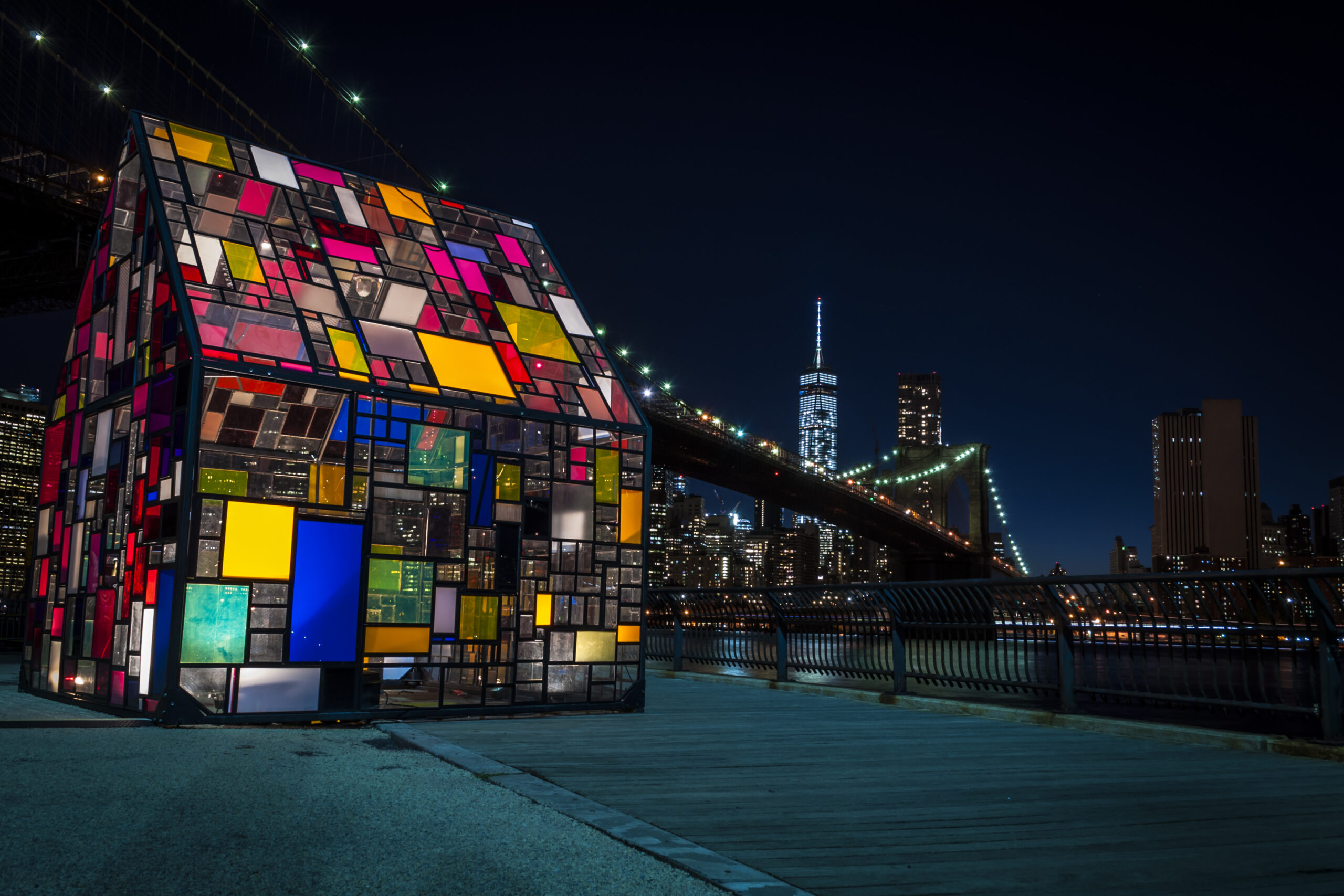 (Installation at DUMBO, New York City)
And it doesn’t have to be on a New York scale: in 2007, committed art lovers in Bad Vilbel transformed a small area along a stream into a lively gallery and, under the title “Massenheimer Auenkunst”, have been showing sculptures and installations by regional artists in exhibition cycles of approximately two years5.
Utopia City Wuppertal
Urban art and culture play an important role in the success of the Utopiastadt project in Wuppertal6. In 2011, the project was launched in the historic Mirke railway station as a “laboratory for development and creativity” with the aim of creating a lasting connection between art, culture and society. Over the following eight years, Utopiastadt grew from a 200 m² co-working space to almost 40,000 m². A hacker and maker space, a community workshop, urban gardening areas, a bicycle and cargo bike rental service, markets, festivals and many other elements of today’s urban culture were created. Above all, the strong commitment of the people from the surrounding neighbourhood demonstrates the appeal and thus also the marketing potential of such a project.
Godsbanen Aarhus
In Aarhus, Denmark’s second largest city, an old freight station – Danish: Godsbanen – was also transformed into an art and culture centre. Since 2012, Godsbanen has not only been a magnet for locals, visitors and artists. The project has also led to a significant increase in property values in the surrounding neighbourhood7 :apartment prices rose by 2.3 to 3 per cent or 27 to 29 thousand euros per apartment compared to the city as a whole.
Conclusion
Urban culture is extremely versatile and adaptable. In the field of visual arts, for example, it does not have to be limited to large-scale murals and representative sculptures. Even relatively small spaces are suitable for exhibitions by local artists or pop-up galleries. Event spaces and venues can literally provide a stage for performing arts such as music, dance, theatre, cabaret or variety shows. Participatory offerings such as those at Godsbanen in Aarhus or the URBAN NATION Museum in Berlin, where artists collaborate with the neighbourhood to create works of art, also have an appealing effect. Even relatively small projects can thus create spaces or rooms for art and culture and leverage their appeal.
This often results in added financial value, but this is not necessarily guaranteed – the influences on property prices are too diverse. Furthermore, excessive price increases can easily lead to gentrification, which is not always welcomed by urban planners and politicians3 .However, proximity to art and culture certainly creates an ideal marketing argument for real estate – and not only for residential areas and leisure zones: shopping and office locations also benefit when customers and professionals find inspiration and experiences in the surrounding area.
Sources
- Christin Erdmann-Goldoni: “Contemporary Art in Public Spaces: Forms of Expression, Impact, and Challenges”, European Public & Social Innovation Review EPSIR, Issue 8, October 2024
- Dr Constanze von Marlin: “Stiftung Berliner Leben: Verantwortung für lebendige Quartiere” (Berlin Life Foundation: Responsibility for vibrant neighbourhoods) in Institute for Corporate Governance in the German Real Estate Industry, Issue 2/2025
- André Kazmierski (Stadtbau Aschaffenburg): “Urban Art: How Art Changes Neighbourhoods”, in immobilienmanager, issue dated 24 January 2025
- “Down Under the Manhattan Bridge Overpass” (DUMBO), examples from “Art and Real Estate: How Public Art Installations are Boosting Property Values”, Trusted Property Advisors TPA, October 2024
- “Massenheimer Auenkunst”, riverside park on the Erlenbach, Mühlstraße, 61118 Bad Vilbel
- “Exemplary neighbourhood development projects – New materials for planning culture”, Institute for Urban Development and Housing (ISW), German Academy for Urban Development and Regional Planning (DASL), August 2024
- Matthiesen, L., Lautrup, M., Panduro, T.: “From industry to centre for arts and culture: the impact of industrial heritage transformation on neighbourhood house prices,” Frontiers in Sustainable Cities, 9 June 2025
(Image sources: istockphotos.com, dreamstime.com, High Line Park NYC, Urban Nation Museum Berlin)