
17.12.2025
Merry Christmas from Valdivia
A personal review of the year – and an outlook for the new year 2026 from Valdivia.


With the VALDIVIA Book Club, we are launching a new series for executives, entrepreneurs and decision-makers who engage with the central questions of effective leadership, sustainable strategy and long-term business development.
We will regularly feature books that provide guidance in complex decision-making environments, challenge established management thinking and offer fresh perspectives on competition, organisation and leadership. The focus is not on theory for theory’s sake, but on ideas with genuine relevance for strategic practice.
We begin with Hamilton Helmer’s 7 Powers: The Foundations of Business Strategy — a book that explores one of the defining questions of corporate leadership: what makes a competitive advantage not only successful, but enduring?
Helmer’s starting point is as simple as it is demanding: an attractive product, a growing market or strong operational performance are not enough to secure a company’s long-term success. What matters is whether a business possesses a structural strength that creates economic value while remaining difficult for competitors to replicate. Helmer refers to this strength as “Power”.
In everyday business language, the term competitive advantage is often used rather broadly. An innovative offering, a strong reputation or an experienced team can undoubtedly contribute to success. Yet not every strength protects a business from imitation over the long term.
In Helmer’s view, strategic Power emerges only when two elements come together: a tangible economic benefit for the company and a barrier that prevents competitors from easily copying or neutralising that benefit.
On this basis, he identifies seven forms of sustainable strategic strength:
Together, these seven Powers provide a clear framework for analysing business models and strategic positioning. They are not intended as short-term recipes for success, but as the foundations of sustained, above-average value creation.
One of the book’s most important insights concerns the timing of strategic decisions. Helmer distinguishes between building a strong position — “Getting There” — and operating from that position once it has been achieved — “Being There”.
Many competitive advantages cannot simply be added at a later stage, once a business is already established. They often emerge during early phases of development and growth: through the design of a new business model, the creation of a network, privileged access to resources or decisions that established competitors are initially unable or unwilling to make.
This means that 7 Powers is by no means relevant only to founders or investors. Established businesses must also regularly assess whether their current strengths are genuinely defensible over the long term — or whether they depend primarily on favourable market conditions, individual products or the performance of particular people.
For executives, the book raises one central question: Which of our company’s strengths would remain intact even if our competitors fully understood our strategy?
It is an uncomfortable but valuable question. It shifts attention away from short-term initiatives and towards the structural conditions required for lasting success. It also makes clear that strategy consists of more than ambitious targets, positioning statements or growth plans.
Following Helmer’s logic, strategic leadership means creating the conditions that allow a company to operate differently — and more economically — than its competitors over time. This requires conscious decisions about which capabilities to build, which resources to protect, which processes to develop and which existing business models may need to be challenged.
This perspective is particularly relevant in periods of technological change and increasing market volatility. As products and services become more easily comparable, the question of which capabilities and structures cannot be copied quickly becomes ever more important.
7 Powers is not a conventional management guide offering quick solutions or universal instructions. Instead, Helmer presents a compact but analytically demanding strategy framework. Numerous corporate examples help to make the more abstract elements of the model tangible.
The book’s greatest strength lies in its clarity. The seven categories provide a shared language for strategic discussion and enable leaders to test supposed competitive advantages more critically.
At the same time, the framework requires an honest assessment. Not every company already possesses one of the seven Powers. Nor can every form of strategic strength be deliberately or quickly developed. Yet this is precisely what makes the model so valuable: it distinguishes between what makes a company successful today and what can protect that success over time.
Hamilton Helmer’s 7 Powers is highly recommended for entrepreneurs, executives and strategy leaders who want not only to develop business models, but also to understand their long-term resilience. The book does not offer a simple blueprint for success. It provides something more valuable: a precise framework for examining how sustainable corporate strength is actually created. Our key takeaway from the book is:
A strong strategy does not merely explain how a company intends to win. It also explains why competitors cannot easily copy that success.
Book Source:
Hamilton Helmer
7 Powers: The Foundations of Business Strategy
Deep Strategy, 2016
210 pages
(image source: istockphotos.com)
A personal review of the year – and an outlook for the new year 2026 from Valdivia.
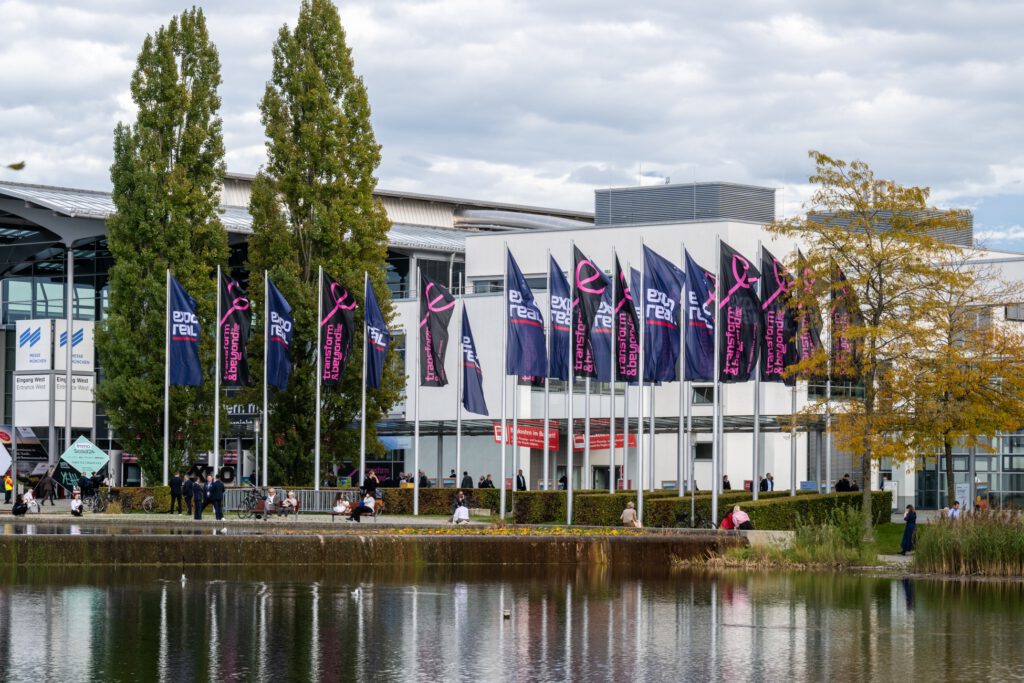
This year's EXPO REAL 2025 once again highlighted the profound changes taking place in the real estate industry.
Valdivia was right at the heart of it all – engaging in dialogue about strategies, innovations and future prospects. Read our review here!

Team spirit meets running shoes...
Valdivia was back at the J.P. Morgan Corporate Challenge in Frankfurt in 2025 – full of energy, good spirits and genuine team spirit.

On the way back from MIPIM 2025 - with many impressions and after in-depth discussions!

Find out how Valdivia experienced this year's Expo Real!

Valdivia at the 30th JPMCC in Frankfurt - it truly was a happening!
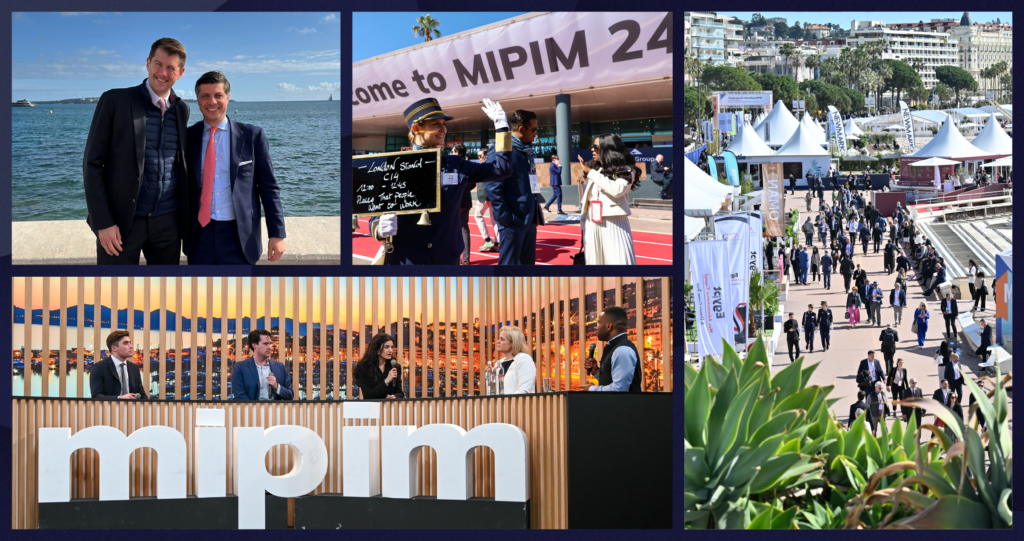
How was MIPIM 2024 as seen by Valdivia? Here you find our review of this year's fair.
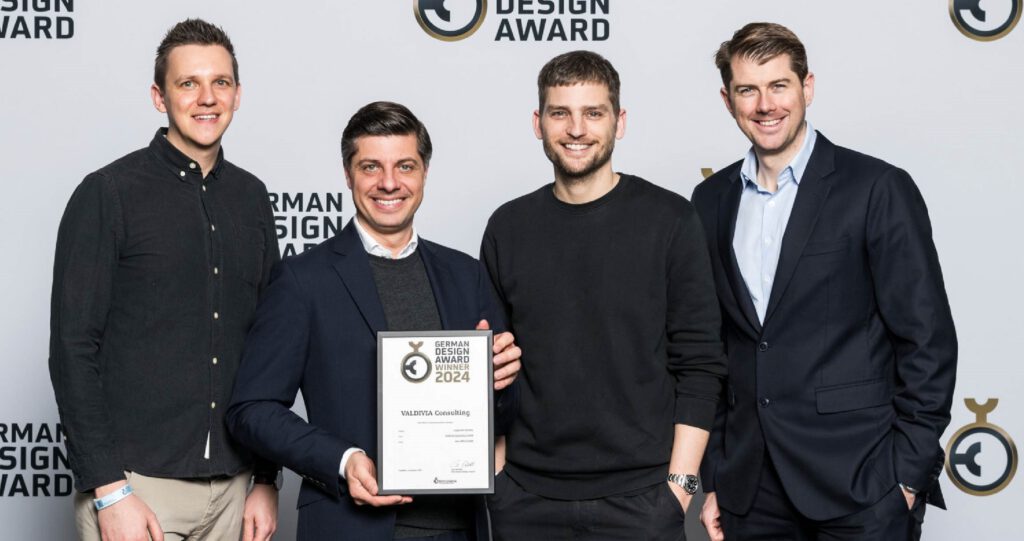
We are truly delighted to receive this award: together with our creative agency, we were honoured as "Winner" of the German Design Award 2024. Read onhere!

Merry Christmas 2023!
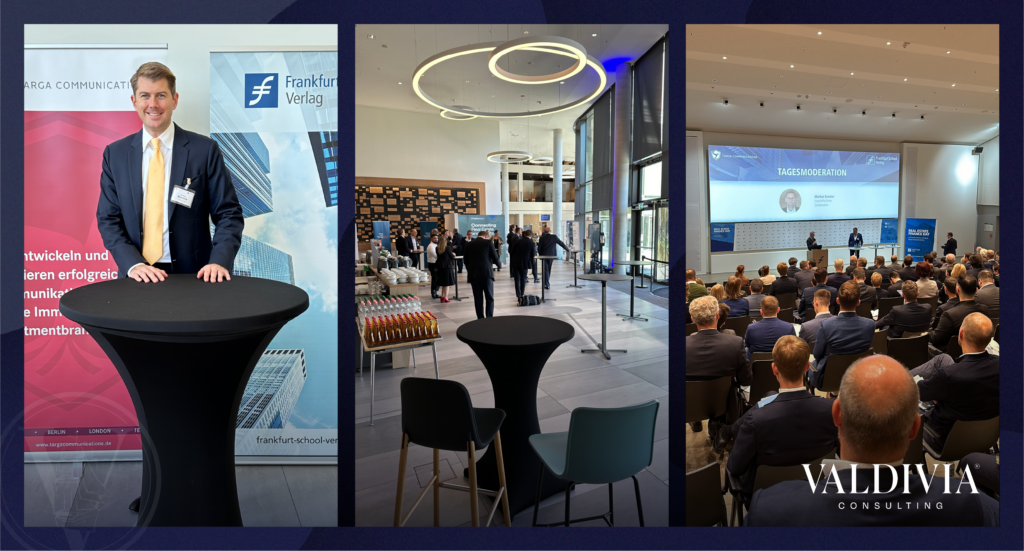
REFD 2023 in Frankfurt again was a truly important forum for the ndustry. Find out more in this article.
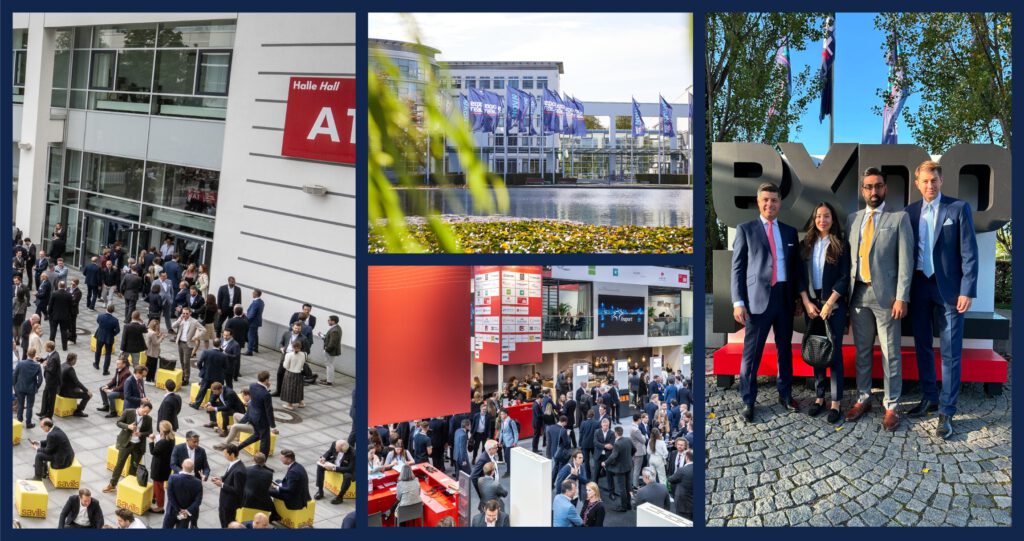
Read on toi find out our feedback on the fair!
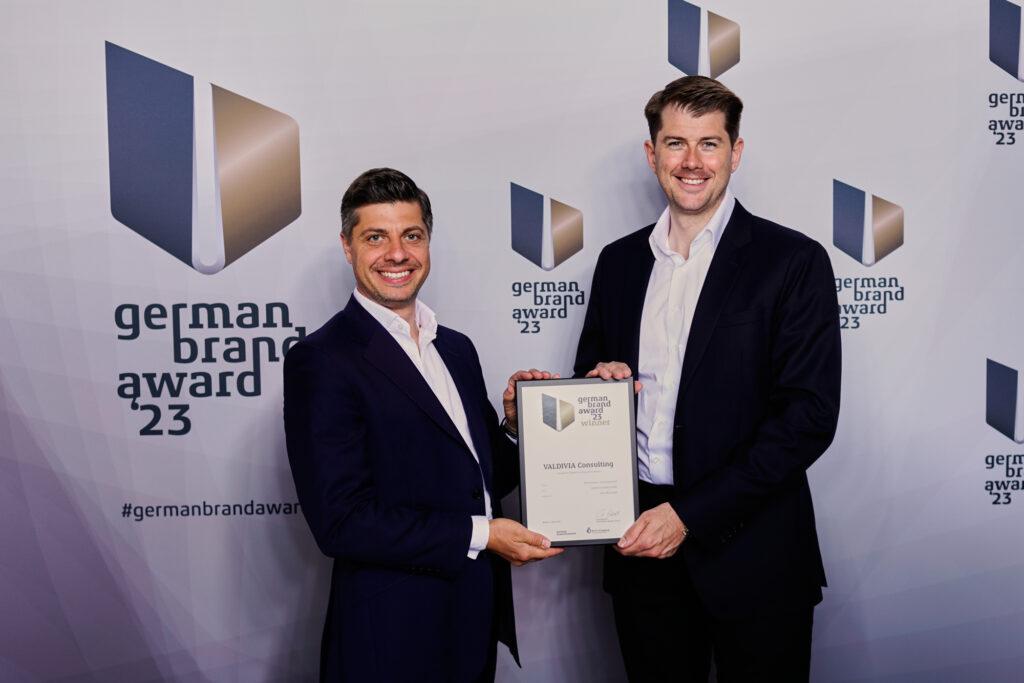
Wjhat a great reason to celebrate Together with our creative agency, we were awarded as "Winner" with the German Brand Award 2023. Read on here to find out more!

Learn more in this brief summary about how we experienced this years's MPIM in Cannes.

Back from Berlin after three days full of information, discussions and positive debates around the development of the real estate industry in the coming years.

Join us on the exciting journey from the beginnings in rather troubled times to today: What drives us. Where we have come to. What commitment a meeting sometimes demands. And how much the future means to us.

Successful leaders in the real estate industry today - Anthony Baumruk sheds light on this topic in a recent guest feature published in the FAZ.
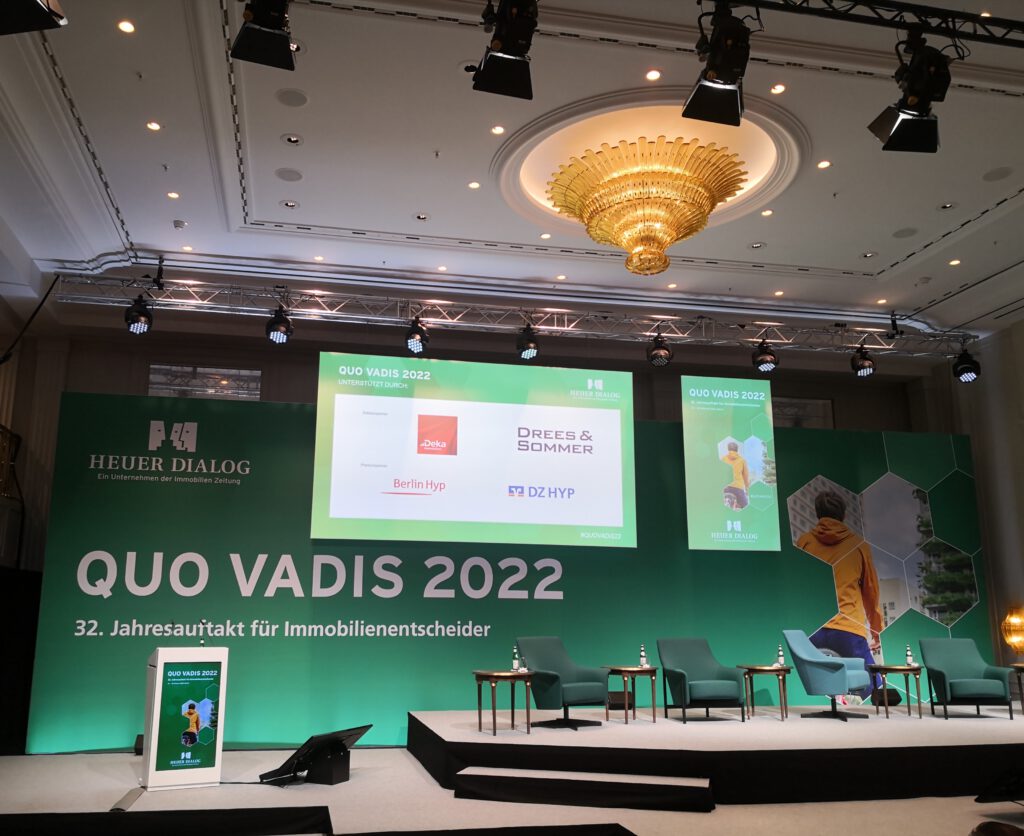
Back from three days with the decision makers of the real estate industry: Read about the insights of Daniel Bauer, our Managing Partner.
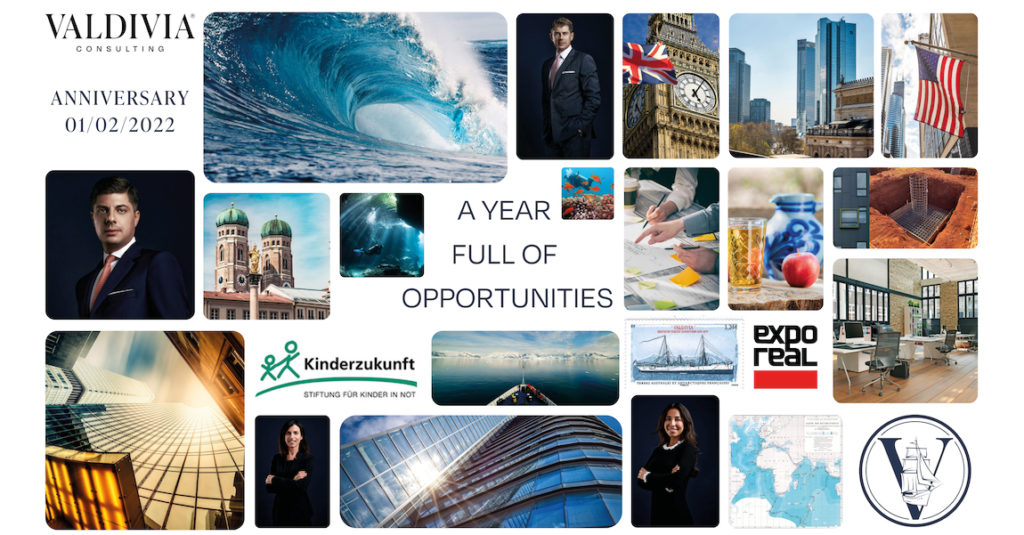
How it all began...the history of Valdivia's origins is full of surprises. Dive in deeply!

The 12th "World Oceans Day": A special day for Valdivia and all those who love the oceans and want to protect them right now, in the midst of climate change.