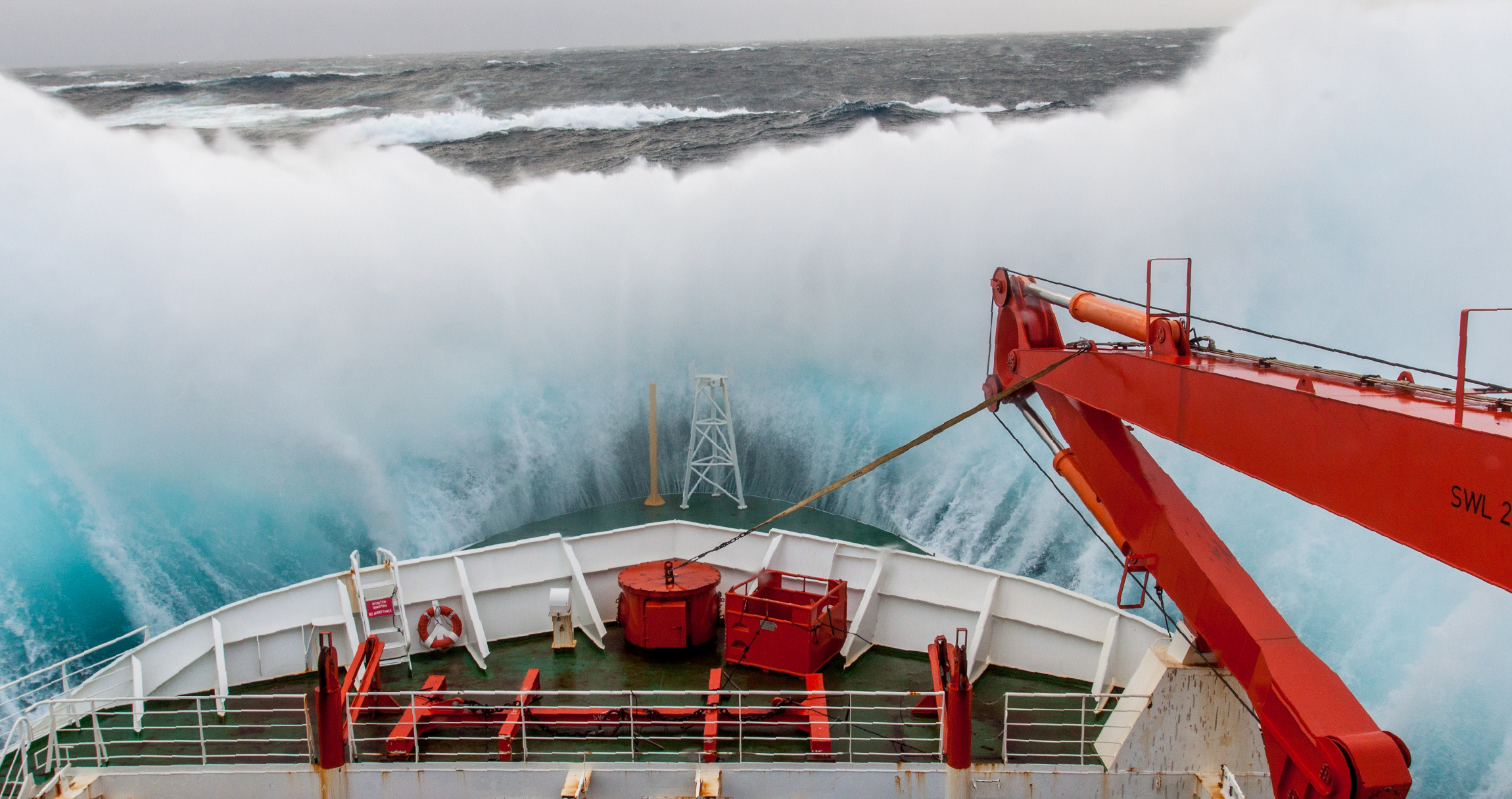
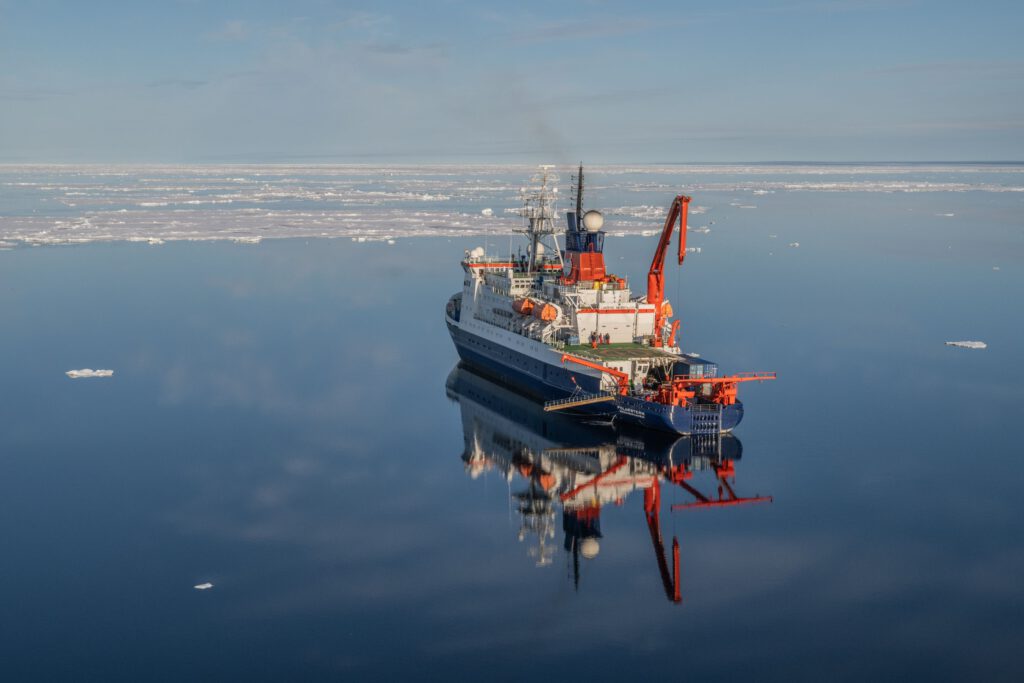
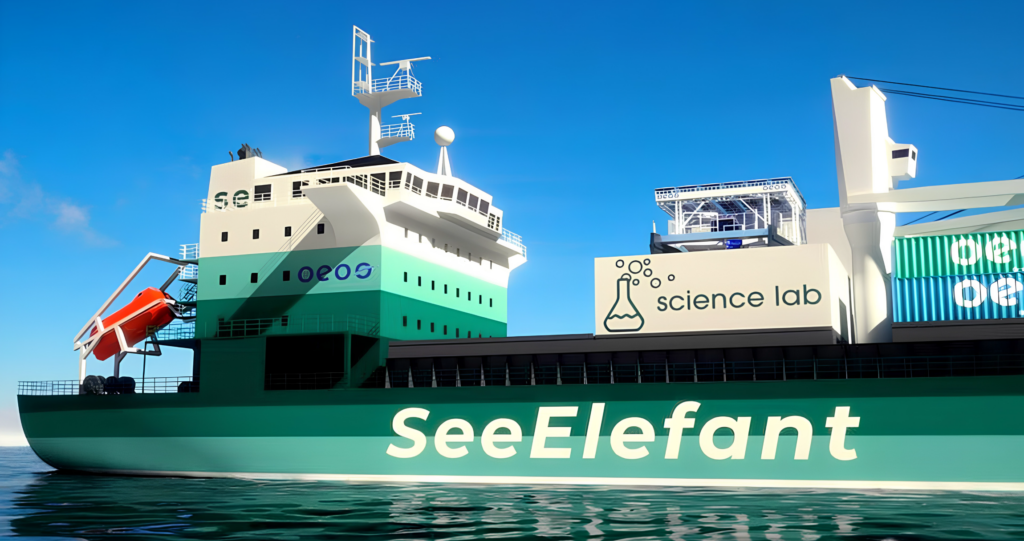
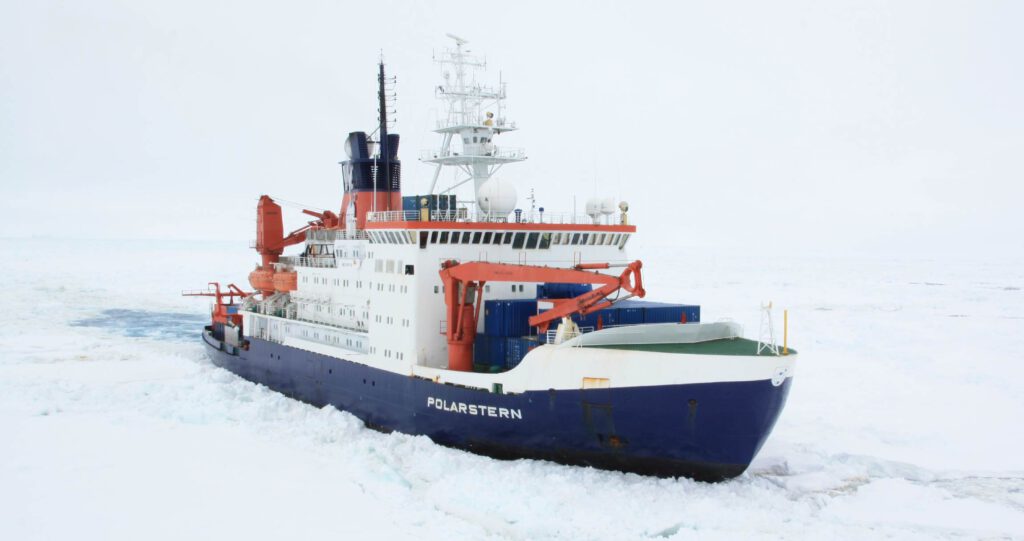
At the end of last year, we set out with the Polarstern to do even more than before for the exploration and protection of the world’s oceans. Now the flagship of the Alfred Wegener Institute (AWI) is back safe and sound from Antarctic waters after several months of research. In this article in our Valdivia Newsroom, we take a look at the work of the expedition — and at an important decision for the future of German polar research.
On an expedition in the Weddell Sea
The latest expedition of the research vessel Polarstern was once again focussed on ocean and climate research. Data was collected in the Weddell Sea to help better understand the influence of the polar zone and sea ice on global ocean currents and the climate. Another task was to supply the German Antarctic station Neumayer III , which is one of almost 30 year-round research facilities on the 6th continent.
Climate factors take centre stage
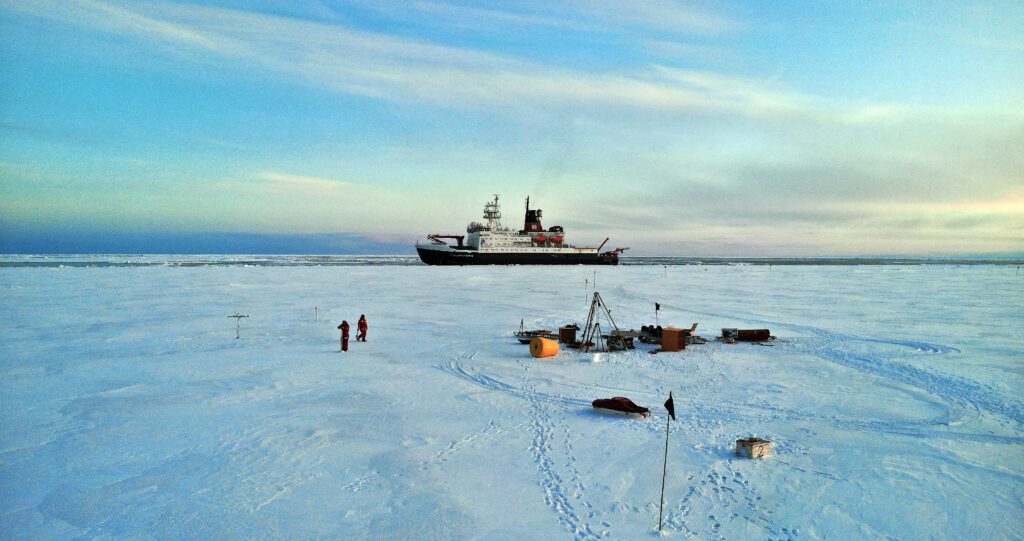
The interactions between the ocean, sea ice and atmosphere were a central research topic. Cores were taken from the sea ice and snow samples were analysed. At the same time, a research team equipped Weddell seals with satellite transmitters to gain insights into their diving behaviour and the hydrographic conditions under the ice
The autonomous Argo rafts, which drift with the current for years and simultaneously create depth profiles, were also used. 41 rafts and 27 permanently anchored measuring buoys were deployed; 33 decommissioned buoys were retrieved. The nature of the water itself was also analysed. So-called CTD probes (Conductivity, Temperature, Depth) analysed water columns down to a depth of 5000 metres. In addition to temperature and conductivity, they also measured values such as fluorescence, oxygen and salt content 135 times.
Topography and life in the depths
Another task of the expedition was to survey the seabed. To this end, data was continuously recorded by sonar during the journey — mainly in an area of the southern Weddell Sea, which covers around one and a half times the area of Bremen. A unique measuring device was also used: the OFOBS (Ocean Floor Observation and Bathymetry System ). It hovers just above the seabed and takes photos and video recordings. This allows scientists to gain insights into the exotic world of life in the lowest metres of the water column and can also measure the topography in high resolution. Almost like “our” Valdivia 125 years ago, the OFOBS was also equipped with a fishing net and thus helped to further investigate the isolated ice fish and their breeding nests.
An important step towards the future
Since the beginning of the year, Thyssenkrupp Marine Systems in Wismar has been working on designing the successor to the current Polarstern. The Alfred Wegener Institute can now look forward with confidence to continuing its valuable work and international research into polar icing in particular. The Federal Ministry of Education and Research and the Budget Committee of the German Bundestag had already the award of the contract in December 2024. In February, the then Federal Research Minister Cem Özdemir personally visited the new building, which sets standards for Germany as a research location and for climate protection — for example with green methanol as a possible fuel.
A new “guiding star” for polar and research
“We are delighted that construction (…) can now begin,” said AWI Director Prof Dr Antje Boetius. “What happens in the ocean and the polar regions affects all of humanity. The ocean is vital for survival due to its function as a heat and carbon reservoir. It is full of fascinating life that needs to be protected. Oceans and coasts feed us, are recreational areas, provide renewable energy and materials and open up global transport routes
The new Polarstern is designed as a floating research platform that is equipped for a wide range of marine science disciplines — from geology and geophysics, marine biology and oceanography to sea ice and atmospheric research. The new building, which is almost 160 metres long and 27 metres wide, will have space for around 60 scientific expedition participants and 50 crew members. In addition to various laboratories and permanently installed research equipment, the Polarstern II will also carry mobile systems such as underwater and flying drones.
Valdivia and the sea — a profound connection
Depth in performance, passion for the sea — that’s how we found our name Valdivia. This is because “Valdivia” was the name of the first German research vessel to set out on a systematic exploration of the deep sea in 1898. This connection motivates us to support the exploration and protection of the oceans in a practical way: as a sponsor of the Alfred Wegener Institute and the “One Earth One Ocean” project for maritime waste disposal.
(Image source: AWI)